


“They say you Capuchins are poor, but you are actually very, very rich. You have saints." St. John Paul II
|
A saint is a person who has been recognized by the universal Church for having lived a life in imitation of Jesus Christ and for having inspired the people around them with their exemplary love of God and of neighbor. The Capuchin Franciscans have been incredibly blessed to have over 100 friars recognized as venerable, blessed, or saints. |
Such a rich heritage of sanctity in so many and diverse expressions is an inspiration to all of us to become saints ourselves. Please click the links below to read about the lives of these holy men. There are also prayers included that can be offered to God in the spirit of these friars. |
Biographies and Feast Days
|
Founder of the Sisters of Mary Most Holy Consolation, Giuseppe Migliavacca was born in Trigolo (Cremona) on June 13, 1849. Ordained a priest in 1874, after two years of pastoral work, he asked to be admitted to the Jesuits. He remained there from 1875 to 1892. In order not to be deprived of his apostolic ministry as a preacher and confessor, he reluctantly accepted the resignation of the Society of Jesus. In Venice he met some young women who wished to consecrate themselves to the Lord in apostolic works. On behalf of the Archbishop of Turin, he took charge of the nascent institute. The hardest test came from his own nuns who, on false accusations, removed him from the direction of the Institute. On the advice of Blessed Andrea Carlo Ferrari, Archbishop of Milan, after a course of spiritual exercises he retired to the Capuchins (1902). He died in Bergamo on December 10, 1909. He was beatified by Pope Francis in Milan on Oct. 7, 2017. The liturgical memorial is celebrated on Dec. 10. |
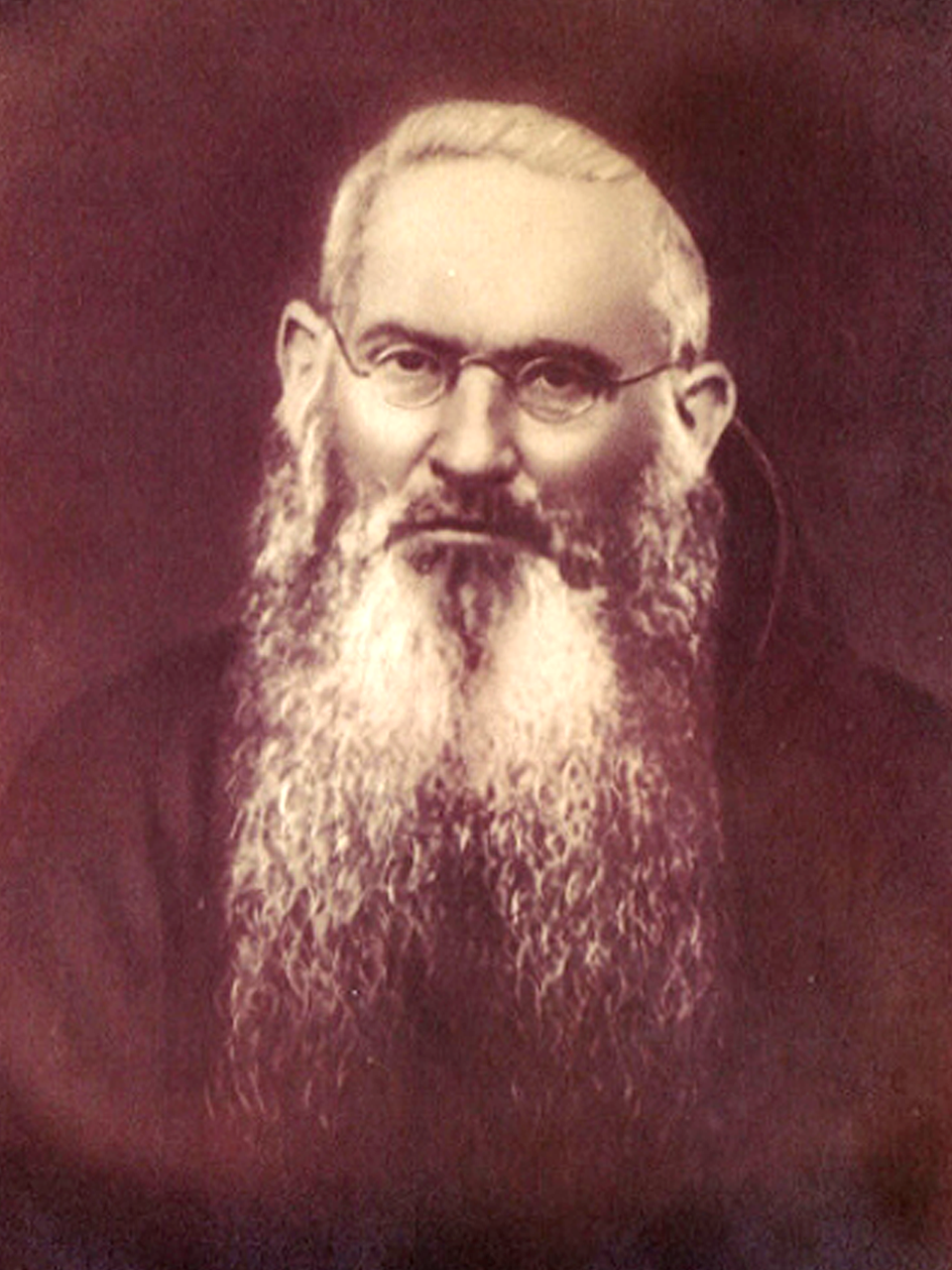 Priest, 1849-1909
Prayer
O God, you gave to the priest, blessed Arsenio, the grace to follow Christ in poverty and humility. Grant unto us, that in exercising the works of mercy, we can live with the same fidelity our vocation and with your help, overcome every adversity.
We ask this through our Lord Jesus Christ, your Son, who lives and reigns with you and the Holy Spirit, God, for ever and ever.
Amen.
|
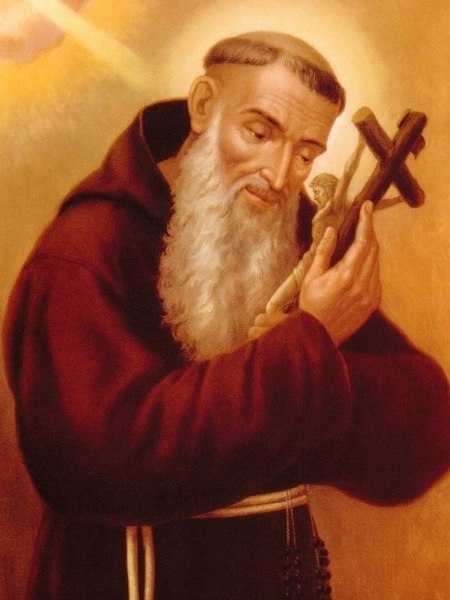
Priest, 1743-1801 Didacus Joseph Lopez Caamano, baptized Joseph Francis, was born in Spain in the year 1743, and entered the Capuchin Order in the Province of Seville. He was invested with the religious habit in 1757. After his ordination to the priesthood, he exercised the ministry of preaching throughout Spain with great success and was called “a second Paul.” He developed a method for his preaching which revolved around three points: 1) giving clear theological input; 2) promoting sacramental and devotional exercises; and 3) advocating a practical Christianity, especially in terms of promoting peace and justice. Always imbued with a great love for the cross, he combined apostolic activity with contemplation in a marvelous way. For a good portion of his religious life, Didacus Joseph lived apart from any local Capuchin fraternity. He often stayed at the home of a devout family in Ronda where he wrote most of his correspondence and where he died in 1801. His remains are preserved at the shrine of Our Lady of Peace at Ronda. Didacus Joseph was beatified by Pope Leo XIII on April 1, 1894. |
Prayer
God, our Father, you endowed blessed Didacus with the knowledge of the Saints and wonderfully guided him in his labors for the salvation of his people. Through his intercession grant us to relish what is right and good, and to preach to all nations the unfathomable riches of Christ.
We ask this through our Lord Jesus Christ, your Son, who lives and reigns with you and the Holy Spirit, God, for ever and ever.
Amen.
|
Religious, Bernard Latini (baptized Philip) was born at Corleone in Sicily in the year 1605. He was a quarrelsome person in his youth and was prone to violence, but converted to a better way of life. Bernard became a franciscan tertiary and dedicated himself to works of mercy in favor of the poor, sick and oppressed. Eventually, he sought admittance to the Capuchin Order, and distinguished himself for his commitment and religious fervor. Devoted entirely to God alone, he made every effort to become like Christ crucified through heroic love and genuine deeds of penance. After time, he even developed an unusual gift. He was able to cure animals by praying an "Our Father", then leading the animal around a crucifix three times to restore them to health. On his deathbead, Bernard was able to bequeath this ability on another friar.He died in 1667, and was beatified by Pope Clement XII on May 15, 1767. Pope John Paul II canonized him on June 10, 2001. |
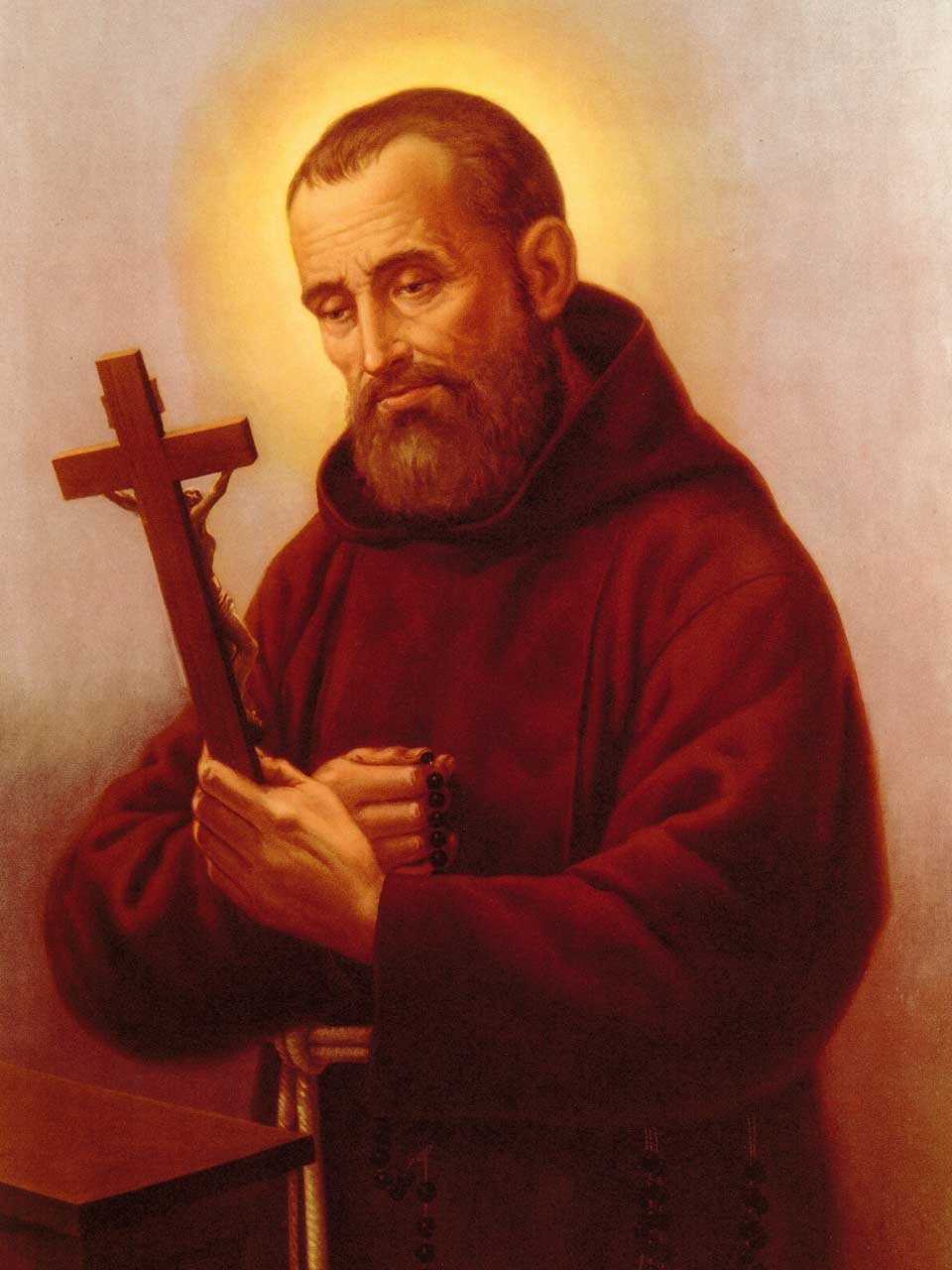 1605–1667
Prayer
God our Father, you have given us blessed Bernard as a wonderful example of penance and of Christian virtues. By the power of your Spirit make us firm in faith and effective in our work.
We ask this through our Lord Jesus Christ, your Son, who lives and reigns with you and the Holy Spirit, God, for ever and ever.
Amen.
|
Priest, 1556-1612 Joseph Desideri (baptized Eufranio) was born on Jan. 8, 1556, and joined the Capuchin friars in 1572. He was noted for the purity and austerity of his life. He was willing to sleep on a board with a wooden block as a pillow and eat only the most meager food, often spoiling its taste with ashes or water. Joseph denied his physical wants to obtain his spiritual needs, and he did so with joy. In his zeal for the faith he went to Turkey, where he was taken captive and tortured, but surprisingly he survived and escaped. He returned to his native land and labored with great success as an untiring preacher-one who worked hard for the conversion of sinners. The Lord favored his ministry with abundant gifts. He died at Amatrice on Feb. 4, 1612. He was beatified by Pope Clement XII on June 22, 1737, and canonized by Pope Benedict XIV on June 29, 1737. |
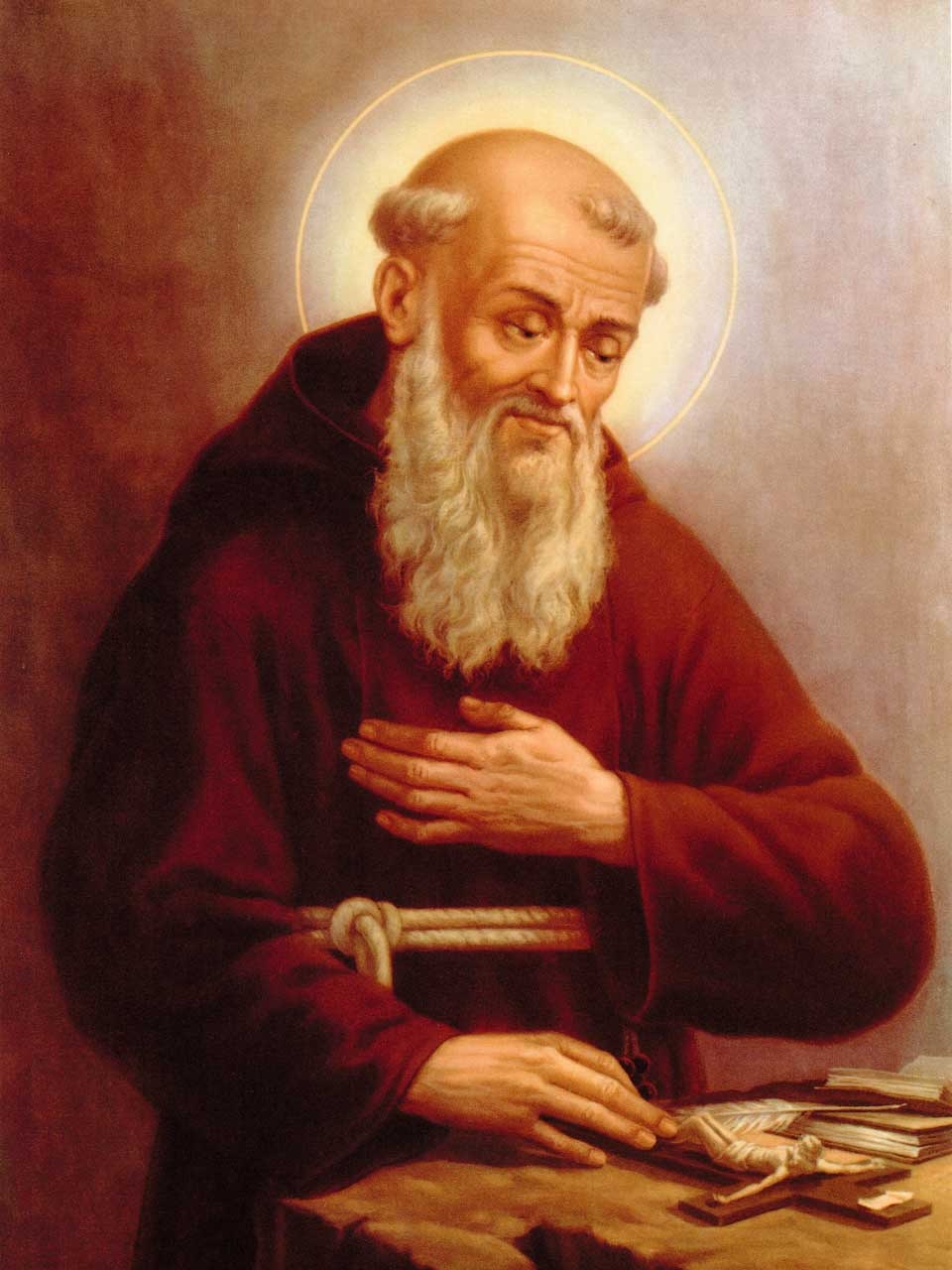
Prayer
Almighty God, you made Saint Joseph an illustrious preacher of the gospel. Through his prayers inflame us with love and zeal for souls that we may serve you alone.
We ask this through our Lord Jesus Christ, your Son, who lives and reigns with you and the Holy Spirit, God, for ever and ever.
Amen.
|
Leopold was born on June 24, 1864, and was given the name Francisco Tomas of St. John the Baptist. He was the first born to Diego Marquez Ayala and Jeronima Sanchez Jimenez, simple industrious peasants. He was a hard worker, working in the fields and living with his family. He would start his day with Holy Mass and a visit to the Blessed Sacrament. It is said that he used to give away his tools to those who needed them or give his money to any poor person he met on his way home from harvesting grapes. In 1894, during the celebrations in preparation for the beatification of the Capuchin Diego of Cadiz, Francisco Tomas decided he wanted to become a Capuchin. In 1899 he was accepted, and on Nov. 16 of that same year, he received the Capuchin habit and was given the name Brother Leopold of Alpandeire. While in Seville, they gave him the job of assistant to the friar who looked after the vegetable garden. He spent short periods in the friaries of Seville, Granada, and Antequera and learned to transform manual work and the service of the brothers into prayer. Brother Leopold was assigned to the friary in Granada in 1903, and on Nov. 23, he made his perpetual vows. For the next half-century, he spent his life as gardener, sacristan, and questor. He would walk the dusty pathways and streets, distributing the alms of love and dispensing God's goodness to everyone. He lived in constant contact with people, who instead of distracting him helped him to come out of himself, to take on the burdens of others, to understand, to be helpful, to serve and to love. He died on Feb. 9, 1956, at the age of 92. He was beatified by Benedict XVI on Sept. 12, 2010. |
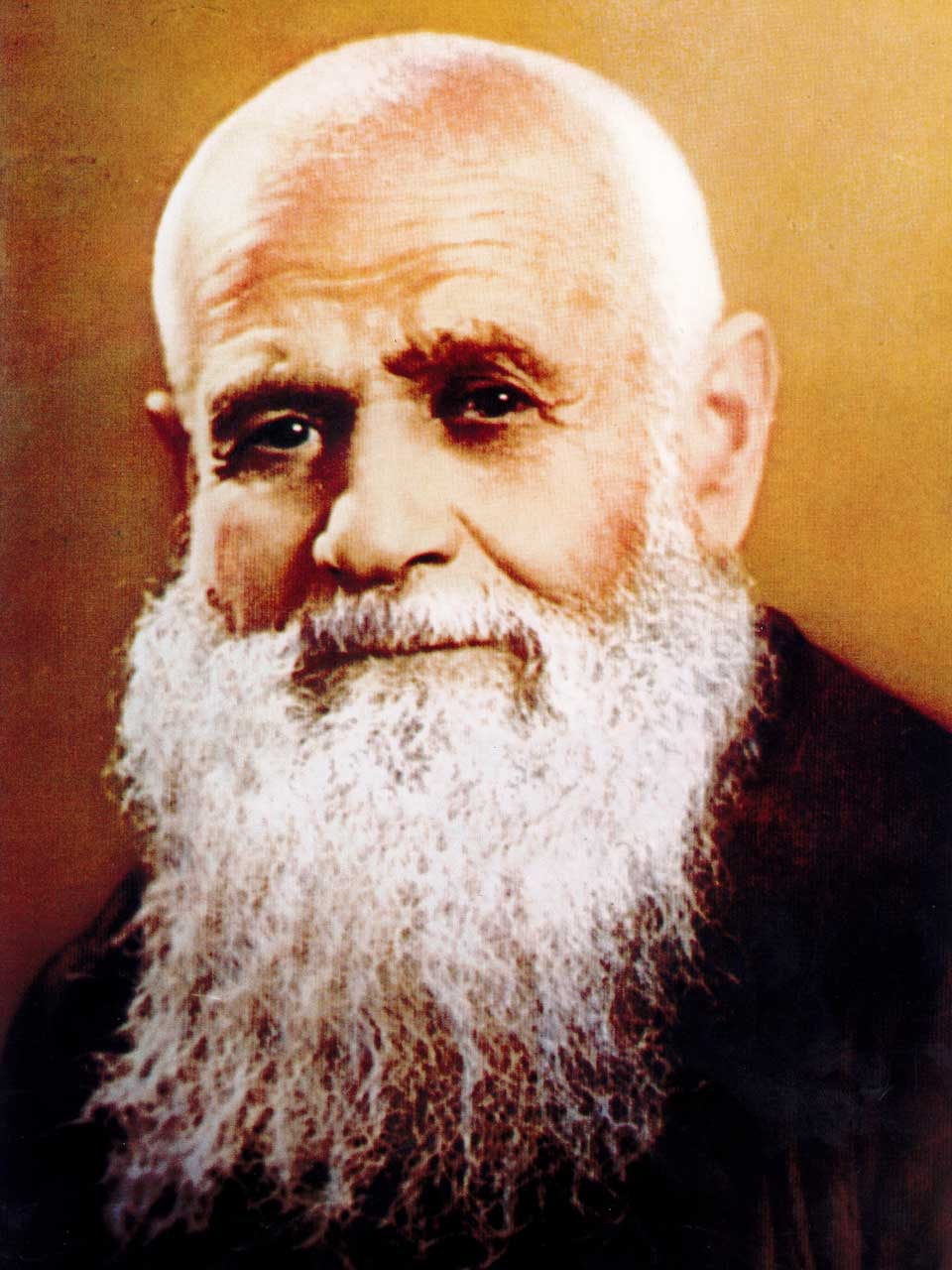 Religious, 1864-1956
Prayer
God our Father, you gave us blessed Leopold as a wonderful example of simplicity and innocence of life. Grant that we may imitate his example here on earth so that we may share in his glory in heaven.
We ask this through our Lord Jesus Christ, your Son, who lives and reigns with you and the Holy Spirit, God, for ever and ever.
Amen.
|
Conrad is the first German saint to be canonized after three centuries of Protestantism. Conrad Birndorfer, previously named John, was born in Bavaria in the year 1818. After living devoutly as a young man, he made religious profession in the Order of Friars Minor Capuchin in the year 1842. For 41 years he served as porter of the friary at Altotting, distinguishing himself for very great charity, zeal, and patience. He was a father to the poor and destitute. Conrad also had a tremendous devotion to the Blessed Mother and instilled this devotion in many others. Just three days after relinquishing his position at the door of the friary, Conrad died April 21, 1894, with a reputation for great holiness. Pope Pius XI beatified him on June 15, 1930, and the same pope canonized him on May 20, 1934. |
 Religious, 1818-1894
Prayer
Merciful God, through the service of Saint Conrad you were pleased to open wide to the faithful the portal of your mercy. May we pursue his spirit of poverty and humility of heart in serving our brothers and sisters.
We ask this through our Lord Jesus Christ, your Son, who lives and reigns with you and the Holy Spirit, God, for ever and ever.
Amen.
|
Fidelis was born Mark Rey in the town of Sigmaringen in Germany in the year 1577. He was born to wealth, power, and prestige. He studied civil law at Freiburg in Germany and was a practicing lawyer who was known for his zealous advocacy for the poor when he entered the Capuchin Order. He was given the name Fidelis, which means "faithful," a very fitting name. He led an austere life in vigils and prayers. After his ordination to the priesthood in 1612, he dedicated himself to preaching God's Word. The Congregation for the Propagation of the Faith commissioned him in 1612 to preach sound doctrine in South Germany and Switzerland. He labored for ten years in this area when, in 1622, he was attacked by heretics at Seewis in Switzerland and died a martyr’s death. This same year the Congregation Propaganda Fide was formally established, and Fidelis was proclaimed the patron of the Propagation of the Faith. He was beatified by Pope Benedict XIII on March 12, 1729, and canonized by Pope Benedict XIV on June 29, 1745. |
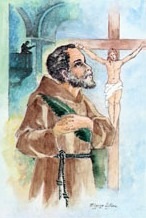 Priest and Martyr, 1577-1622
Prayer
God our Father, you were pleased to adorn Saint Fidelis with the palm of martyrdom. He burned with love for you in propagating the faith. Through his prayers grant that we may be firmly rooted in love and merit to experience with him the power of Christ’s resurrection, for he lives and reigns with you and the Holy Spirit, God, for ever and ever.
Amen.
|
Benedict was born Mark Passionei in the duchy of Urbino. He was the seventh of eleven children of noble parents, Dominic Passionei and Magdalen Cibo. His father died when he was four years old, and his mother died when he was seven years old. The children were then sent to Cagli and placed under the care of tutors. Drawn to silence and solitude, Mark frequented the local church, and at 17, he began his study of philosophy at the University of Perugia. As a student, Mark set aside time for prayer, scripture study and meditation. Together with a friend, Mark also got involved in charitable enterprises. He continued his education at the University of Padua. After obtaining a degree in law at Padua, Mark entered the Capuchin Order. Ordained a priest, he dedicated himself completely to the preaching ministry, and he attracted the faithful by his spirit of prayer, joy and poverty. For four years, he was part of a team of Capuchins ministering in Bohemia under the direction of Lawrence of Brindisi for the defense and propagation of the Catholic faith. For reasons of health, however, Benedict was forced to return to his home province. Despite his ailments, he continued to minister, especially among the poor. He died on April 30, 1625, and was beatified by Pope Pius IX on Jan. 15, 1867. |
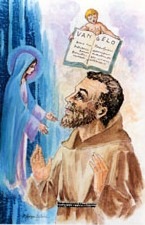 Priest, 1560-1625
Prayer
Holy Father, you exalted blessed Benedict for his ardent love for the cross and the ministry of the Word, grant that we may follow his example, by living in this world in faith, justice and peace.
We ask this through our Lord Jesus Christ, your Son, who lives and reigns with you and the Holy Spirit, God, for ever and ever.
Amen.
|
Thomas was born in Olera (Bergamo) in late 1563. Leaving his family and flock, at the age of 17 he was accepted into the Venetian Capuchins. A non-clerical friar and humble mendicant for about fifty years (first in the lands of the Serenissima and then in those of the Habsburgs), he distinguished himself for his zeal for the Catholic faith and the consecrated life. He was the spiritual director of bishops and government officials, as well as contemplative virgins and common people. During his formative years, he was also taught to write. His numerous writings reveal him as a singer of the Immaculate Conception, a mystic of the Heart of Jesus, and a precursor of Paray-le-Monial. He died in Innsbruck on May 3, 1631. |
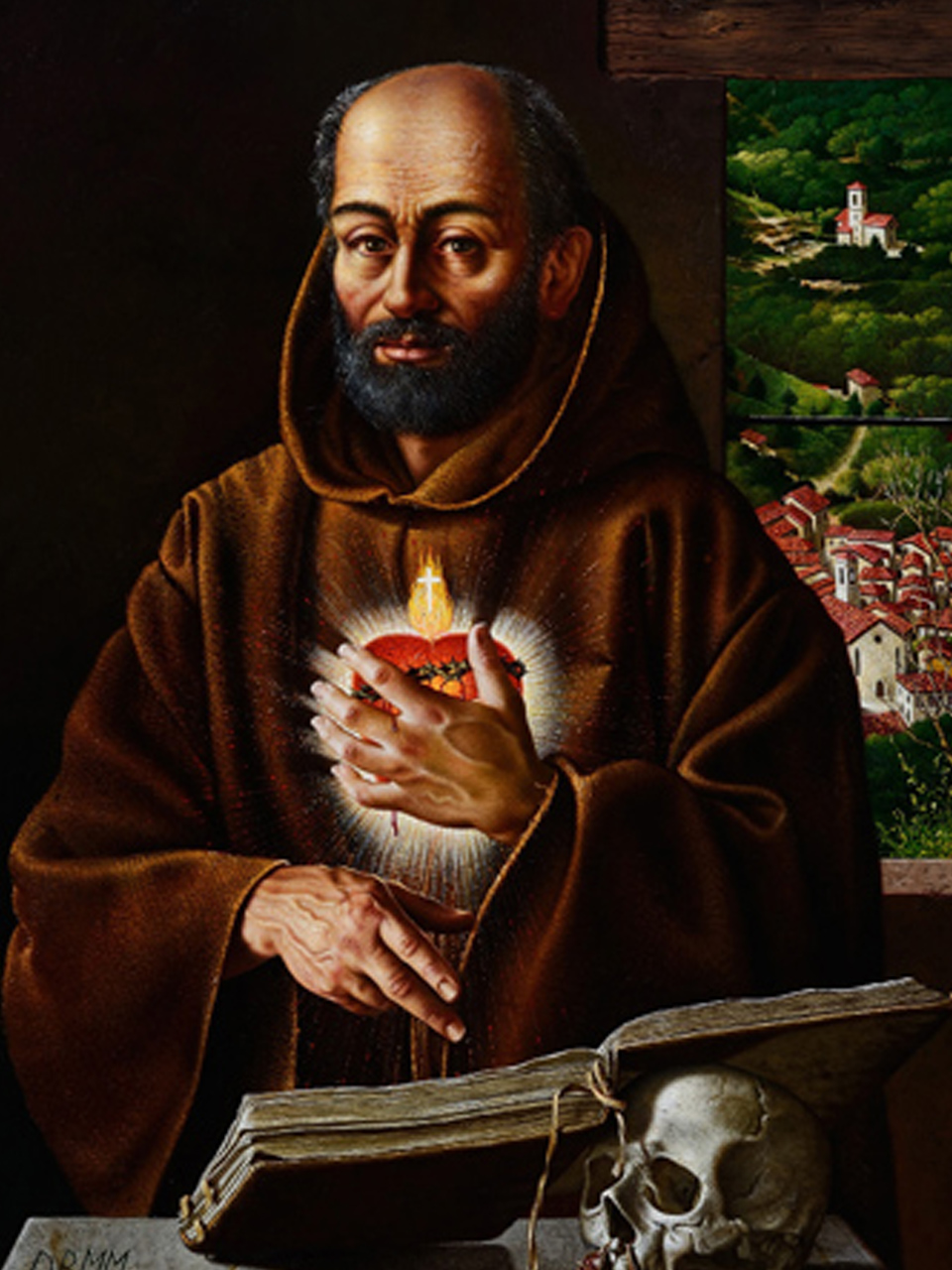 Religious, 1563-1631
Prayer
God our Father, source of every perfect gift, that inflamed with charity the heart of Blessed Thomas, concede also to us to follow his example, and through his intercession, make us collaborators of your plan of love: to make Christ the heart of the world.
Through our Lord Jesus Christ, your Son, who lives and reigns with you and the holy Spirit, God, for ever and ever.
Amen.
|
Blessed Jeremiah was born John Kostist, the eldest son of Margarite Barbato and Stoika Kostist. He was born in Romania on June 29, 1556. He learned charity at home. He and his grandfather used to cut wood for distribution to the poor. His father, a farmer, raised grain, and all surplus was set aside; John's mother would use it to bake bread, which was given to those who lacked food. After his eighteenth birthday, he left his homeland and went to Italy where he remained until his death. He entered the Capuchin Order in the Province of Naples and after his religious profession ministered as infirmarian at St. Ephrem continuouslyfor 40 years. He dedicated most of his life to a generous service to the sick in a spirit of joy and peace. Jeremiah died March 5, 1625, at the age of 69. He was beatified by Pope John Paul II on Oct. 30, 1983. |
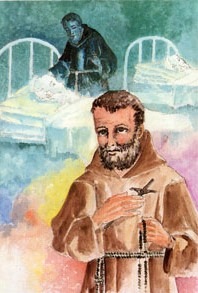 Religious, 1566-1625
Prayer
Merciful God, you gave the blessed Jeremiah the grace of imitating your Son in serving his brothers and giving himself unconditionally in service for them. Help us to follow the evangelical way of humility and love, so that we may cooperate more fully in your universal plan of salvation.
We ask this through our Lord Jesus Christ, your Son, who lives and reigns with you and the Holy Spirit, God, forever and ever.
Amen.
|
Ignatius Peis-Sanna (baptized Vincent) was born Dec. 18, 1701, in Laconi, Sardinia. His large family lived on a small farm and every child was needed to work but Vincent seemed more interested in praying than farming. He joined the Capuchins in 1721. For almost forty years he served as questor, begging alms in Cagliari, highly esteemed for his humility and charity, and adorned with many gifts from God. To those who came to him for comfort, he would advise, "Trust God." In numerous instances, God's healing power was channeled through this "apostle of the streets." Although blind for the last two years of his life, Ignatius was still actively engaged in ministry until just a few months before his death in 1781. Pope Pius XII beatified him on June 16, 1940, and canonized him on Oct. 21, 1951. |
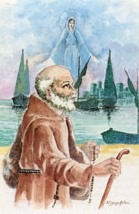 Religious, 1701-1781
Prayer
Lord God, you led Saint Ignatius along the way of humility, innocence, and fraternal charity to the heights of sanctity. Help us to imitate his virtues and to practice charity on earth with word and deed.
We ask this through our Lord Jesus Christ, your Son, who lives and reigns with you and the Holy Spirit, God, for ever and ever.
Amen.
|
He was born Bogdan John Mandic, in Castelnovo, Dalmatia (Bosnia-Hercogovina), Yugoslavia, on May 12, 1866. He was the twelfth child of a Croatian family who once had great wealth but had lost nearly all. Having come from a family that had lost all its wealth gave him a great compassion for those who fell on hard times. Having had a harsh and abusive experience going to confession as a child made him want to express God's gentleness and compassion. He joined the Capuchins of the Venetian province, taking the name Leopold. After his ordination to the priesthood, he ardently desired to return among his people to promote the union of the Church, but his superiors entrusted him with the ministry of confessor, which he fulfilled in an exceptional way throughout his entire life. Leopold died in Padua on July 31, 1942. He was beatified by Pope Paul VI on May 2, 1976, and canonized by Pope John Paul II on Oct. 16, 1983. Leopold is hailed as the “Apostle of Unity.” |
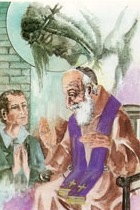 Priest, 1866-1942
Prayer
O God, perfect unity and supreme good, you filled Saint Leopold, your priest, with kindness and mercy for sinners, and an ardent desire for unity among all Christians; grant that we through his intercession, may be renewed in spirit and heart so that we can spread your love to everyone and confidently work for the unity of all Christians in the bond of peace.
We ask this through our Lord Jesus Christ, your Son, who lives and reigns with you and the Holy Spirit, God, for ever and ever.
Amen.
|
Religious, 1515-1587 Felix Porri was born in the year 1515, in Cantalice, Italy. He received the habit of the Capuchin friars in 1543. For forty years he served as questor in the city of Rome, giving a wonderful example of simplicity, innocence, and charity. In continual prayer and humble joy he walked the streets of Rome helping the sick and the poor. He was called “Friar Deo Gratias” because of his custom of greeting the people with these words. Felix was so successful in his work that during the famine of 1580, the political leader of Rome asked the Capuchins if they would lend Felix to them so he could collect food and provisions for the entire city. The Capuchins agreed, and Felix embraced his new task. He died in Rome in 1587, endowed with extraordinary gifts from God. He was beatified by Pope Urban VIII on Oct. 1, 1625, and canonized by Pope Clement XI on May 22, 1712. |
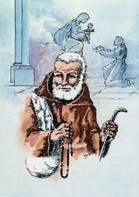
Prayer
Almighty God, you gave Saint Felix to the Seraphic Family and to the Church as an example of evangelical simplicity and innocence of life. Following his example, may we strive to love and joyfully follow Christ alone, who lives and reigns with you and the Holy Spirit, God, for ever and ever.
Amen.
|
Religious, 1668-1750 Crispin was born Pietro Fioretti on Nov. 13, 1668, in Viterbo, Italy. He joined the Capuchin order on July 11, 1693, and took the name Crispin. For more than forty years he served his province as questor, begging for food not only on behalf of his Capuchin brothers, but also to provide for all the needy of his "big Orvietan family." Before serving as questor, he spent twelve years in various communities as cook, gardener, orchard keeper, and nurse. Crispin accomplished a remarkable amount of good in the area of social and spiritual assistance, energetically ministering among the sick, the imprisoned, sinners, unwed mothers, families experiencing hardship, and those on the brink of despair. He was a skilled peacemaker both within his own Capuchin community and with others. He was convinced that much of human misery, both material and spiritual, was due to injustice. He therefore set about to confront social injustice by admonishing merchants, reminding people of workers' rights, and asking forgiveness of debts whenever possible. He worked with an incredible spirit of sacrifice and serenity in both the religious and social areas. He was beautified by Pope Pius VII on Sept. 7, 1806, and canonized by Pope John Paul II on June 20, 1982. |
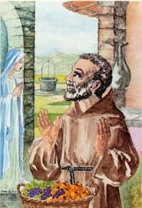
Prayer
Lord, you led your faithful servant Crispin through a life of perfect joy to the heights of evangelical perfection; grant that through his intercession and example we may always practice true virtue and come to share the joys of heaven which it promises.
We ask this through our Lord Jesus Christ, your Son, who lives and reigns with you and the Holy Spirit, God, for ever and ever.
Amen.
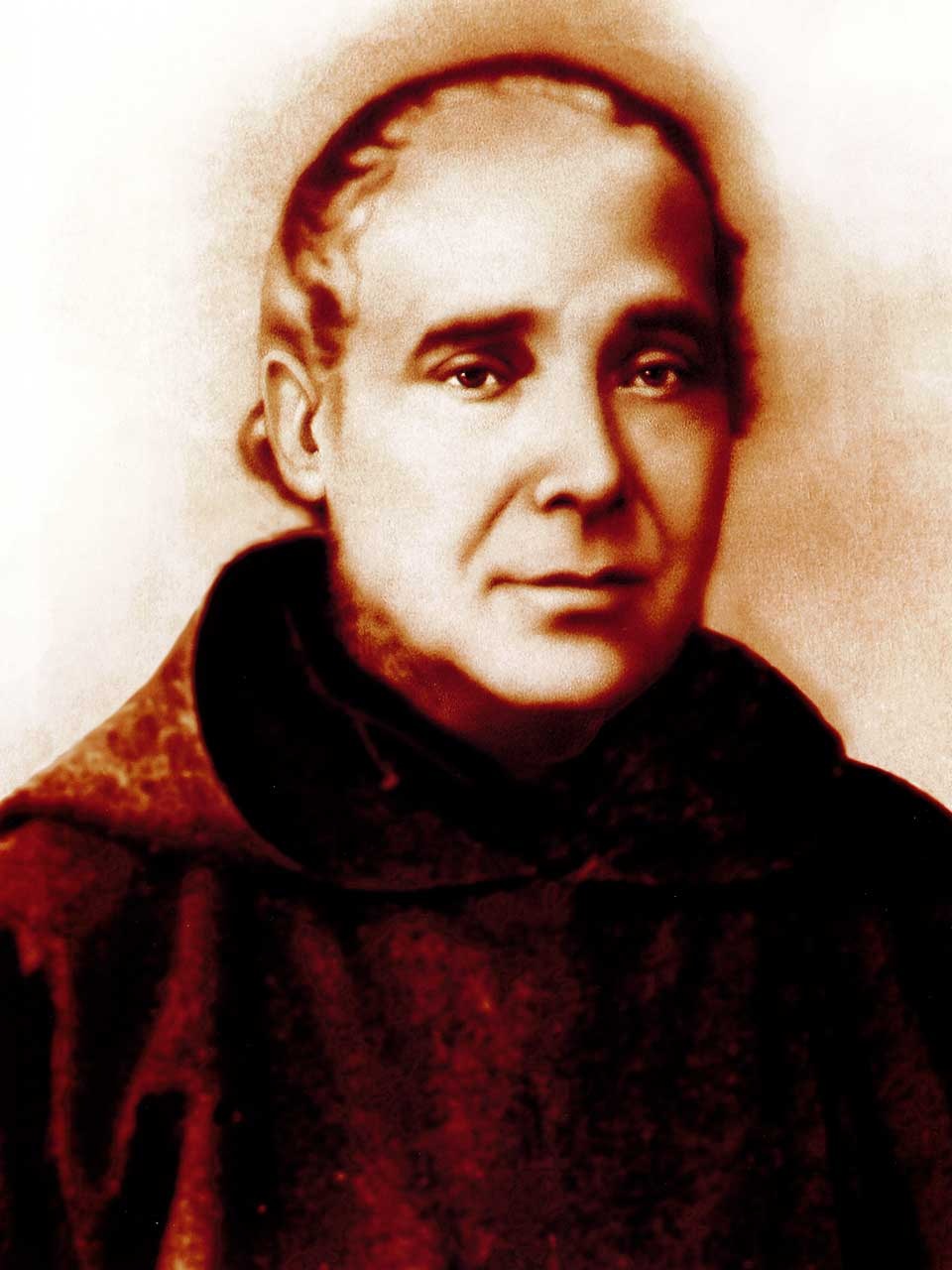
Priest, 1811-1871 Jose Tous y Soler (baptized Jose-Nicolas-Jaime) was born on March 31, 1811, in Igualada, the ninth of twelve children born to Nicolas Tous Carrera and Francisca Soler Ferrer. They were a wealthy family with profound Christian roots. In 1827, at the age of 16, he donned the Capuchin habit and was ordained a priest in 1834. The following year, on account of the suppression of religious houses decreed by the government, he and his fellow friars of Santa Madrona were imprisoned in Monjuic fortress in Barcelona. After 18 days, he was freed and began the harsh journey of exile. In 1836, he returned to France and completed his studies in moral theology, gaining the title of preacher. During this period he served as chaplain to the Benedictine nuns of Perpetual Adoration. He returned to Spain in 1843, in hopes of being able to rejoin Capuchin conventual life, but laws of the time prevented this. Instead, Father Jose went to live with his family, always remaining faithful to the austere, penitential style of Capuchin life. In March 1850, Father Jose founded the Institute of the Capuchin Sisters of the Mother of the Good Shepherd. He personally drafted the constitutions of the institute he founded, which very clearly show the two principles on which the life of the sisters were to rest: devotion to Mary, Mother of the Good Shepherd and the education of children and young people. Father Jose died on Feb. 27, 1871, while celebrating Mass in the school of the Mother of the Good Shepherd in Barcelona. He was beatified by Pope Benedict XVI on April 25, 2010. |
Prayer
Lord, you gathered all your commandments into the one commandment of love of God and love of our brothers and sisters, grant that imitating Blessed Jose, we may dedicate ourselves to the service of our brothers and sisters so that we may be blessed by you in heaven.
We ask this through our Lord Jesus Christ, your Son, who lives and reigns with you and the Holy Spirit, God, for ever and ever.
Amen.
|
Agnese Pacifica Panas was born in Alano di Piava, Belluno, Italy. Her parents, who had lost their jobs as artisans because of industrialization, were forced to emigrate to the United States in 1902. They left Agnese with her uncle Father Angelo, chaplain at Asiago and then archpriest at Enego, until they returned in 1910. After lengthy and strong opposition from her family, she entered the monastery of Fabriano on Oct. 11, 1917. On April 19, 1918, Agnese Panas became Sr. Maria Costanza, having been vested with the habit of a Capuchin Poor Clare. On May 19, 1927, at age 31, she was elected novice mistress and on June 22, 1936, she was elected abbess, an office she carried out for sixteen consecutive years, until 1952. For many years she welcomed the people who knocked on the door of the monastery, especially priests, some of whom became her spiritual sons. After a break of three years, she was elected abbess once again, an office her sisters gave her by nearly unanimous vote until her death in 1963. During this time she was elected to the council of the Capuchin Poor Clare Federation of Central Italy. On May 29, 1963, she died a holy death, surrounded by her sisters in their usual haste to receive the daily instructions of their abbess. She was beatified by Pope Francis on Oct. 9, 2022. |
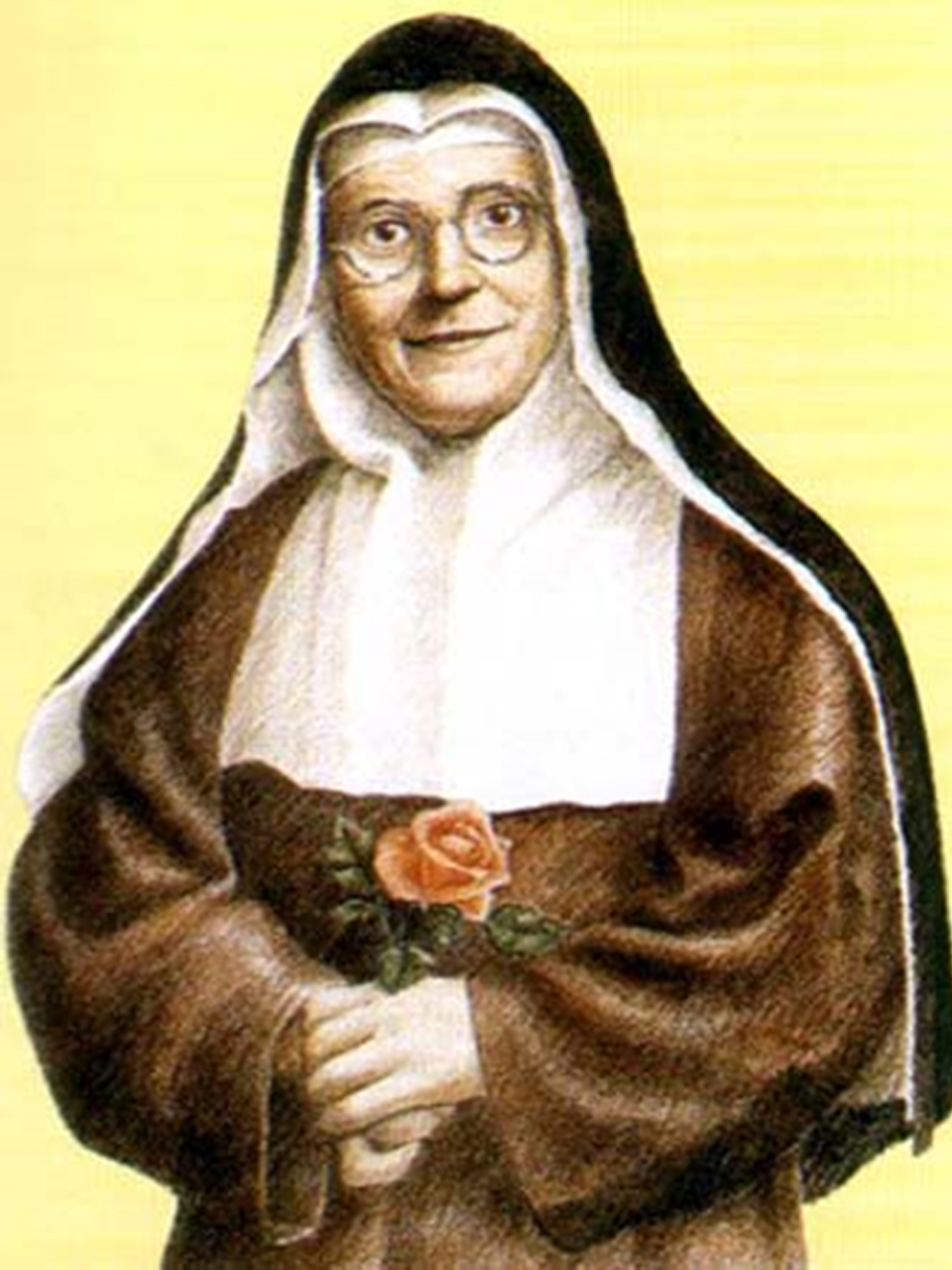 Religious, 1896-1963
|
Felix of Nicosia was born on Nov. 5, 1715, and given the name Philip James Amoroso. He was the son of a poor family, the cobbler Philip Amoroso and Carmela Pirro. He was not formally educated, but his mother taught him the basics of Catholic faith and encouraged him to spend time with the local Capuchin friars. After several attempts and refusals, he was finally accepted by the Capuchins when he was 28. His entire life was spent in his hometown, where he exercised the office of questor with heroic charity for more than 30 years. He often instructed youth in Christian doctrine and reminded parents of their responsibility to provide their children with catechetical instruction. He taught children the Creed, confronted those who used profanity, and spoke often of the mysteries of the incarnation and redemption. He was adviser, guide, and support for the simple, the learned and the clergy alike. Felix was so faithful to his vow of obedience that on his deathbed at the age of 72, he asked his superior's permission one final time, "May I die now?" and having received permission and blessing, he died on May 31, 1787. Felix was beatified by Pope Leo XIII on Feb. 12, 1888. |
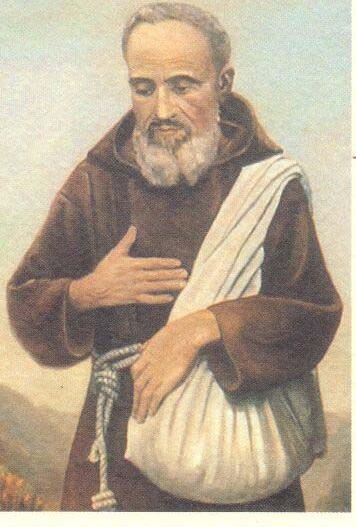 Religious, 1715-1787
Prayer
Lord, you taught blessed Felix to serve you in humility and simplicity, and to be attentive to the greater things. Grant that we may imitate his example here on earth so that we may share in his glory in heaven.
We ask this through our Lord Jesus Christ, your Son who lives and reigns with you and the Holy Spirit, God, for ever and ever.
Amen.
|
Brother Nicholas, known in the world as John Medda, the son of John Medda Serra and of Pirama Cogoni Zedda, was born in the small Sardinian town of Gesturi on Aug. 4, 1882. On Oct. 20, 1913, John Medda donned the Capuchin religious habit with the name of Nicholas. After his perpetual profession, he was appointed to the kitchen in the friary of Sassari. Despite his efforts, he was replaced and transferred to Oristano, Sanluri, and Cagliari, where he received the task of questor. Brother Nicholas was a man given to the silence noted in the Capuchin Constitutions. He was popularly known as "Brother Silence." When he spoke, he was always brief and focused on the prayer in which he was involved. He spent 45 years as a man of religious life in humility, penance, charity, silence, and constant prayer. He died on June 8, 1958. Brother Nicholas of Gesturi was declared blessed on Oct. 3, 1999. |
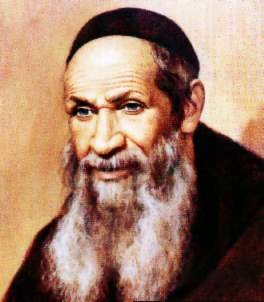 Religious, 1882-1958
Prayer
God our Father, you taught blessed Nicholas to serve you in humility and simplicity, and to be attentive to the greater things. Grant that we may imitate his example here on earth so that we may share in his glory in heaven.
We ask this through our Lord Jesus Christ, your Son, who lives and reigns with you and the Holy Spirit, God, for ever and ever.
Amen.
|
Thomas Saleh and Leonard Melki were born in Baabdath, Lebanon, in 1879 and 1881, respectively. While still teenagers, after the arrival of the Capuchins in their village, they decided to follow their example, entering the Apostolic Institute of the East in Istanbul in 1895 for the training of missionaries. After completing their studies in 1906, they were assigned to the mission in Mesopotamia, where they dedicated themselves to the education of young people, preaching, and the Franciscan Third Order in various places. During the First World War, Leonard was arrested, tortured, and taken into the desert, where he was killed on June 11, 1915, along with 416 other companions, after refusing to abandon the faith. For hiding an innocent Armenian priest wanted by the police, Thomas was taken into the desert with three other brothers. As a result of mistreatment and typhus he contracted on the journey, he died in prison on January 18, 1917. |
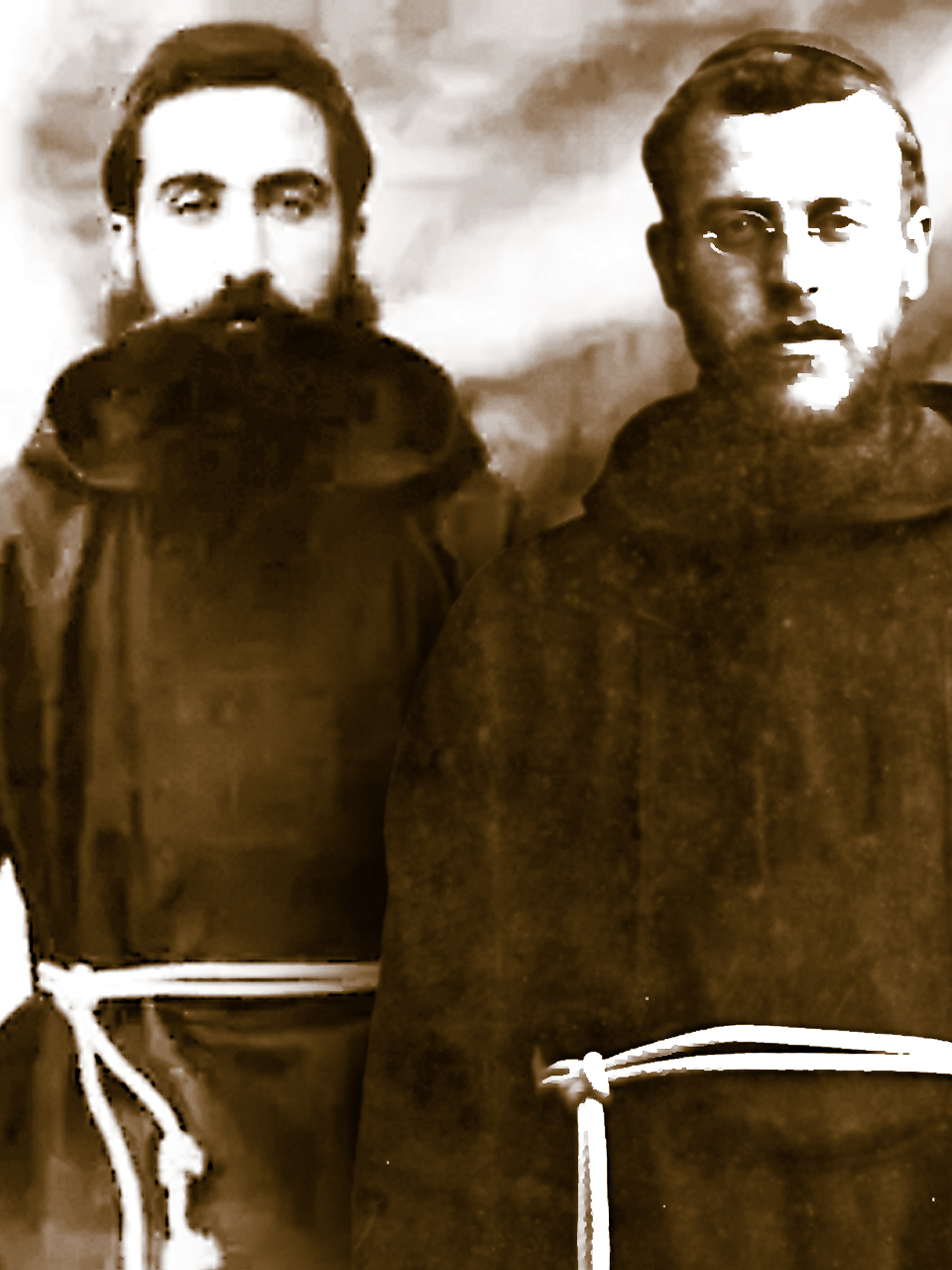 Priests and Martyrs
Prayer
Almighty, eternal God, who called the blessed martyrs Thomas and Leonard to depart from their land to preach the Gospel and to bear witness to your love and the love of our brothers by the shedding of their blood, grant us that we may undertake the labors of life always trusting in your mercy.
Through our Lord Jesus Christ, your Son who lives and reigns with you in the unity of the Holy Spirit, God, for ever and ever.
Amen.
Amen
Religious, 1685-1767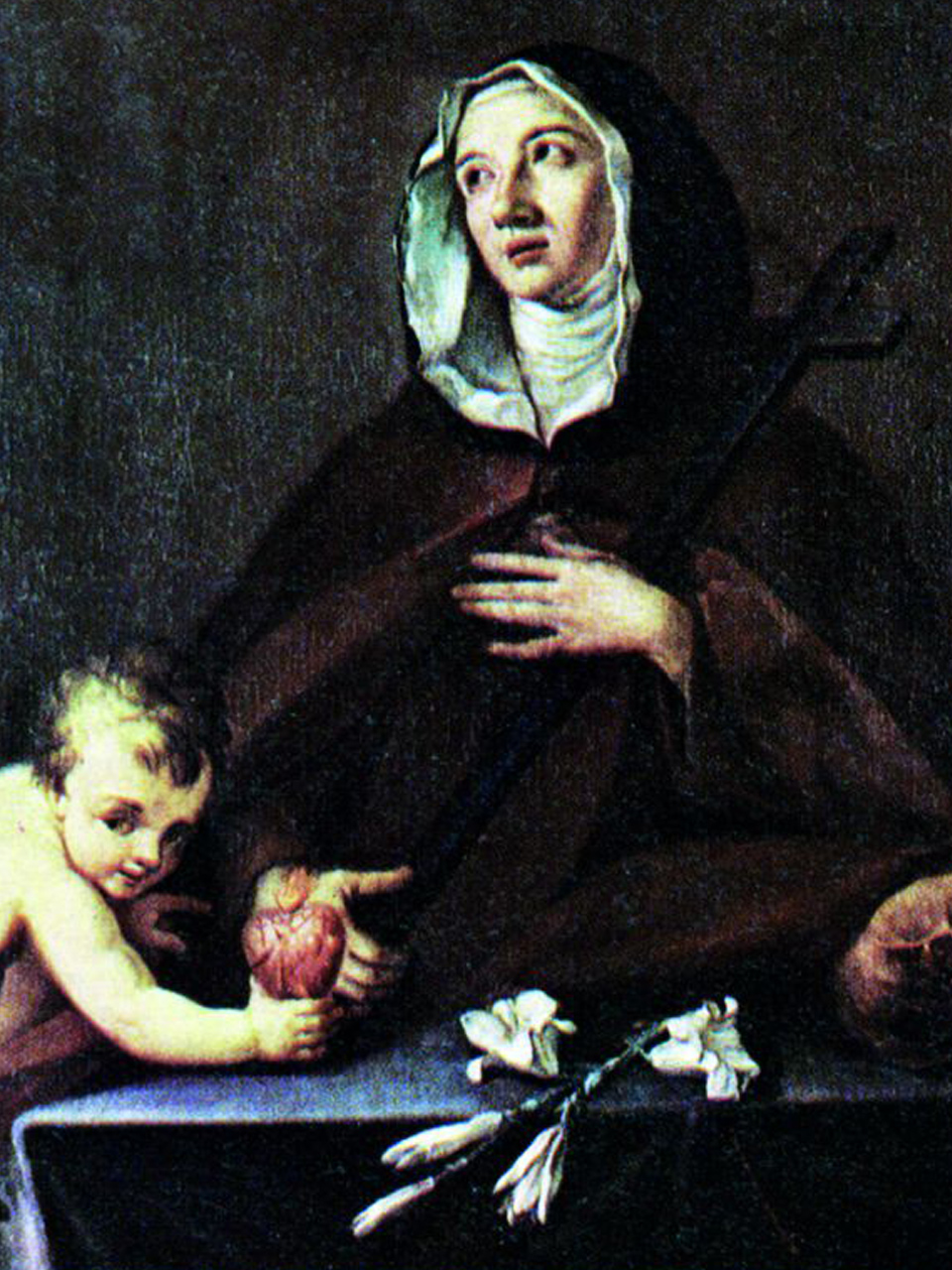
Lucrezia Elena was born in Pisa on Nov. 11, 1685, to Count Curzio Cevoli and Countess Laura della Seta. At the age of thirteen, she was entrusted to the nuns of San Martino in Pisa for instruction and education. She felt in her heart the vocation to religious life with ever greater desire and so, to the wonder of the world, she entered the monastery of the Capuchin Poor Clares in Città di Castello in the spring of 1703, taking the name Sister Florida. She was educated at the school and followed the example of St. Veronica Giuliani. In 1716, Veronica was elected abbess and Sister Florida vicar. Upon Veronica's death (1727), she succeeded her in the same office for 25 years. She governed the monastery with great wisdom and profit. She lived in the intensity of prayer, burning with zeal for the salvation of souls, full of charity toward the poor. For almost her entire life, she alternated between the offices of abbess and vicar. Blessed Florida Cevoli died on June 12, 1767. She was beatified by Pope John Paul II on May 16, 1993. |
Prayer
O God, the fountain of salvation, you inflamed Blessed Florida with your love, leading her along the path of self-denial and the cross to the heights of gospel perfection. May we experience the same love, and so advance in wisdom and knowledge of the mystery of the cross.
We ask this through our Lord Jesus Christ, your Son, who lives and reigns with you and the Holy Spirit, God, for ever and ever.
Amen
Amen.
|
Blessed Anizet Koplin Anizet Koplin was born Adalbert in 1875 to a Polish-German couple in Germany and was the youngest of twelve children. On Nov. 23, 1893, he joined the Capuchins and received the name Anizet, meaning "invincible." He was ordained a priest in 1900 and focused on service to the poor. In 1918 he became a mediator between the many poor families living in misery and the very rich. Regarded as the "Saint Francis of Warsaw," he could be seen walking the streets of Warsaw asking for charity for the poor. From the rich he asked for bread for the poor and from the poor he asked for prayers for the rich and for himself. On June 28, 1941, the day after the aerial attack on Warsaw, Anizet was arrested with twenty other brothers and shut in the prison of Pawiak, given the reason for his arrest as having read anti-National Socialist flyers and having expressed ideas against the new regime. He did not make use of his German descent in order to escape death. In addition to being stripped of their religious habits and their heads and beards shaved, the father guardian and brother Anizet were tortured to obtain forced confessions. Both refused to confess and Anizet remained faithful to his vocation. On Sept. 3, 1941, all were loaded into a cattle truck and taken to Auschwitz, where they were reduced to a prison number among thousands. Since Anizet was already sixty-six, he was assigned to the Invalids Block, which was adjacent to those destined for extermination. On Oct. 16, after a staged trial by jailers, they threw Anizet into a pit with other prisoners where they experienced a most cruel death by the corrosive acid, quicklime. Henry Krzystofik was born March 22, 1908 and was baptized Jozefon April 19, 1908. He donned the Capuchin habit on Aug. 14, 1927, and was ordained a priest on July 30, 1933. Upon completing his studies, he was assigned to the friary of Lublin in Poland, where he taught dogmatic theology at the local Capuchin seminary. Henry was then appointed rector of the seminary and vicar of the friary. He was later appointed guardian and rector, and once war broke out in 1939, the atmosphere became extremely tense. On Jan. 25, 1940, the German Gestapo arrested him among the twenty Capuchins from the Lublin friary and transported them to Sachsenhausen concentration camp near Berlin. On Dec. 14, 1940, he and his brothers were transferred to the concentration camp in Dachau, where they received their prison numbers. In July 1941, he was weak from exhaustion and unable to walk, so he was assigned to the camp hospital, which was the same as a death sentence. From the hospital he got a secret message out to his clerics: "I am terribly thin... I weigh 35 kilos. All my bones are painful. I am lying in bed as in the cross with Christ. I am glad to be with Him and suffer with Him. I am praying for you and offer my sufferings to God for you." He died Aug. 4, 1942, and was cremated in the ovens of Camp Twelve. Florian Stepniak was born Jan. 3, 1912, in Zdzary and ordained a Capuchin priest on June 24, 1938. He was a man of singular faith and kindness. He lived in the friary in Lublin and was arrested on Jan. 25, 1940. He was later deported to Dachau, and in moments of uncertainty and terror, he sustained the spirit of his fellow prisoners, earning the name "spiritual father" of the block of the condemned and "sun of the camp." On Aug. 12, 1942, he was removed from the camp into the "division of the invalids" and killed in the gas chamber. Fidelis Chojnacki was born Hieronim on Nov. 1, 1906, in Lodz, the last of seven children. At home he received an exemplary religious education, attending the parish of Holy Cross. On finishing school, he enrolled in the military academy, after which he worked for a year at the Department of Social Security and then at the Warsaw Central Post Office. He was a reliable employee. Meanwhile, he worked in the organization of Catholic Action with his uncle Fr. Stanislaw Sprusinski, where he was engaged in a campaign against alcohol and became aware of the need to deepen his interior life. On Aug. 27, 1933, he received the Capuchin habit and the name Fidelis. He was in his third year of theology studies when he was arrested and jailed for five months in Lublin Castle. On June 18, 1940, he was transferred with the whole group to the concentration camp at Sachsenhausen near Berlin. On Dec. 14, 1940, he was transferred in a convoy of priests and religious to the concentration camp of Dachau, where his arm was tattooed with his prison number. In the summer of 1942, Fidelis was transferred to the invalid block, but before leaving, he kissed and greeted his brothers with the words of St. Francis, "May Jesus Christ be praised. We will meet again in heaven." On July 9, 1942, Fidelis died in the camp hospital, and his body was cremated. Symforian Ducki was born Feliks on May 10, 1888, in Varsavia. He joined the Capuchins in 1918, first as an inquirer, making himself useful in the reorganization of the friary. He made his solemn profession on May 22, 1925. In Warsaw he first had the role of brother questor, busy with the collection of donations for the construction of the minor seminary of St. Fidelis. Then for a number of years he was appointed socius of the provincial minister. He was a simple and friendly character who never lost the spirit of prayer and devotion. He was arrested June 27, 1941, along with twenty-two Capuchins in the Warsaw friary. At first Symforian was interned in Pawiak and then transferred to the extermination camp of Auschwitz, where he was beaten to death on April 11, 1942, by the guards after making the sign of the cross over the bodies of slaughtered prisoners. On June 13, 1999, Pope John Paul II beatified 108 martyrs of Poland in the last world war. Among them were 3 bishops, 52 diocesan priests, 26 religious priests, 3 clerics, 7 lay religious, 8 female religious, and 9 laity. |
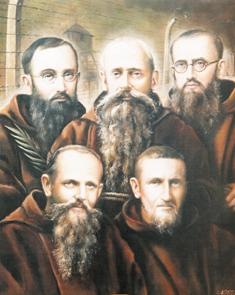 Priest and Martyrs of Nazi Persecution
Prayer
God our Father, you were pleased to adorn Blesseds Anizet, Henry, Florian, Fidelis, and Symforian with the palm of martyrdom. They burned with love for you in propagating the faith. Through their prayers grant that we may be firmly rooted in love and merit to experience with them the power of Christ’s resurrection.
We ask this through our Lord Jesus Christ, your Son, who lives and reigns with you and the Holy Spirit, God, for ever and ever.
Amen.
|
Father Jacques Ghazir Haddad was born on Feb. 1, 1875, in Ghazir, Lebanon, the third of five children. He studied Arabic, French, and Syriac at the College de la Sageese in Beirut. In 1892, he went to Alexandria, Egypt, to teach Arabic at the Christian Brothers' college, where he felt the call to priesthood. The following year he entered the Capuchin convent in Khashbau and was ordained a priest on Nov. 1, 1901. Father Jacques dedicated his life to preach the Word of God and to rescue the poor, the orphans, and the handicapped. His vocation was matured through his experience in life and his skills as a teacher, which helped him understand the difficulties and struggling of the Lebanese family during the turn of the century. By 1910, he had opened 230 schools for 7,500 students. Father Jacques walked all over Lebanon proclaiming the Word of God as an itinerant preacher from 1903 to 1914 and was given the name "the Apostle of Lebanon." He was also seen preaching in Syria, Palestine, Iraq, and Turkey. He built a chapel dedicated to Our Lady of the Sea and erected a great cross nearby. Father Jacques was willing to help anyone in need following in the footsteps of St. Francis of Assisi. With the help of his brother Capuchins and other helpers, he organized 15 soup kitchens and started 24 orphanages. He also founded the Franciscan Sisters of the Holy Cross of Lebanon to assist him in this mission. Father Jacques died on June 26, 1954, in Lebanon. He was beatified on June 22, 2008, by Cardinal Jose Saraiva Martins, prefect of the Congregation for the Causes of Saints. |
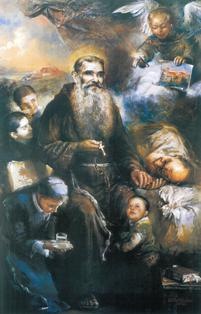 Priest, 1875-1954
Prayer
God our Father, You take care of the humble and are far from the proud. May the example and intercession of the Blessed Jacques help us to avoid pride and grow in humility on the road which leads to You.
We ask this through our Lord Jesus Christ, Your Son, who lives and reigns with You and the Holy Spirit, God, for ever and ever.
Amen.
|
Blessed Andrea was born as Hyacinth Bonaventure Longhin on Nov. 22, 1863, in Fiumicello di Campodarsego (Italy). He was the only son of Mathew and Judith Marin, poor and pious tenant farmers. At the age of 16, against the wishes of his father, he became a Capuchin novice, taking the name Andrew of Campodarsego. Andrea was a spiritual director for young religious at the Capuchin seminary at Udine; served as director of Capuchin teachers at Padua; served as director of theology students in Venice; became provincial minister at Venice; and was ordained bishop of Treviso. During Andrea’s time as bishop, he reformed the diocesan seminary, improving the quality of teaching and spiritual formation. He promoted spiritual retreats for the clergy and worked with lay groups, especially those involved in the Catholic social movement, supporting the right for workers to organize. During World War I he was imprisoned for refusing to ally himself with any of the war parties. Upon his release, he resumed his work of ministering in his diocese and rebuilding the city and the 47 parishes that had been destroyed and was eventually awarded the Cross of Merit war decoration. On June 26, 1936 in Treviso, Italy, Andrea died of natural causes following an eight-month illness. He was beatified on Oct. 20, 2002, by Pope John Paul II. |
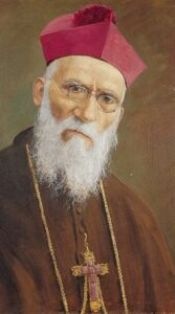 Bishop, 1863-1936
Prayer
Lord, God, you filled Blessed Andrea, your bishop, with ardent desire for unity among all Christians; grant that we through his intercession, may be renewed in spirit and heart so that we can spread your love to everyone and confidently work for the unity of all Christians int he bond of peace.
We ask this through our Lord Jesus Christ, your Son, who lives and reigns with you and the Holy Spirit, God, for ever and ever.
Amen.
Religious, 1660-1727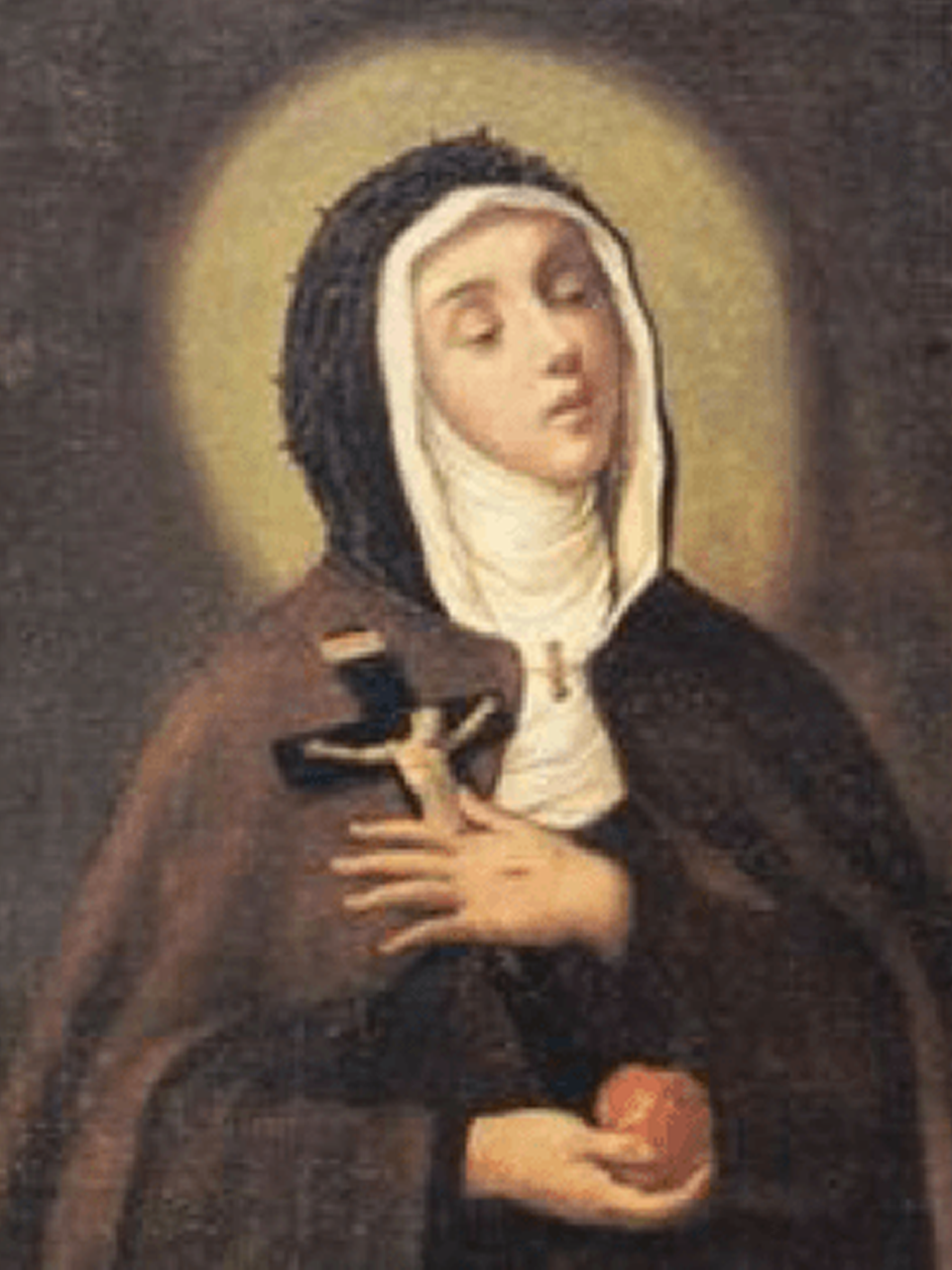
Veronica, born in Mercatello sul Metauro (Pesaro) in 1660, entered the Capuchin convent in Città di Castello at the age of seventeen. She spent her life in prayer and contemplation, striving to conform herself ever more closely to the crucified Christ. Her love for the mystery of the cross earned her the sacred stigmata. She recounted her profound mystical experiences in a diary that she wrote out of obedience to her confessor. She died a saintly death in 1727. She was beatified by Pope Pius VII in 1804 and canonized by Pope Gregory XVI in 1839. |
Prayer
Father, you made the virgin, Saint Veronica, a wonderful embodiment of your Son’s Passion. Through her example and prayer may we become conformed to Christ by humbly embracing the cross and so rejoicing when he is revealed in glory,
who lives and reigns with you and the Holy Spirit, God, for ever and ever.Amen.
|
Giulio Cesare Russo was born in Brindisi in 1559. He entered the Capuchins in Verona and took the name of Lawrence. He was ordained a priest and used his vast and profound knowledge of sacred Scripture in the service of Church reform after the Council of Trent. As a linguist he preached with great success among the peoples. He fulfilled numerous diplomatic missions and was elected vicar general of the Capuchin Order. Through all this, he remained a humble son of St. Francis. He died in Lisbon on his 60th birthday, on July 22, 1619. He was beatified on May 23, 1783, by Pope Pius VI and canonized by Pope Leo XIII on Dec. 8, 1881. Because of his many works, Pope John XXIII declared him Doctor of the Church on March 19, 1959, with the title “Apostolic Doctor." |
 Priest and Doctor, 1559-1619
Prayer
Almighty God, for the glory of your name and the salvation of souls you conferred on Saint Lawrence the priest the spirit of counsel and of fortitude. Grant us in the same spirit to know what we are to do, and through his prayers, to do what we have come to know.
We ask this through our Lord Jesus Christ, your son, who lives and reigns with you and the Holy Spirit, God, for ever and ever.
Amen.
|
Blessed Mary Magdalene Martinengo was born in Brescia in 1687 into the noble Martinengo family. As a young girl, she attended the best religious schools in the city and acquired a considerable classical education. At the age of eighteen, she entered the convent of the Capuchin Poor Clares of Santa Maria della Neve. She immediately dedicated herself to a life of penance and work, seeking out the most humble tasks, but also accepting positions of greater responsibility, such as mistress of novices and abbess. She suffered greatly, but was endowed by the Lord with heavenly charisms and a visible conformity to the crucified Jesus. She left behind several writings of high spirituality and mystical life. She died on July 27, 1737, and was declared blessed by Pope Leo XIII in 1900. |
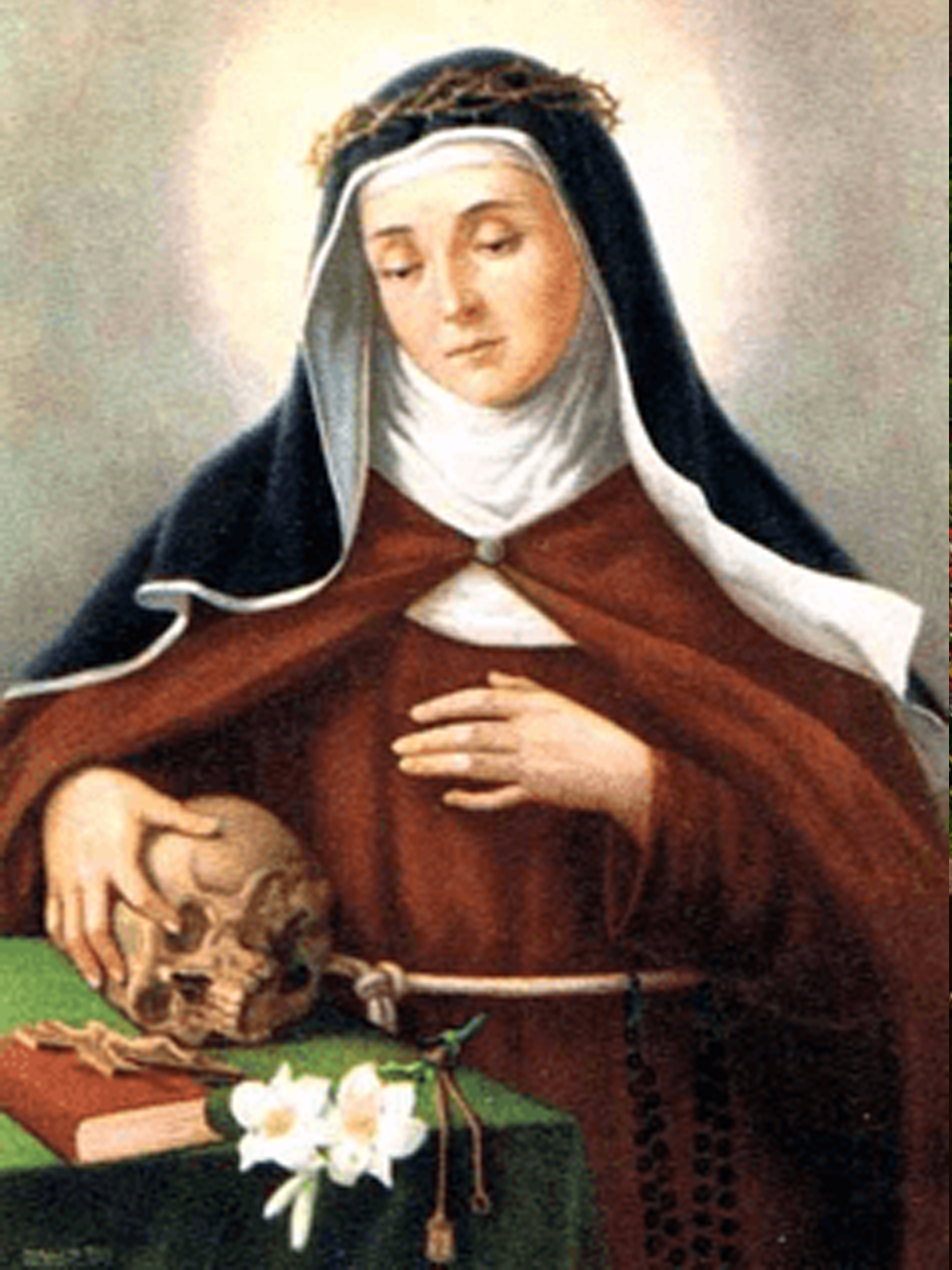
Prayer
God, you gave to Blessed Mary Magdalene the grace to imitate the poor and humble Christ. Grant, through her prayers,
that being faithful to our vocation, we may come to you by the way of truth and justice.We ask this through our Lord Jesus Christ, your Son, who lives and reigns with you and the Holy Spirit, God, for ever and ever.
Amen.
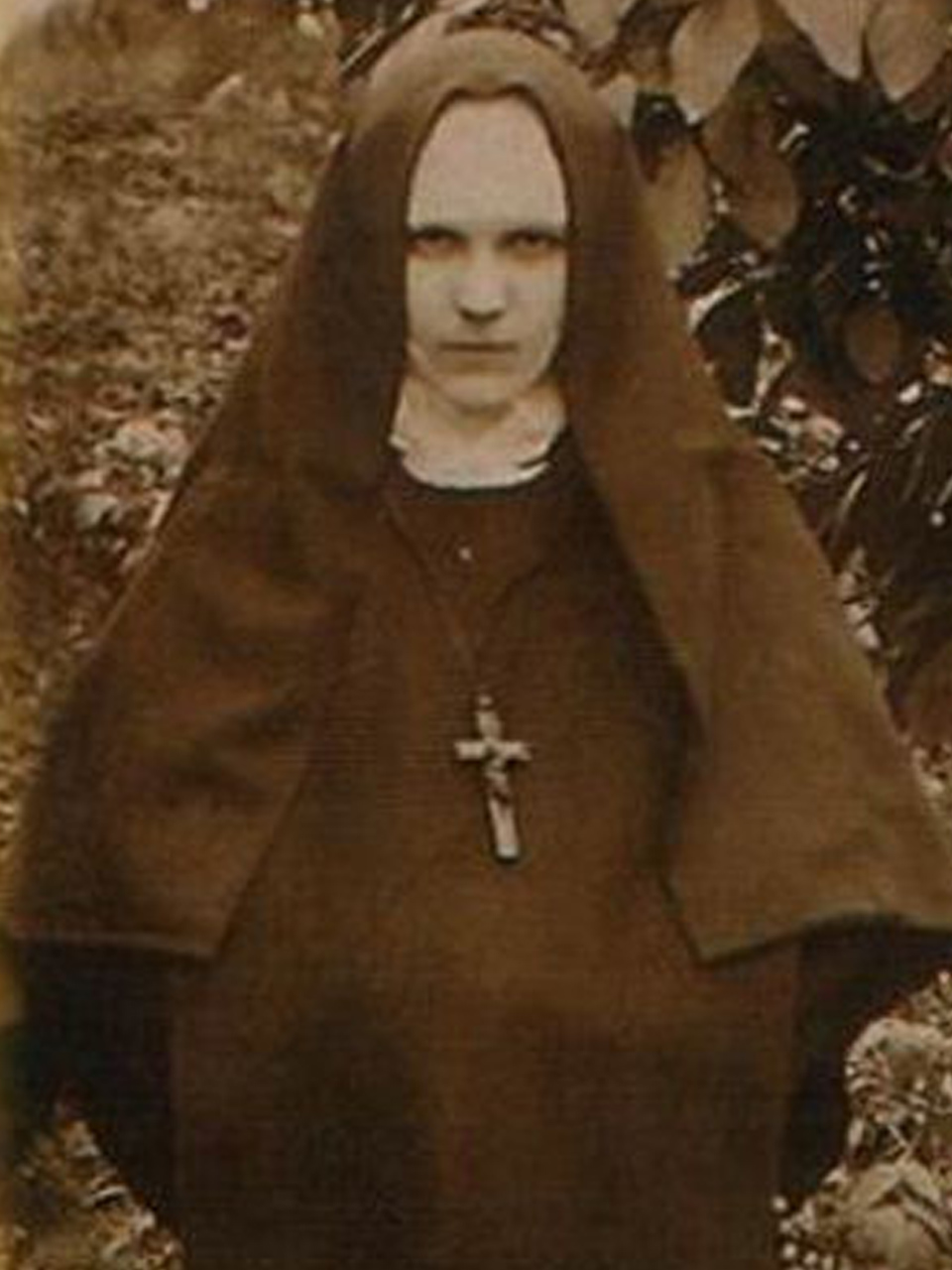 Religious and Martyr, 1902-1941 Religious and Martyr, 1902-1941
Maria Teresa Kowalska was born in Warsaw in 1902; she received the habit of the Capuchin Poor Clares in the convent of Przasnysz on Aug. 12, 1923. The following year, on Aug. 15, 1924, she took temporary vows and perpetual vows in 1927. Despite the illness that afflicted her, she was always very affable with everyone. She was known for her spirit of prayer and industriousness. On April 2, 1942, the Germans raided the convent, arrested all the nuns, and transferred them to the Dzialdowo concentration camp. She died on July 25, 1941. She offered her sufferings to God to obtain the release of the nuns, who were in fact freed two weeks after her death. She was beatified by Pope John Paul II on 13 June 1999 together with a group of 107 other martyrs of the Second World War. |
Prayer
God, who delight your Church with the memory of Blessed Maria Teresa, the virgin and martyr; through her intercession and example grant us strength and purity of spirit to follow Christ in the way of the cross, who lives and reigns with you, in the unity of the Holy Spirit, God, for ever and ever.
Amen.
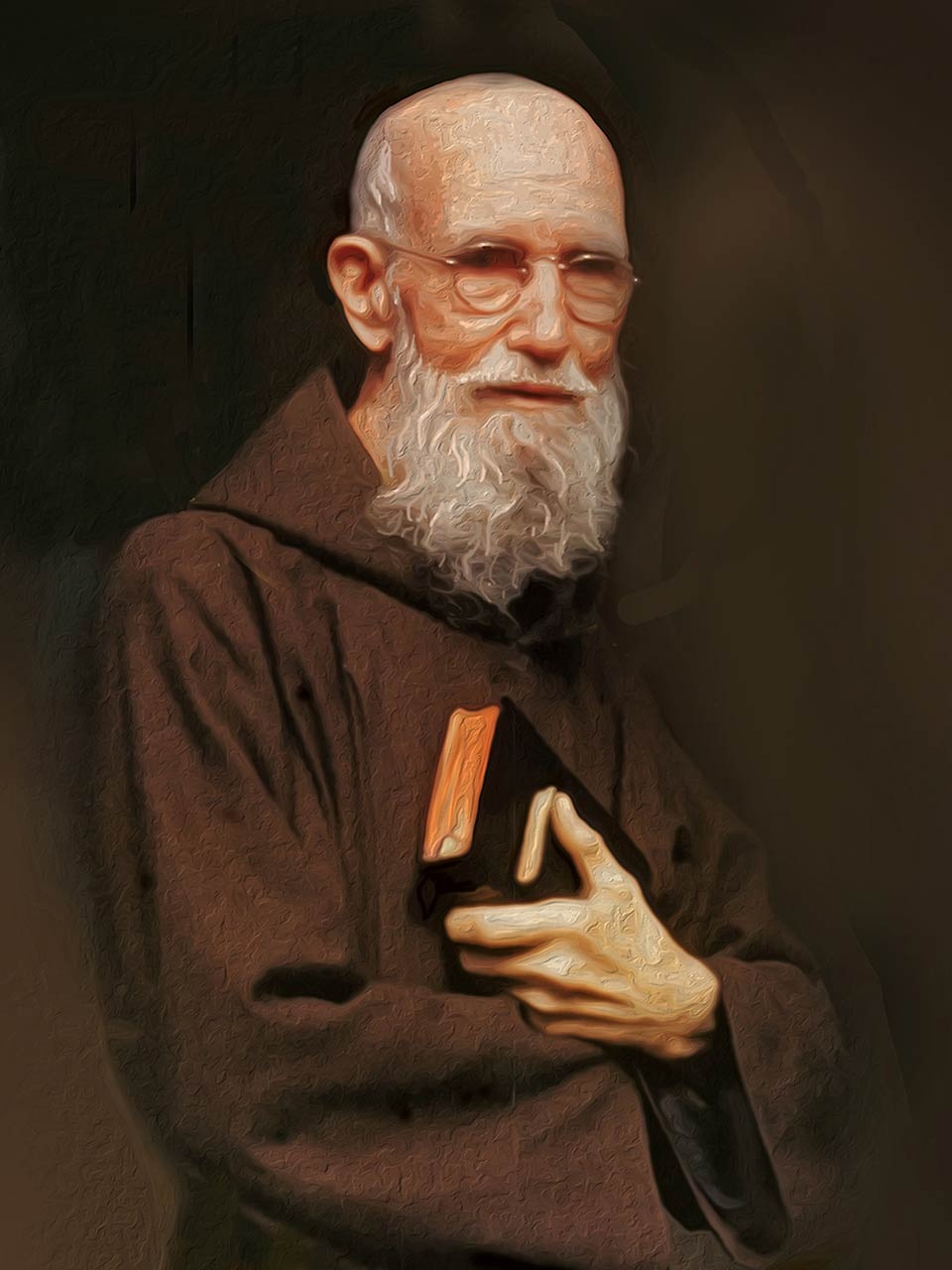
Religious and Priest, 1870-1957 On Saturday, Nov. 18, 2017, the Church formally recognized our Capuchin brother, Fr. Solanus Casey, as a blessed and so is on his way to being canonized. Father Solanus had ministered to the people of God in New York State, among other places, in the last century, and was well-known for his compassionate approach to all people and his ministry of healing. Bernard Casey was born on Nov. 25, 1870, in Oak Grove, Wis., to a large family of Irish immigrants. After working in many jobs, including as a streetcar operator and a prison guard, he entered the Capuchin order in Detroit in 1896 and was ordained a priest in 1904. Because of difficulties with his academic training, he was ordained as a “simplex priest” and so was not allowed to hear confessions or to preach. He was often assigned as the porter of the friary, answering the door and assisting the people who came there looking for assistance of many kinds. He soon became well-known for his patient and compassionate way of dealing with people and his holiness became apparent to all who met him. Many healings were attributed to his intercession during his lifetime. Blessed Solanus served at parishes in New York City and Yonkers, N.Y., and at the friary in Detroit. In Detroit, he established a soup kitchen during the Great Depression, which continues to feed the hungry today and is the center of a very large charitable operation in his name in that city. He was tireless in his work to help people in whatever way he could, always providing a sense of hope and of God’s care for each person. He was so confident that God was graning what was best for the person who came to him for his intercession that he often said, “Thank God ahead of time!” Blessed Solanus died on July 31, 1957, and over 20,000 people went by his coffin before his burial in Detroit. The Church celebrates our Capuchin brother liturgically on July 30. |
Prayer
O God, I adore You. I give myself to You. May I be the person You want me to be, and may Your will be done in my life today. I thank You for the gifts You gave Father Solanus. If it is Your will, bless us with the canonization of Father Solanus so that others may imitate and carry on his love for all the poor and suffering of our world.
As he joyfully accepted Your divine plans, I ask You, according to Your will, to hear my prayer for… [your intention] through Jesus Christ our Lord.
Amen.
|
|
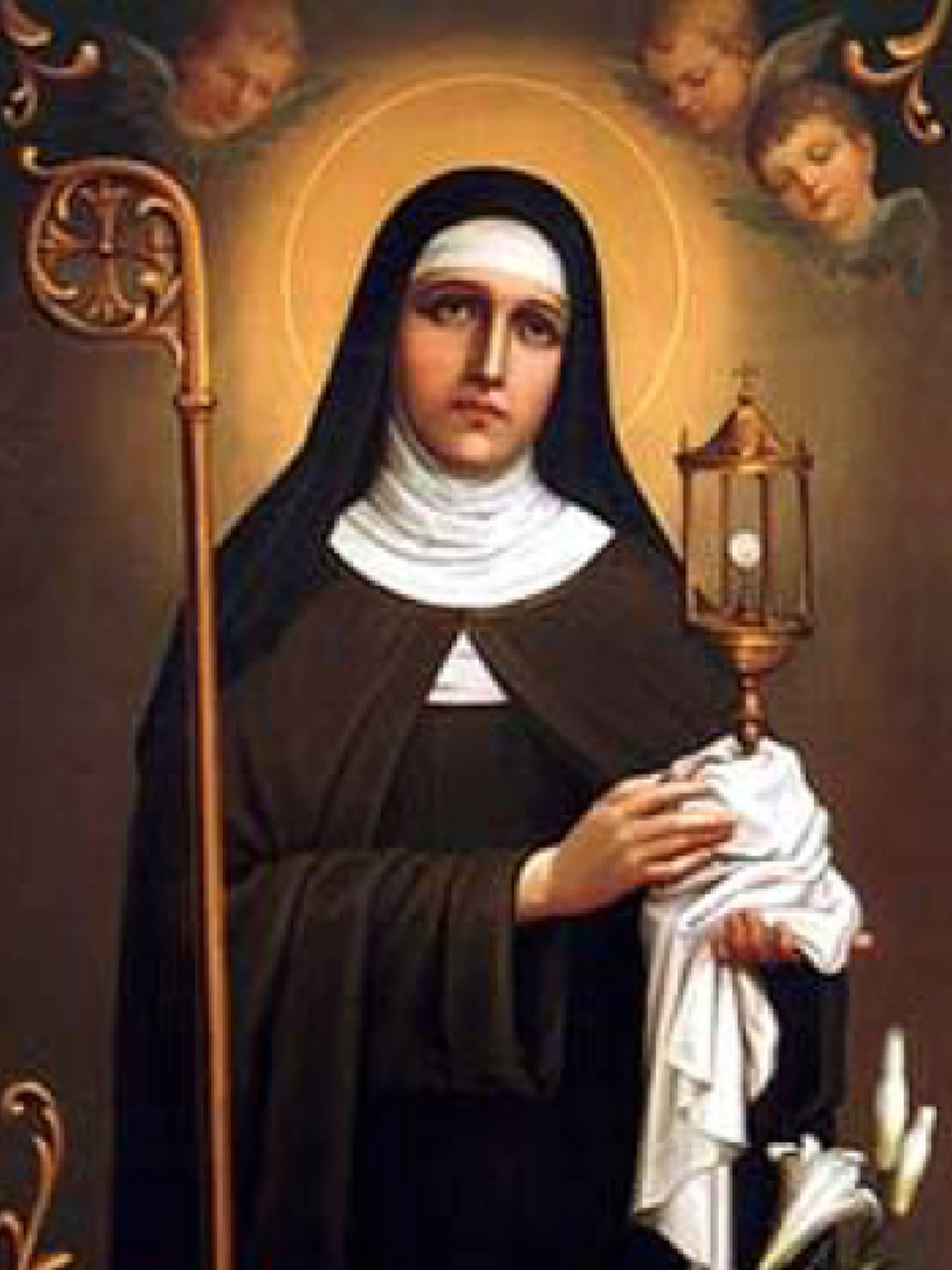 Religious and Founder of the Order of Poor Clares, 1193-1253
Prayer
God of mercy, you inspired Saint Clare with the love of poverty. By the help of her prayers may we follow Christ in poverty of spirit and come to the joyful vision of your glory in the kingdom of heaven.
We ask this through our Lord Jesus Christ, your Son, who lives and reigns with you and the Holy Spirit, God, for ever and ever.
Amen.
|
Blessed Marco was born as Carlo Domenico Cristofori on Nov. 17, 1631, in Aviano, Italy, to Marco Pasquale Cristofori and Rosa Zanoni. At the age of 16, he left home to walk to Crete where Venice was at war with the Ottoman Turks, planning to preach Christianity to Muslims and take his chance on martyrdom. After a few days, he stopped at a Capuchin house seeking food and shelter. His time at the monastery affected Carlo deeply, and in 1648 he became a Capuchin novice at Conegliano, Italy. He made his formal vows in 1649, taking the name Mark. On Sept. 8, 1676, while preaching at a monastery in Padua, Italy, Mark prayed over Sr. Vincenza Francesconi, who had been bed-ridden for 13 years; she was miraculously healed. Word spread, and while he continued preaching, Mark was soon besieged by people seeking miracles; many were healed and many were brought to the faith. He worked as a peacemaker throughout Europe, bringing unity to warring Catholic powers, educating them on the threat posed by the Ottomans and never letting them forget that all wise counsel was given by God. On Aug. 13, 1699, Mark died of cancer in Vienna, Austria. He was declared venerable on July 6, 1991, and beatified on April 27, 2003, by Pope John Paul II. |
 Priest, 1631-1699
Prayer
Lord, God, you filled Blessed Mark, your priest, with ardent desire for unity among all Christians; grant that we, through his intercession, may be renewed in spirit and heart so that we can spread your love to everyone and confidently work for the unity of all Christians int he bond of peace.
We ask this through our Lord Jesus Christ, your Son, who lives and reigns with you and the Holy Spirit, God, for ever and ever.
Amen.
|
Agathangelus Noury was born in France in 1598 and joined the Capuchin friars in 1619. He worked as a missionary from the year 1629 until his death. As superior of the mission in Cairo he worked zealously to bring the Copts back to the unity of the Church. When he was sent as superior to the new mission in Ethiopia in 1637 he summoned Cassian Lopes-Netto to assist him. Cassian was born in Nantes in 1607 and made profession in the Capuchin Order in 1623. After a few months of missionary activity, both were seized by the Abyssinians. As a reward for their apostolate both were crowned with martyrdom in the city of Gondar in the year 1638. They were beatified by Pope Pius X on Jan. 1, 1905. |
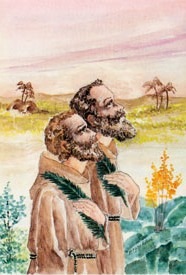 Priests and Martyrs
Prayer
God our Father, you made your holy martyrs Agathangelus and Cassian outstanding defenders of the Catholic Faith. Through their prayers grant that all nations may be united in the one true faith.
We ask this through our Lord Jesus Christ, your Son, who lives and reigns with you and the Holy Spirit, God, for ever and ever.
Amen.
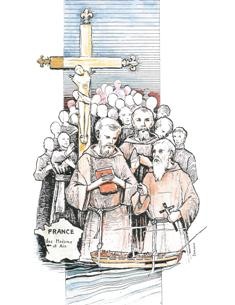 Priests and Martyrs of Rochefort Priests and Martyrs of Rochefort
Blessed John Louis Loir Blesseds Jean Louis Loir, Protaise Bourdon, and Sebastian Francois were martyrs of the French Revolution and among more than eight hundred priests and religious amassed in the infamous "pontons de Rochefort" moored near the island of Aix in 1794. Jean-Baptiste was born on March 11, 1720, to Jean-Louis Loir and Elisabeth Juliot, the sixth of eight children. At twenty years of age, in May 1740, he became a Capuchin. He received the Capuchin habit and the name Jean-Louis. He spent most of his religious life in one of two friaries in Lyon, Saint Andrew and Saint Francis, and at least twice held the office of superior. In 1791, the revolutionaries obliged priests and religious to swear allegiance to the civil constitution of the clergy. While Brother Jean-Louis was in Saint Francis Friary, the Constituent Assembly ordered an inventory of the persons and assets of every religious house. At the age of seventy-four, Brother Jean-Louis declared that he wished to remain with the order, but in October he left Lyon and withdrew to Bourbonnais. In 1793, an investigation was ordered and Brother Jean-Louis was transported to Moulins where he and sixty-six rebellious or refractory priests were shut away. On April 2, 1794, Brother Jean-Louis left Moulines in the last of three consignments to Rochefort. They reached Rochefort toward the end of April and Brother Jean-Louis was transferred to the ship "Deux-Associes." The captain and his crew were prison inmates, and onboard more than four hundred persons were literally crammed together in pitiful conditions. Although Brother Jean-Louis endured such sufferings, he fostered courage among his companions. It is even said that he was found dead on the morning of May 19, 1794, kneeling down in his place, as if still in prayer. Protaise Bourdon was born Jean Bourdon Protais on April 3, 1747, in Seez, France, and professed religious vows on Nov. 27, 1768. He was ordained a priest in 1775. Displaying a strong attachment to the true faith, Protais refused to take the oath required by the Civil Constitution of the Clergy. On August 26, 1791, he declared in writing his intention to persevere in his Capuchin vocation, refusing to return to secular life or to opt for voluntary exile. He was expelled from the friary in 1792 and on April 10, 1793, he was arrested, interrogated, and sentenced to imprisonment for celebrating Eucharist without government authorization, for having in his possession texts regarded as contrary to the principals of the Revolution, and for refusing to take the oath required by the Civil Constituion of the Clergy. He was condemned to deportation to Guyana, and in March 1794, was taken in chains from Rouen to Rochefort on foot. He arrived there on April 12 and was placed aboard the prison ship Deux-Associes and died, most likely of typhus, on Aug. 23, 1794. Sebastian Francois was born Louis-Francois Lebrun on Jan. 17, 1749, in Nancy, France, and professed religious vows on Nov. 24, 1769. Following ministry formation, he was ordained a priest. He refused to take the oath required by the Civil Constitution of the Clergy and was imprisoned on Jan. 26, 1794. He was sent to Rochefort and transferred to the prison ship Deux-Associes on May 5, 1794. When he became sick, he was moved to a hospital ship and died May 5, 1794. On Oct. 1, 1995, John Paul II recognized that this sacrifice was the grace of martyrdom. |
Prayer
God our Father, you were pleased to adorn Blessed John, Blessed Protaise, and Blessed Sebastian with the palm of martyrdom. They burned with love for you in propagating the faith. Through their prayers grant that we may be firmly rooted in love and merit to experience with them the power of Christ’s resurrection.
We ask this through our Lord Jesus Christ, your Son, who lives and reigns with you and the Holy Spirit, God, for ever and ever.
Amen.
|
Blessed Bernard was born on Nov. 7, 1604, as Dominic, the third of eight children of Menica and Joseph Peroni. The family was a poor farming family and by the age of seven Dominic was shepherding the family sheep. He entered the Capuchin Order at 23 years of age and received the name Bernard. He sought to acquire all the most beautiful Franciscan virtues by competing with those friars he considered the best. During his long life, he served as cook, infirmarian, questor, gardener, and porter. Through life's many misfortunes, Bernard cultivated a spiritual outlook that transformed every occasion into a prayer and spiritual opportunity. He was beatified by Pope Pius VI on May 25, 1795. |
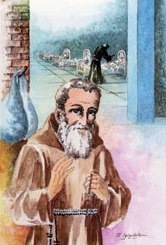 Religious, 1604-1694
Prayer
Lord, you gathered all your commandments into the one commandment of love of God and love of our brothers and sister; grant that imitating blessed Bernard, we may dedicate ourselves to the service of our brothers and sisters so that we may be blessed by you in heaven.
We ask this through our Lord Jesus Christ, your Son, who lives and reigns with you and the Holy Spirit, God, for ever and ever.
Amen.
|
John James Morel was born on June 12, 1739, in a small village near Fribourg, Switzerland. He was educated by the Jesuits and graduated summa cum laude in philosophy and humane letters. He entered the Capuchin Order at 23 years of age. Ordained a priest, he dedicated himself to assisting the clergy in the parishes and preaching popular mission. During the French Revolution, because of his unwavering loyalty to the Catholic faith and his refusal to take the schismatic oath prescribed by civil law, he, together with many others, was martyred on Sept. 2, 1792. Pope Pius XI declared him blessed, together with another 190 martyrs, on Oct. 17, 1926. |
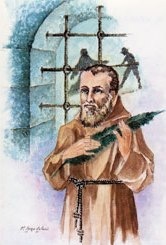 Priest and Martyr, 1739-1792
Prayer
O Lord, help us to love your Church with filial devotion for whose defense the Blessed Apollinaris, strengthened by your grace, faithfully fought till his death.
We ask this through our Lord Jesus Christ, your Son, who lives and reigns with you and the Holy Spirit, God, for ever and ever.
Amen.
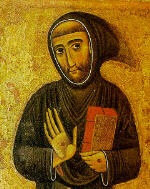
Founder of the Franciscan Movement From the earliest days of his conversion, Francis enjoyed a devotion to the crucified Christ. He was the first to receive the Stigmata or wounds of Christ on his body. In 1224, while immersed in meditation on Monte La Verna, Francis beheld the vision of the seraph, as a sequel of which there appeared on his body the five wounds. Pope Benedict XI permitted the Franciscan Order to incorporate into its liturgical calendar an annual celebration of Francis' stigmatization. The feast of the Stigmata of St. Francis is September 17. |
Prayer
O God, Fullness of Life, You allowed Saint Francis to experience the depth of Christ’s Love by branding his body with the marks of Christ’s passion and death. Transform us into living images of Christ, that we may share in the glory of the resurrection.
We ask this through Jesus Christ, our saving Lord, who lives and reigns with you and the Holy Spirit, God, forever and ever.
Amen.
|
Francis Mary Croese, baptized John Evangelist, was born in 1804. After entering the Order of Friars Minor Capuchin, he served for 40 years, beginning with begging for alms for the poor through the streets of Genoa. He zealously carried out his task of promoting the spiritual and temporal welfare of the people of Genoa. He acquired such a great reputation for sanctity that the Genoese called him “the holy father.” Francis had a special commitment to peacemaking. He sought to mend relationships among his friars, between families and even within individuals who were not at peace with themselves. This commitment was tested when he was struck by a rock and he picked it up and kissed it. By keeping his peace, he was able to pass it on to others, through his example. When cholera broke out in the year 1866, he offered himself as a victim for the sick and afflicted. He succumbed to the plague on Sept. 17, 1866. With Francis Mary's passing, the number of cases of cholera immediately began to abate, and the epidemic subsided. He was beatified by Pope Pius XI on June 30, 1929, and was canonized by Pope John XXIII on Dec. 9, 1962. |
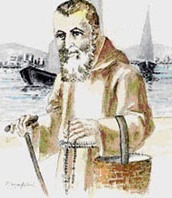 Religious, 1804-1866
Prayer
God, our Father, you made your servant Saint Francis Mary illustrious through every work of charity. Grant us through his prayer and example always to continue in sincere and humble service of our brothers and sister.
We ask this through our Lord Jesus Christ, your Son, who lives and reigns with you and the Holy Spirit, God, for ever and ever.
Amen.
|
Lawrence Maurice, the fourth of six children of Mary Elizabeth Balocco and Peter Paul Belvisotti, was born on June 5, 1686, at Santhia (Vercelli) Italy. When Lawrence was seven years old, his father died, and his mother entrusted his care and education to a local priest who fostered the youngster's vocation to the priesthood. Already a priest, he insistently sought to join the Capuchins and was finally accepted at 30 years of age, where he received the name Ignatius and began serving as sacristan. After five years, Ignatius was made the assistant master of novices, and after one year, he was given the roles of sacristan and confessor to the laity. Because he treated hardened sinners with utmost compassion and tenderness, he became known as "the father of sinners and of the depressed." After fourteen years, his ministry was interrupted when he contracted a mysterious eye ailment. After he partially recovered, he became head of chaplains for the king of Piedmont's armies, a position he held for two years. At the age of 60, Ignatius was reinstalled as confessor and spiritual director and remained in this service for twenty-four years. In his final years he made a special point to see the sick and very poor. He was beatified by Pope Paul VI on April 17, 1966, and canonized by John Paul II on May 19, 2002. |
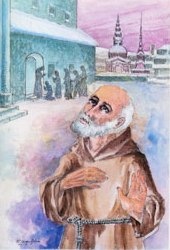 Priest, 1686-1770
Prayer
Almighty and eternal God, you wanted that our human nature be restored by obedience which makes up for what was lost by pride: grant that through the prayers and example of the priest blessed Ignatius, we may always be ready to do your will, since you teach us that this is the beginning of our salvation.
We ask this through out Lord Jesus Christ, your Son, who lives and reigns with you and the Holy Spirit, God, for ever and ever.
Amen.
|
Padre Pio was born Francesco Forgione in Pietrelcina, Italy, on May 25, 1887. At the age of five, he dedicated his life to God. From his early childhood he showed a kind of recollection of spirit and a love for the religious life. At the age of 15, he joined the Capuchin Franciscan friars, and at the age of twenty three he was ordained to the priesthood and became known as Padre Pio. The celebration of the Holy Mass was the center of his spirituality. He lived at San Giovanni Rotondo, Pietrelcina, in the Franciscan spirit of poverty with detachment from self, from possessions, and from comforts. After celebrating morning Mass on Sept. 20, 1918, while praying in thanksgiving before a crucifix, he received the Stigmata. Padre Pio was the first stigmatized priest in the history of the Church. Upon his death in 1968, the wounds were no longer visible, there was no scarring, and the skin was completely renewed. He died on Sept. 23, 1968, was beatified on May 2, 1999, and was canonized by Pope John Paul II on June 16, 2002. |
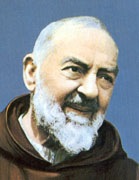 Priest, 1887-1968
Prayer
O Lord, we ask for a boundless confidence and trust in Your divine mercy, and the courage to accept the crosses and sufferings which bring immense goodness to our souls and that of Your Church. Help us to love You with a pure and contrite heart, and to humble ourselves beneath Your cross, as we climb the mountain of holiness, carrying our cross that leads to heavenly glory. May we receive You with great faith and love in Holy Communion, and allow You to act in us, as You desire, for Your greater glory.
O Jesus, most adorable heart and eternal fountain of Divine Love, may our prayer find favor before the Divine Majesty of Your Heavenly Father.
Amen.
|
Blessed Aurelio of Vinalesa Aurelio heads a group of 11 friars and five Capuchin nuns who were killed in various places within the Archdiocese of Valencia. After being expelled from their friaries, the religious sought refuge primarily with their relatives, hoping that there they would find some measure of security and even be protected by the people of their hometowns. Nonetheless, many of them met martyrdom at the hands of local revolutionary committees or through the connivance of the local people of the towns. Aurelio of Vinalesa was born Feb. 3, 1896, in Vinalesa, Spain. He was ordained priest in Rome on March 26, 1921. Throughout his religious life he was director of the Capuchin philosophical-theological School in Alicante. When circumstances forced him to leave the friary, he took refuge in the house of his parents, where he was arrested by the military on Aug. 28, 1936. Led at daybreak to the precipice of the Carraixet, he was shot and killed. Ambrose of Benaguacil was born May 3, 1870, and entered the Capuchin Order in 1890. He was ordained priest on Sept. 22, 1894. His responsibilities included preaching, ministry of confession, and spiritual direction. Ambrose was regarded as one of the better preachers in the Province of Valencia. In 1936, when religious persecution was unleashed in Spain, he took refuge in the house of Mrs. Maria Orts but longed to die for Christ. On Aug. 24, 1936, he was arrested and killed. Pedro of Benisa was born Dec. 11, 1876. He entered the Capuchin Order and received the habit on Aug. 1, 1893. Upon completing his studies, Pedro was ordained priest on Dec. 22, 1900, and dedicated himself mainly to the young and to catechesis. He abandoned the friary after July 18, 1936, and took refuge in the house of some friends and then in the house of one of his sisters. On Aug. 26, 1936, he was taken by the militia and killed. Joachim of Albocacer was born April 23, 1879, and was ordained priest on Dec. 19, 1903. In 1913 he went to Colombia as a missionary, and in 1925 he was appointed to superior of the Custody of regular Bogota. Joachim returned to Spain after his service and was then appointed director of the seraphic seminary of Massamagrell, where he tried to instill a missionary spirit. When religious persecution was unleashed, he first found refuge for his seminarians and then followed them. On Aug. 20, 1936, he was captured and killed by militants. Modesto of Albocacer was born Jan. 18, 1880, and received the Capuchin habit on Jan. 1, 1896. Upon completion of his philosophy studies at Orihuela and theology at Massamagrell, Modesto was ordained priest on Dec. 19, 1900. He served as a missionary in Colombia in the custody of Bogota and upon his return to Spain, he was appointed guardian for a number of years. He was known as a priest dedicated to preaching, to retreats and to spiritual direction. At the time of the revolution, he was guardian in Olleria, which was destroyed by fire. He sought refuge in the home of his sister, but then fled to la Masa dairy farm, where the militia captured and killed him. German of Carcagente was born Feb. 12, 1895, and received the Capuchin habit on August 13, 1911. When the religious persecution was unleashed, he forced himself to take refuge in the family home, leading a life devoted to prayer. On Aug. 19, 1936, he was taken by the militia and killed. Bonaventure of Puzol was born Oct. 9, 1897, and made profession within the Capuchin Order on Sept. 17, 1914. Bonaventure studied church law in Rome, and when he returned to Spain, he was devoted to teaching, preaching and the sacraments. He was a professor for the young Capuchins in Orihuela and taught at other centers of the Order. When forced to leave the friary, he took refuge in the home of his parents in Puzol. On Sept. 25, 1936, he was arrested along with his father and brother. All three were killed the next morning. James of Rafelbunol was born April 10, 1909, and entered the Capuchin Order at twelve years of age. He was ordained priest in Rome on March 26, 1932. After his doctorate in theology at the Gregorian University, James returned to Spain and was appointed vice-rector of the seraphic seminary at Massamagrell. At the outbreak of the religious persecution, he sought to protect the seminarians entrusted to his care and then sought refuge in his home town of Rafelbunol, where he was able to lead a normal life. When he received news that his brothers had been detained by the committee and that their lives were at risk, James presented himself to the committee in exchange for their freedom. On Sept. 26, 1936, he was imprisoned along with his brothers and killed. Enrique of Almazora was born Feb. 3, 1896, and ordained priest on March 26, 1921. Throughout his religious life he was director of the Capuchin philosophical-theological School in Alicante. He was professor in the seminary, director of the Third Franciscan Order, confessor, and preacher. When circumstances forced him to leave the friary, he took refuge in the house of his parents. On Aug. 28, 1936, he was arrested there by the military and killed at daybreak. Fidel of Puzol was born January 8, 1856 and became a professed Capuchin. He died September 28, 1936. Bernard of Lugar Nuevo de Fenollet was born July 23, 1867, and entered the Capuchin Order on February 2, 1900. After his profession, he was sent to the friary of Orihuela where he spent his whole life as a questor and tailor of the fraternity. When the friary was closed because of persecution, Bernard took refuge in his home town with relatives. He dedicated himself to prayer and works of charity. On Aug. 30, 1936, he was taken by members of the local committee and killed. Pacifico of Valencia was born Feb. 24, 1874. He was the son of laborers, with little opportunity for schooling. He received the Capuchin habit and then made simple vows on June 21, 1900. He was entrusted with the job of alms and tried to help with as many Masses as he could. When circumstances forced him to take refuge, he went to live with his older brother in the home of his parents. On Oct. 12, 1936, the militia surrounded the house looking for the religious. Pacifico went with them and was killed. The Capuchin friars are proud to have such courageous men and women as a part of their story. They lived as they died: totally devoted to the Lord Jesus and totally dedicated to one another. |
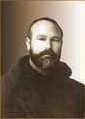 Priest With the Martyrs of Valencia
|
Innocent was born on March 19, 1844 to Francis Poli and Peter Scavlinoni. His father died when he was an infant, and his uncle, Francis, became like a second father to him, teaching him how to pray and work, and sharing with him his own outlook on life. He was already parish priest when he decided to join the Capuchins at 30 years of age. He immediately embraced the rigors of the lifestyle with enthusiasm. Although he was assigned to various offices during his religious life, he was never able to fulfill the expectations of his superiors. This helped him to become more humble and lead a more hidden life. Pope John XXIII beatified him on Nov. 12, 1961. |
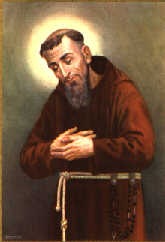 Priest, 1844-1890
Prayer
O God, you take care of the humble and are far from the proud. May the example and intercession of the blessed Innocent help us to avoid pride and grow in humility on the road which leads to you.
We ask this through our Lord Jesus Christ, Your Son, who lives and reigns with you and the Holy Spirit, God, for ever and ever.
Amen.
|
Giovanni Bernardone, known as Francis, was born in 1182, in Assisi, a small town in Italy. As the son of a wealthy cloth merchant, his early years were frivolous, but an experience of sickness and military service were instrumental in leading him to reflect on the purpose of life. His life changed radically after he encountered and hugged a leper. He became markedly devout and austere and began dressing in the poor man’s garb. Taking the Gospel as his way of life, he embraced radical poverty and joy, following the humble, poor and chaste Christ, according to the spirit of the Beatitudes. Together with his first companions, Francis went from place to place preaching the love of God and contributing to the renewal of the Church. Enamored of Christ, Francis focused his contemplation on the mysteries of the Incarnation and Christ’s passion and death. Two years before his death, he received the Stigmata as he prayed on the mountain of La Verna. He suffered for the rest of his life as he bore in his body the marks of the Stigmata and integrated his spirituality with a deep respect for every creature, which he expressed in his Canticle of the Creatures. He died on the evening of Oct. 3, 1226, and was canonized on July 16, 1228, by his friend, Pope Gregory IX. Francis' remains were moved to the Basilica of St. Francis of Assisi on May 25, 1230. |
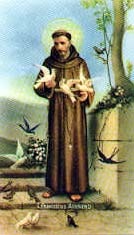 Religious and Founder of the Franciscan Movement, 1182-1226
Prayer
All praise be yours, O God, through our brother, Saint Francis, who embraced the gospel and was transformed into a living image of Christ. Guide us by your Spirit’s power, that we might be faithful to the gospel, and become Christ to all we meet.
We ask this through Jesus Christ, our saving Lord, who lives and reigns with you and the Holy Spirit, God, forever and ever.
Amen.
|
Seraphin de Nicola, baptized Felix, was born in Montegranaro, Italy, in 1540. His father and brother were masons, but Felix was neither strong nor skilled, so he was sent to work as a shepherd, a job he enjoyed because it allowed him to be by himself and pray. When his father died, his older brother needed Felix to help with the business. He was given tasks he could not complete, and his ill-tempered brother would beat him and belittle him. A friend urged him to accept his more spiritual side and suggested he speak with the Capuchins. He joined the Capuchins as a lay brother when he was eighteen. He served in various friaries as porter and questor. His life was noted for its unaffected simplicity, close union with Christ, and great love for the poor and for sinners. He died at Ascoli in 1604. He was canonized by Pope Clement XIII on June 16, 1767. |
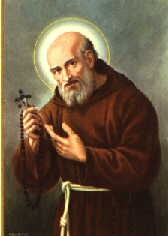 Religious, 1540-1604
Prayer
God, our Father, You endowed Saint Seraphin with the manifold gifts of the Spirit, and made him an admirable witness of the riches of Christ. Through his intercession make us grow in knowledge of You that we may walk faithfully before You according to the truth of the Gospel.
We ask this through our Lord Jesus Christ, Your Son, who lives and reigns with You and the Holy Spirit, God, for ever and ever.
Amen.
|
Blessed Honorat was born on Oct. 16, 1829, in Biala Podlaska (Poland). He was the son of Stefan Kozminski and Aleksandra Kahlowa and at baptism, was given the name of Wenceslaus. At the age of 11, Wenceslaus lost his faith. He was arrested in April 1846 and sent to prison. In a prison cell, Wenceslaus experienced a spiritual upheaval. His faith was renewed and after eleven months of imprisonment, he was freed, and in 1848 he entered the Capuchin Order, taking the name Honoratus. After professing vows and finishing his philosophical and theological studies, he was ordained a priest. As a priest, he began an enthusiastic and zealous apostolic activity in Warsaw. He was an indefatigable confessor and preacher. In his pastoral work he strongly promoted the Third Order of St. Francis, a group of lay men and women following the way of St. Francis. In 1867, Father Honorat offered himself to Christ through the hands of Mary as her "slave," giving himself over to her completely as an instrument for her hands. From that moment forward, the motto of his life was contained in a sentence expressing limitless trust: "Mary, I am completely yours -- Tuus totus." |
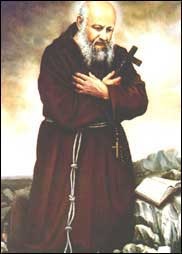 Priest, 1829-1916
Prayer
Lord, God, help us to imitate Blessed Honorat in his virtues and to practice charity on earth with word and deed.
We ask this our Lord Jesus Christ, your Son, who lives and reigns with you and the Holy Spirit, God, for ever and ever.
Amen.
|
Blessed Maria Lorenza Longo was born in Lérida (Spain) in 1463. Married to Joan Lonc, a jurist in the chancellery of Ferdinand the Catholic, she moved with him to Naples in 1506. Paralyzed following poisoning, she was healed in Loreto in 1510. Widowed, she devoted herself to the sick and in 1519, together with Ettore Vernazza, she founded with her assets the hospital of Santa Maria del Popolo, known as the Hospital of the Incurables, for syphilis sufferers and women in difficulty. In 1535, on the advice of St. Cajetan of Thiene, she founded the monastery of Santa Maria in Gerusalemme, adopting the first rule of St. Clare of Assisi and the constitutions of St. Colette, receiving papal approval and the spiritual care of the Capuchins in 1538. She died at the age of 76, in October 1539. She was beatified in Naples by Pope Francis on Oct. 9, 2021. |
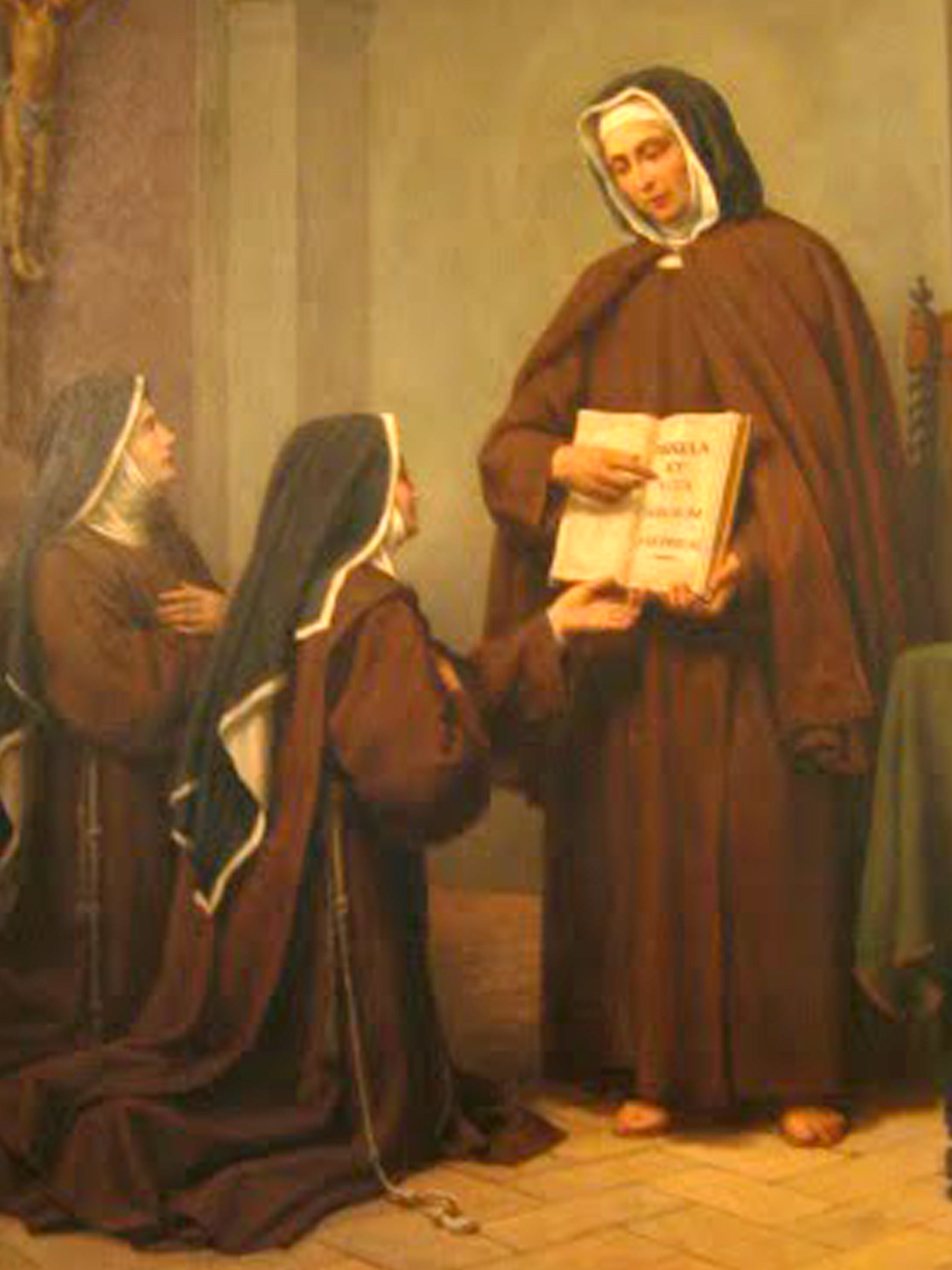 Religious and Founder of Capuchin Poor Clares, 1463-1539
Prayer
Almighty and eternal God, who, in blessed Maria Lorenza gave the Church a shining example of contemplation and loving kindness, grant that we too may follow Christ, poor and crucified, to come with her into the glory of your kingdom.
Through our Lord Jesus Christ your Son, who lives and reigns with you, in the unity of the Holy Spirit, God, for ever and ever.
Amen.
|
During the religious persecution of the Church in Spain in 1936, the Capuchin Poor Clare sisters Mary of Jesus, Mary Veronica, and Mary Felicity Masiá Ferragut, from the Monastery of Agullent; Elizabeth Calduch Rabira from the Monastery of Castellon; and Milagro Ortells Gimeno from the Monastery of Valencia, faithful to their religious consecration, offered their lives in witness to the faith, thereby joining the crown of martyrdom to that of virginity. They were beatified by Pope John Paul II in March 2001. Maria Teresa Ferragut Roig was born Jan. 14, 1853, in Algemesi, Spain. She married Vicente Silverio Masià, a man of deep faith and constant prayer, on Nov. 23, 1872. They had nine children, three of whom became Capuchin Poor Clare Nuns (Maria Jesus, Maria Veronica, Maria Felicidad), and a fourth became a discalced Augustinian nun (Josefa de la Purificación). Maria Teresa went to Mass every day and was very devoted to the Blessed Sacrament, Our Lady, and the Sacred Heart of Jesus. She promoted charitable works, especially through the Society of St. Vincent de Paul, of which she was also president. At the outbreak of the Spanish Civil War and the religious persecution that spread throughout Spain in the 1930s, Maria Teresa had her four religious daughters at home. They were discovered, and their mother was imprisoned with them because she refused to leave them on their own. On Oct. 25, 1936, they were all slain near Cruz Cubierta. Maria Teresa asked to be shot last so as to be able to encourage her daughters in their faithfulness to the Lord. They all cried, "Long live Christ the King!" and forgave their slayers.
|
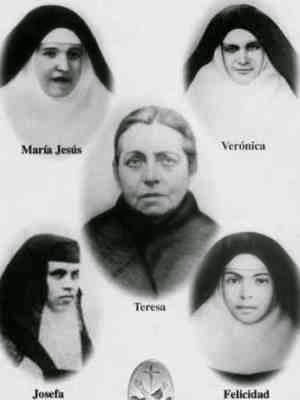 Religious and Martyrs
Prayer
Almighty God, you gave to Blessed María Jesús and her companions the double crown of virginity and martyrdom. Grant that through their intercession we may preserve in genuine charity and experience the power of the resurrection of Christ, who lives and reigns with you and the Holy Spirit, God, for ever and ever.
Amen.
|
He was born Luke Anthony Falcone on Oct. 19, 1669, in Acri, Calabria, Italy. At the age of 18 he decided to become a Capuchin Franciscan, but oppressed by doubts and uncertainties, he left the novitiate twice; the third time he remained. He professed vows in 1691 and took the name Angelo. He confided to his confessor that the way he resolved the constant struggle with temptation was through fervent prayer and harsh, personal penances. He was ordained a priest and dedicated himself to preaching. Elected provincial superior, he was called “the angel of peace” for his way of governing the province. Pope Leo XII beatified him on Dec. 18, 1825, and was canonized by Pope Francis on Oct. 15, 2017. |
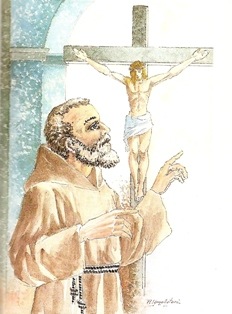 Religious and Priest, 1669-1739
Prayer
O God, you gave to your priest Saint Angelo the grace to call sinners to penance through his words and miracles; grant through his intercession that we may be sorry for our sins and gain eternal life.
We ask this through our Lord Jesus Christ, your Son, who lives and reigns with you and the Holy Spirit, God for ever and ever.
Amen.
Priests and Martyrs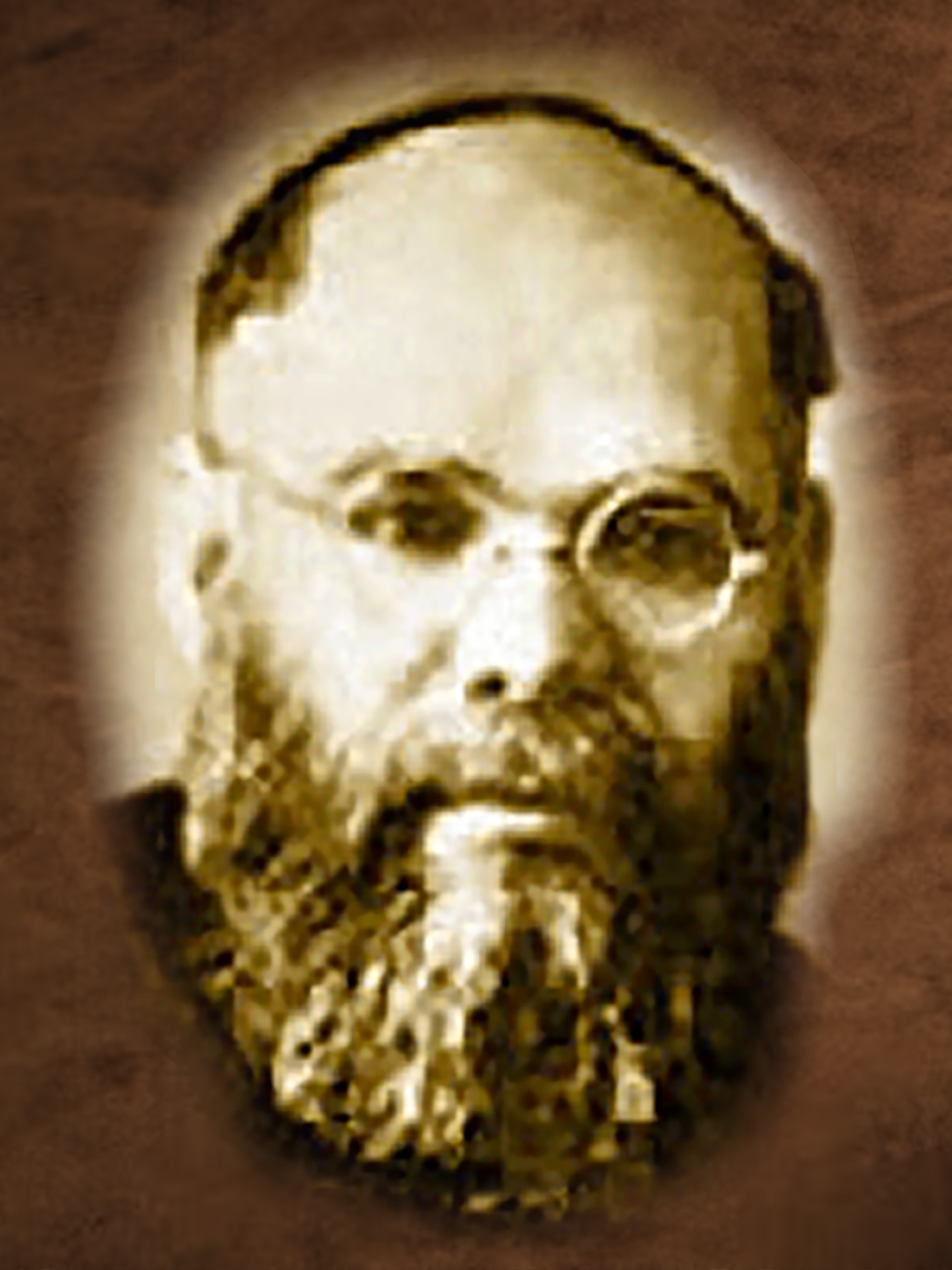
Blessed Andrew of Palazuelo, originally Miquel González Gonzáles, was born on May 8, 1883, and was baptized the same day. At the age of sixteen, he entered the Order of Friars Minor Capuchin as a novice, receiving the habit in the Bilbao convent. This was on July 31, 1899, a significant date because on the same day in 1936 he would be killed in hatred of the faith. After completing his novitiate year, he made his temporary profession, while on Aug. 2, 1903, he consecrated himself forever to the Lord by making his perpetual profession. On Sept. 19, 1908, he received priestly ordination and at the same time was sent as a teacher to the Capuchin friars' study in El Pardo, Madrid. Later transferred to Leon and subsequently to Bilbao, always as a teacher, in 1920 he returned to Madrid as provincial archivist and chronicler, a position he held, except for a brief period in Gijón, until his death. A provincial definitor, writer, and sought-after spiritual director, during the tragic events of the Popular Front, on July 20, 1936, he was forced to leave the Madrid convent, finding lodging with other religious in a guesthouse for priests. Maintaining his usual serenity, but declaring that he had done no harm to anyone, on July 30, 1936, he was arrested and taken away from the guesthouse. Without trial, but solely because he was a religious and a priest, on the night of July 30-31, 1936, he was massacred and killed. On the morning of July 31, his body was found in San Isidro Park. Taken to the Almudena cemetery, he was buried in a place that has not been possible to identify. Blessed Andrew is the first of 31 Capuchin friars who suffered martyrdom in the same year at the hands of the Popular Front militia. We give their names below:
* On Oct. 13, 2013, another Capuchin friar, included in another process, was also beatified. |
Prayer
Eternal and omnipotent God, who conceded to Blessed Andrew of Palazuelo and his companions the grace to die for Christ, help our weakness, so that, as they did not hesitate to die for you, we too can remain strong in the confession of your name.
Grant this through our Lord Jesus Christ, your Son, who lives and reigns with you and the Holy Spirit, God, forever and ever.
Amen.
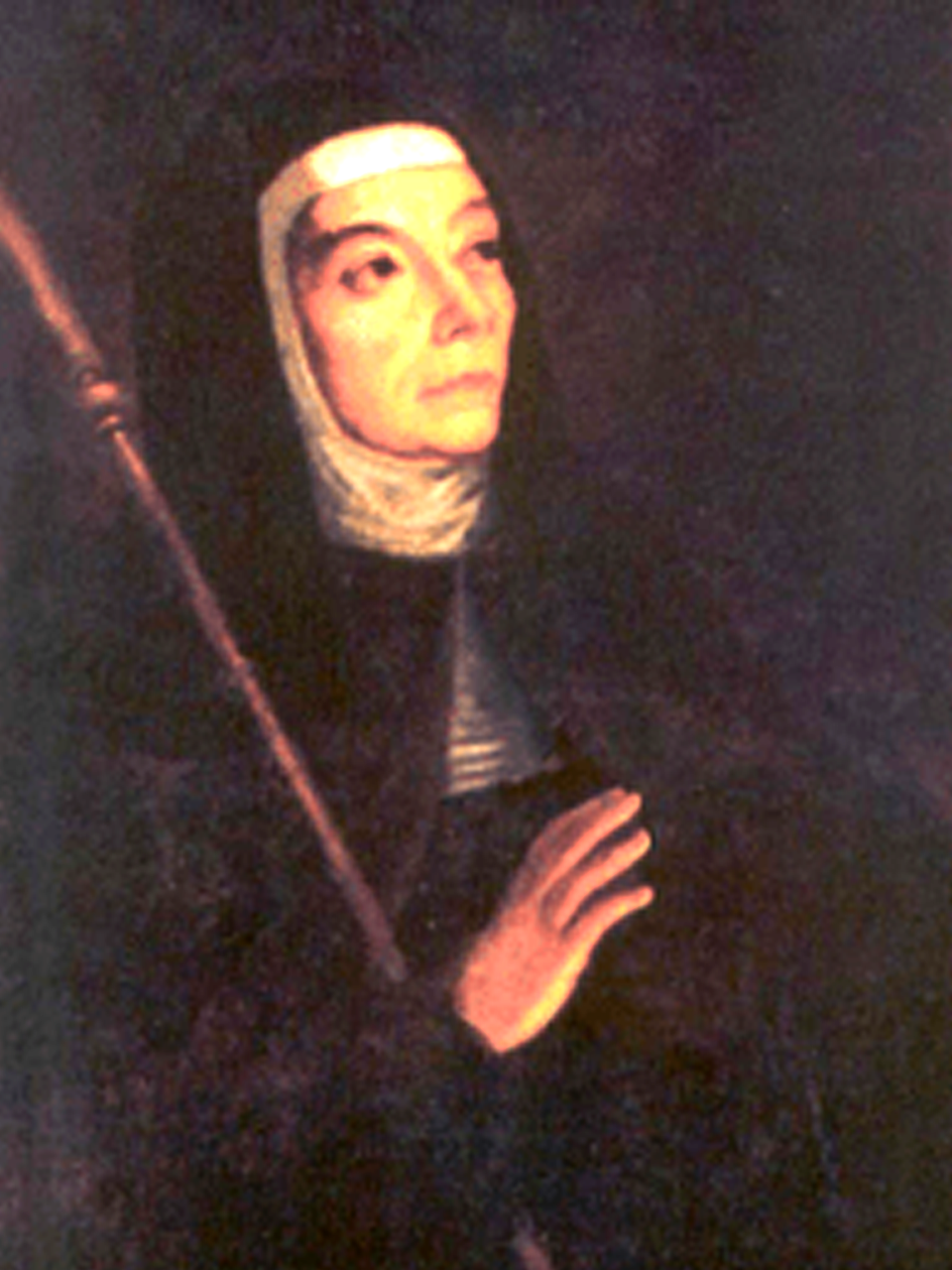 Religious, 1592 – 1665 Religious, 1592 – 1665
Angela Maria Astorch was born in Barcelona on September 1, 1592. Having lost her father and mother at a young age, she entered the Capuchin Poor Clares monastery in Barcelona. She made her religious profession there on September 8, 1609. At twenty, she was sent to Zaragoza as a novice mistress; she was later elected abbess of this monastery and governed it until the foundation of the monastery in Murcia in 1645. Her devotions: the Child Jesus, the Sacred Heart, the Passion, but especially the Eucharist. She saw the real presence of Christ as the epitome of all Christology: the Incarnation, Birth, Death, and Resurrection of the Lord. For her, the presence of Mary was inseparable in these mysteries of Christ, whose closeness she sometimes experienced in the most intimate part of her soul. Physical and spiritual trials further deepened her soul's love. Her mystical experiences are recounted in the writings she left by order of her confessors. She died on December 2, 1665. She was beatified on May 23, 1982 by John Paul II. |
Prayer
O God, rich in mercy to those who call upon you, you gave Blessed Maria Angela the grace to fathom in ways beyond words the secrets of your riches in the daily liturgy of praise.
Through her intercession, may all that we do be done for you, for the praise of your glory, in Christ Jesus your Son, who lives and reigns with you and the Holy Spirit, God, for ever and ever.
Amen.
