



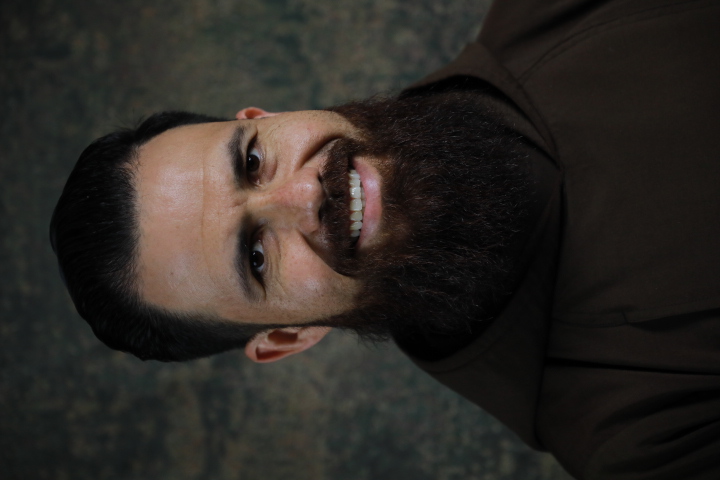
by Br. Francisco Serrano
 Growing up in Mexico, I was privileged to experience my faith deeply embedded in my culture. Christmas stood out as one of the most significant celebrations in my town. Our Catholic identity brought us all together. Even in public schools, we were encouraged to pray and decorate our classrooms, eagerly embracing the joyful anticipation of the Christmas season. Every family in town proudly showcased a nativity scene, displaying their creativity with whatever resources they had. There was an enchanting quality to Christmas, as we creatively mimicked American decorations to capture the magical essence of a winter wonderland. In school, we learned to make paper snowflakes, snowmen, holly branches, and Santa Clauses. Though these traditions were foreign to us—having never experienced snow in our region and Santa never being the one who brought us gifts—we embraced them with enthusiasm and imagination.
Growing up at my grandmother’s house, I loved helping her set up the nativity scene. We would go to the outskirts of town to collect natural plants and rocks to decorate the manger. This was very special to me because, from that moment on, there was a unique feeling at my grandmother’s house and throughout the entire town. From a young age, I learned that doing something for God required sacrifice and needed to be done to the best of our ability. I understood this as we scouted the outskirts of our town, gathering plants, small rocks, and pebbles to give the manger a natural look. This experience provided me with a palpable opportunity to connect more deeply with the reality of the world that God entered through the Incarnation.
At a young age, I learned to appreciate the simplicity of Jesus and the struggles He endured out of love for me. When the time came to place each figurine in the nativity scene, my grandmother would tell me stories that made the figurines come alive. Each figurine’s story was interconnected and transformed by the baby in the manger. Through my grandmother’s stories, I realized how special and powerful the baby in the manger was, as His birth brought joy to everyone, including me. My grandmother’s house had a certain glow that radiated from the manger, bringing joy to all of us, especially to me. Each year, I became more eager to help set up the nativity scene because the stories touched me differently, to the point where I could see myself in some of the figurines.
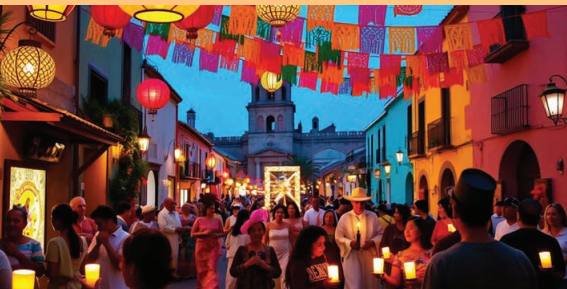
In preparation for Christmas, my whole town celebrated Las Posadas, a novena celebration that culminates on the 24th with the midnight Mass. For nine days, all the kids in town were invited to celebrate Las Posadas, starting at the church with prayers of the rosary. After the rosary, we were divided into groups based on our neighborhoods to go to the house that was hosting the celebration that night. Three kids from each group were chosen to dress up as Joseph, Mary, and the angel, who accompanied them on their journey to Bethlehem. The walk from the church to the host house gave us a sense of the long, cold, and difficult journey the Holy Family endured in search of a place to give birth to the baby Jesus.
Among us kids, everyone wanted to be one of the three who dressed up, because the family hosting the celebration treated them especially well. The family hosting felt honored that the Holy Family had “visited” their home. This celebration taught me so much, as it was another way to retell the story of the Holy Family through songs, Bible readings, and prayers. The Posadas represent the story of Joseph going from inn to inn in Bethlehem, searching for a place for the Blessed Mother to give birth. All the inns were full and indifferent, even when Joseph explained who they were and who the baby in the womb was.
plained who they were and who the baby in the womb was. This story deeply moved me because I realized how much rejection the Blessed Family faced from their people. It served as a wake-up call to the reality of how cruel people can be to those in need. Yet, at the same time, we sang a song where we offered our hearts as a place for the baby to be born. Even though I was young and did not fully understand what that meant, I knew I was offering to be Jesus’ friend. This celebration highlighted values that were deeply ingrained in the fabric of my town. People were more hospitable and charitable, fostering a sense of unity and joyful hope as we awaited the Christmas season. People shared the little they had, and we were grateful for the small bag of candy we received.
Living in a small town of about 10,000 people, we shared many commonalities—not just in faith and culture but also in family stories. This is something I treasure, especially now that I live in America and have experienced cities like New York and Boston. Often, I do not even know who my neighbors are. There is something special and meaningful in being able to share your joys and sorrows not only with those who live with you but also with your neighbors
I pray and hope that this Christmas will be a time for us to share the joy brought by the birth of the baby who has transformed the lives of so many. May this season inspire us to renew and share our Christian values and morals with those around us.