



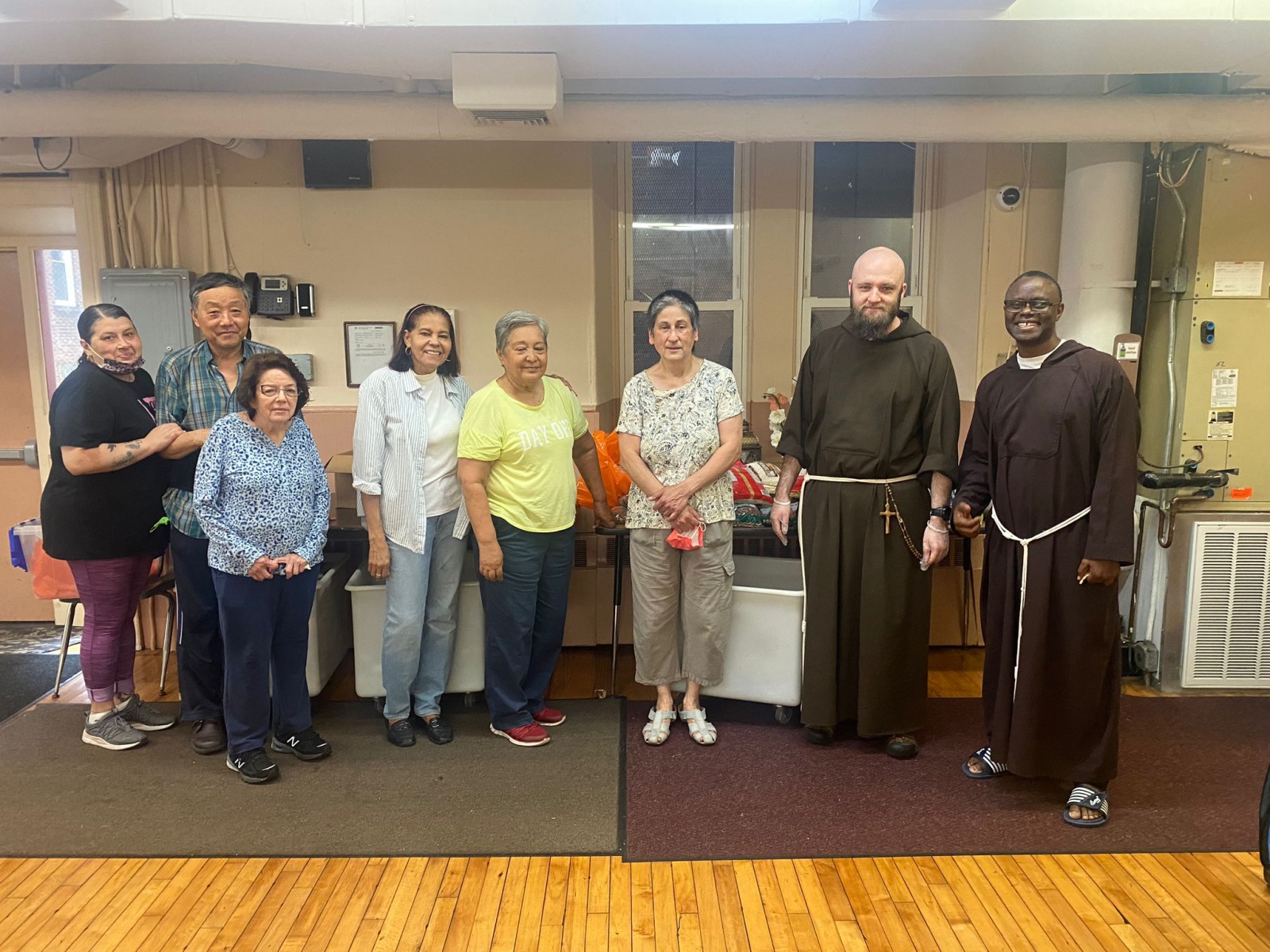
Giving the hungry something to eat is core to the corporal works of mercy. It is one of the ways we can minister to Jesus Christ himself, for he says that when we give food to the least among us, we give it to him (see Matthew 25:31-46). As Christ gives himself to us in simple food and drink in the Holy Eucharist, so we are to give ourselves to others.
The food pantries at our Capuchin parishes are feeding the poor and also feeding Christ, especially in New York City.
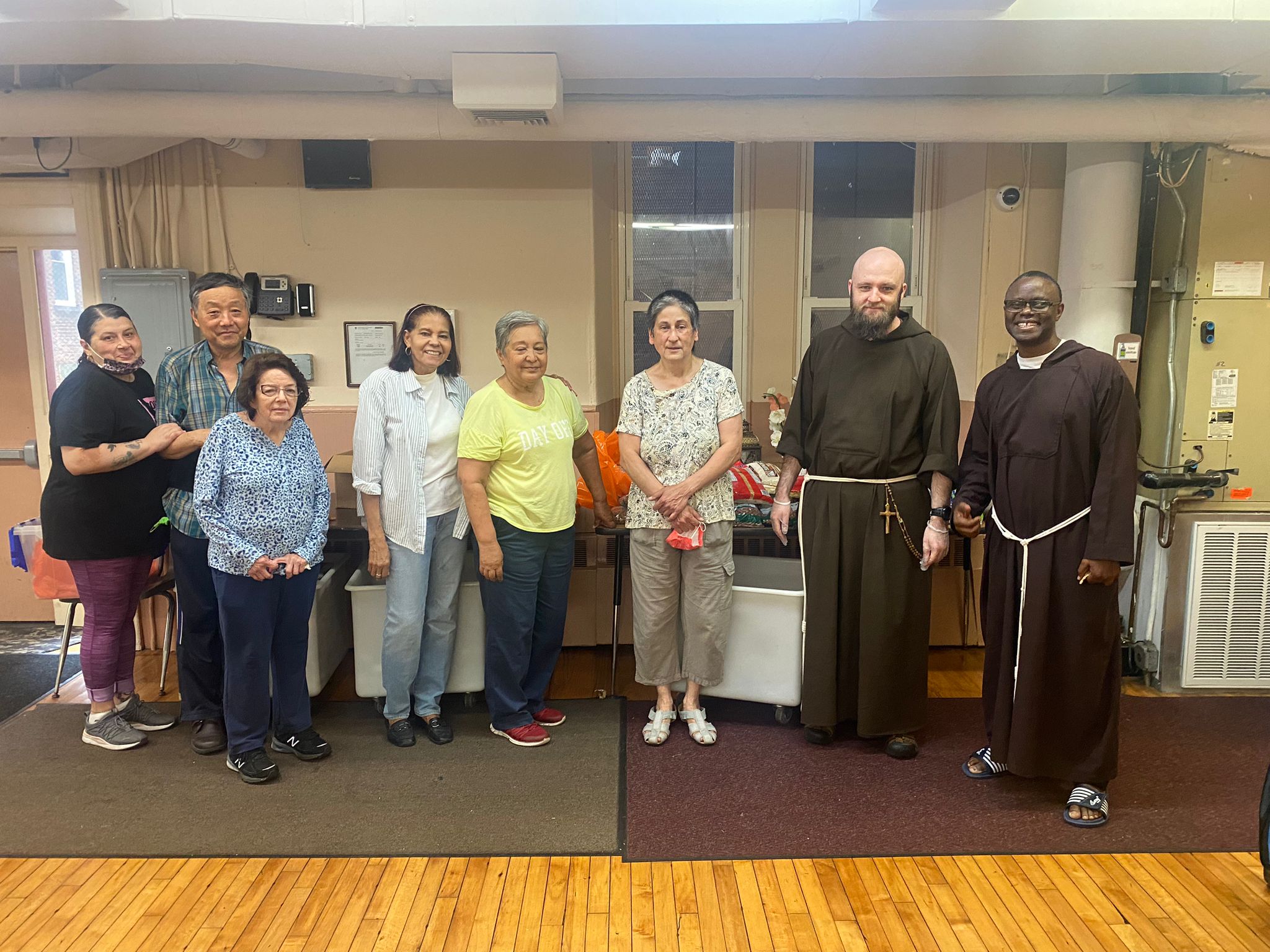
The mission of Our Lady of Sorrows’ food pantry is to provide nutritionally balanced non-perishable and perishable food to families and individuals living in the Lower East Side of Manhattan who are in need and struggling with food insecurity. Families and individuals come from diverse backgrounds and struggle every day to survive in a city that is always changing.
“Our clients struggle with physical as well as mental challenges,” said Nivia Mendez, coordinator of the parish food pantry. “Many cannot get benefits because they do not fulfill the criteria and requirements for receiving benefits. Our clients live on extremely limited budgets. They cannot afford to buy extras such as personal care items and often cannot afford to purchase lifesaving medications. Their resources are limited, and they have had to make difficult decisions regarding what items they can purchase with limited funds. After paying rent and covering necessary expenses they have very little if no money for food or anything else. This is a common situation our clients deal with daily. Since the pandemic, their circumstances are more challenging because of the rising costs of everything.”
Our Lady of Sorrows’ food pantry is a safe space where people can find common ground, as the volunteers and the food pantry coordinator can relate to many of the challenges their neighbors face. “People need someone to listen to and understand what they’re going through and who could assist them to have stability and independence,” Mendez said.
Fr. Thomas McNamara, the pastor; Fr. Benedict Ayodi, the parochial vicar; and the other Capuchin brothers at Our Lady of Sorrows Friary fully support the pantry. At times, the friars help with distribution at the pantry.
The pantry’s clientele is mostly Asian, African American, and Latino, with a small percentage of immigrants from other parts of the world who come regularly, once a month, to the food pantry. “Recently we have had an influx of about 10 to 15 percent of migrants calling to receive food bags. We have a bilingual staff, which helps in communicating with the new and current clients. Most of our volunteers speak English and Spanish fluently with a Chinese volunteer who assists with the Asian clients,” Mendez said.
“As servants of God, we make every effort to understand and fulfill the needs of our community in the Lower East Side of Manhattan in New York City. We want to help them be independent and self-sufficient,” she added.
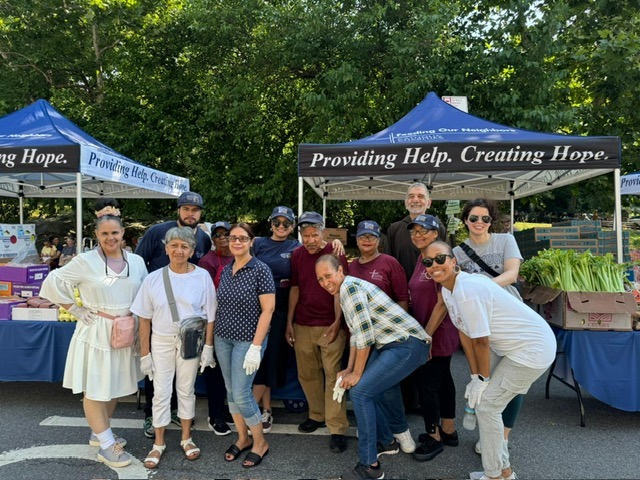
At the other end of Manhattan, the food pantry at Good Shepherd Parish conducts a weekly food distribution with the help of Cabrini Immigrant Services.
According to Alba Fresco, a parishioner who has volunteered at the pantry for several years, Good Shepherd serves over 400 families a week. Volunteers gather all day on Fridays to receive deliveries and to package groceries for individuals and family households. They reconvene on Saturday mornings to distribute the packages.
Fr. Thomas Faiola, the pastor, initiated the partnership with Cabrini Immigrant Services to better meet the food and nutrition needs of parishioners and the Inwood community. The food pantry coordinator is Paul Kwon, who works at Cabrini.
Certain clients of the food pantry who have disabilities or health issues that preclude them from showing up to receive food can get deliveries made to their home if they live within certain ZIP codes of the parish.
In addition to operating its own food pantry, Good Shepherd collaborates with Catholic Charities of the Archdiocese of New York to stage a “pop-up food pantry” every so often. The Feeding Our Neighbors program of Catholic Charities sponsored a pop-up pantry on June 21 in front of Good Shepherd School. “Numerous parishioners volunteered, providing much-needed food assistance to the neighborhood,” Fresco said.
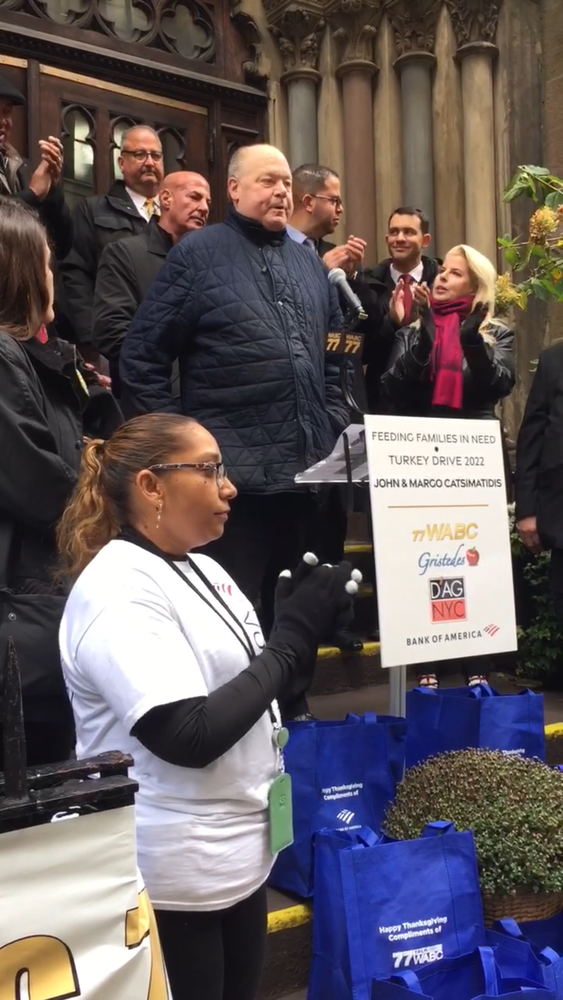
In midtown Manhattan, where great wealth conceals great poverty, the pantries at our combined parish of Holy Cross and St. John the Baptist serve diverse communities, truly being “Christ in the City” for them.
The St. John Bread of Life Food Pantry, started by the late Br. Paul Crawford in the 1970s, provides for the physical needs of our poorest neighbors who live between 14th and 59th Streets, from river to river. In addition to groceries, it provides free services through partnerships with local businesses and public authorities, such as flu shots, SNAP application interviews, and clinics on senior citizen benefits.
Saint John Bread of Life distributes food to those in need every other Wednesday between 11 a.m. and 1:00 p.m. in the church hall. The pantry serves hundreds of people weekly, with a large number being children. Many of our clients come from Spanish-speaking and Chinese-speaking immigrant households of three or more members.
 For many years, Crossroads Food Pantry at Holy Cross Church has been meeting the nutrition needs of residents in Hell’s Kitchen, Chelsea and Clinton, and environs, from West 30th to West 57th Street and from 5th Avenue to 12th Avenue. It operates every other Saturday from 9 a.m. to 1 p.m. all the year round. The pantry is run by volunteers with no paid staff.
The food pantry has been busier than ever. Before the Covid-19 pandemic, Crossroads served 28,692 neighbors and gave out 177,887 pounds of food annually. In 2023, it served a total of 42,361 neighbors: 3,088 children, 33,259 adults, and 6,014 seniors. Many of the households served are Asian and Latino immigrants. In addition to food, and with the assistance of local businesses, Crossroads provides flu shots, Medicare and Medicaid assistance, SNAP (food stamps) information, and more.
All of our parish food pantries are supported by the Province’s Capuchin Food Pantries fund and by private donations. You can help us continue helping our hungry neighbors. Please make a donation to the Province today.