


 At a time when many young people feel overwhelmed by life decisions or uncertain about their future, the Province continues its quiet and faithful work of accompanying men who sense a calling to religious life.
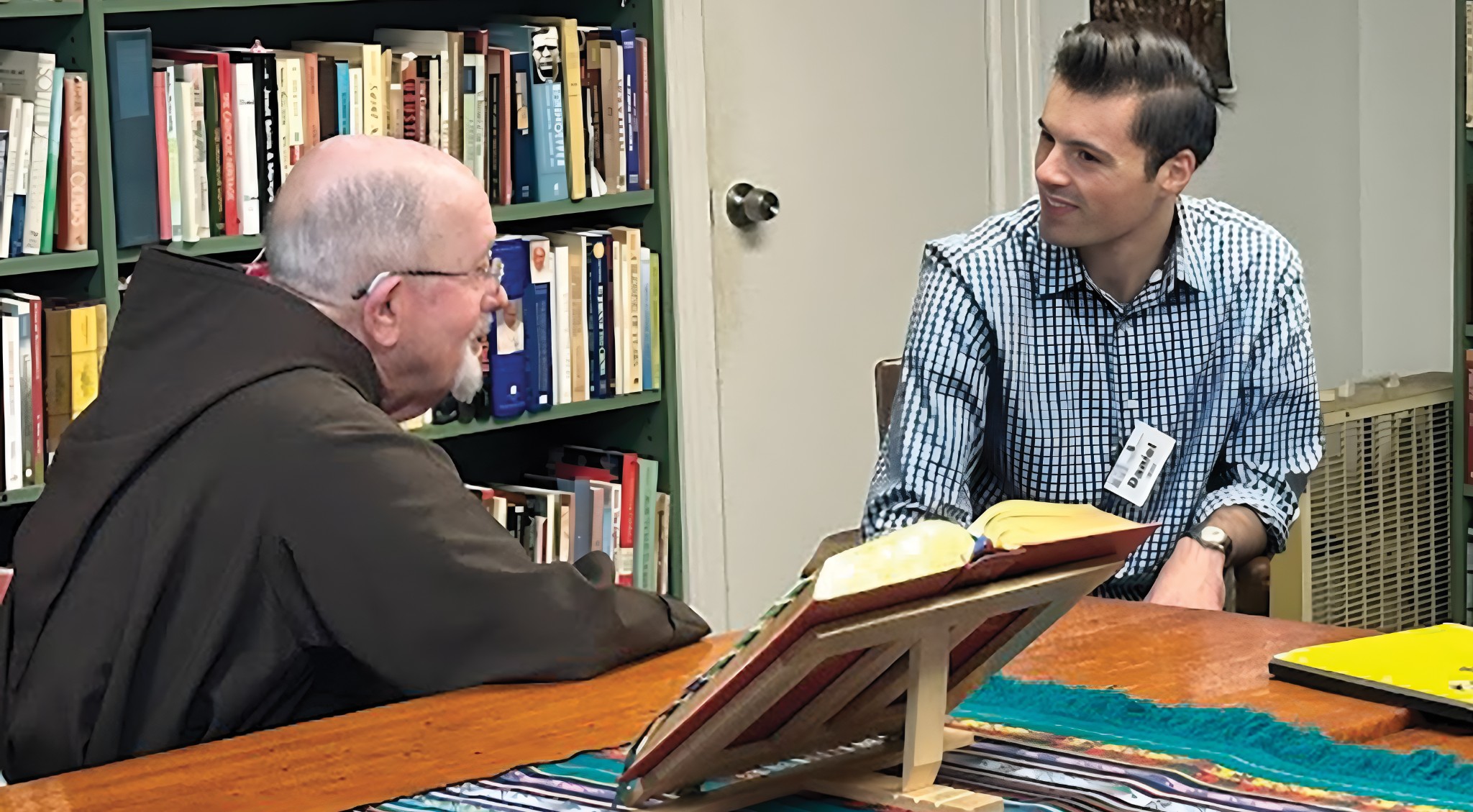
For Fr. Erik Lenhart, director of the vocation ministry, this work is not only about recruitment but also about walking with people over time. “As vocation director, my role is to foster a relationship between the candidate and the Province,” he said. “I try to provide experiences where the Province can get to know the candidate, and the candidate can get to know the Province, the Order, and Saint Francis.”
Father Erik assumed the role of vocation director in August 2023. He carries out this job while also being the director of Capuchin Family Ministries, where he has served since 2018. He sees a natural synergy between the two roles. “Though it can be a challenge to juggle both roles, the vocation ministry and Capuchin Family Ministries are deeply connected,” he said. “Both are about encounter—meeting people where they are and helping them discover Christ and their own call.”
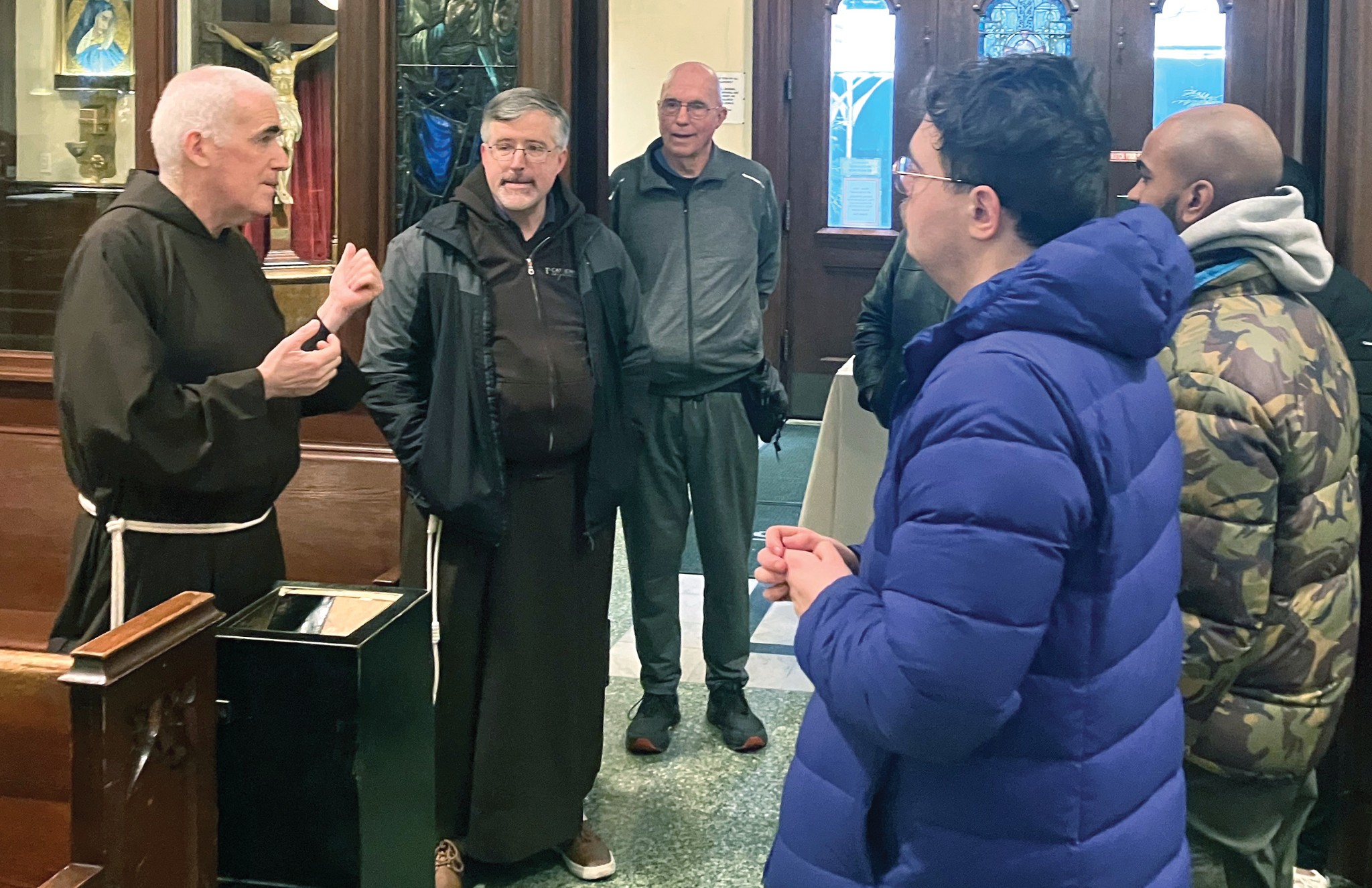
The Province offers many opportunities for encounter. We hold discernment weekends and days of recollection throughout the year (see Page 15). We invite candidates to provincial gatherings like Fraternity Day, our Advent breakfast, and our annual walk-a-thon. We also encourage candidates to visit our friaries for prayer and a meal with the brothers.
Vocation discernment is mutual: both the candidates and the friars are asking questions. The discernment weekends are especially illuminating, Father Erik said. “Those times are mutually informative. The man learns who we are; we learn who he is.”
Through prayer and relationship building, clarity comes, though such clarity is rarely instant. “Some of this ministry is mysterious,” Father Erik said. “It’s not a linear process. It takes time. Each little experience—each weekend, each conversation, each ‘come and see’—is a data point. From our end, we’re also asking: does this man have the DNA of prayer, service, and fraternity that will allow him to flourish as a Capuchin?”
Time and Energy
Father Erik meets every candidate in person within 48 hours of their first point of inquiry, and he checks in monthly with each candidate outside of scheduled discernment events. This requires traveling all over New York and New England.
“I’ve learned you can’t over-schedule your calendar,” he said. “I get lots of calls about coming to parishes, doing retreats, or doing missions or visiting schools. And I do take some of those, but you can’t pack your schedule. Because when you get a call from a guy in New Hampshire or Maine or Rhode Island, you want to be able to be in their presence within 48 hours if possible. That requires being available.”
“You know, it’s not that the vocation stuff is so difficult,” said Mary Ellen Yannitelli, manager of the vocation office. “The hard part is finding the time!” Like Father Erik, Yannitelli also works for Capuchin Family Ministries, where she is the programs administrator. She provides the logistical support that keeps candidates on track, especially when they decide to apply for postulancy. “When we get a real applicant, my job ramps up fast,” she said. “There’s a lot of paperwork—making sure everything’s accurate, and people have what they need. Every step builds on the one before.”
"
We pray, and we ask the Lord, the master of the harvest, to send out laborers into the vineyard."
Cultivating Vocations
How does the Province foster a culture of vocations? A 2025 report from the U.S. Conference of Catholic Bishops’ Secretariat of Consecrated Life and Vocations finds that family background and ministry experience correlate positively to religious vocations. In the bishops’ study, among those who professed final vows in 2024, 92 percent of respondents said at least one parent was Catholic, and 87 percent reported that both were Catholic. And 31 percent of respondents reported having a relative who was also in religious life. About 85 percent had served in at least one ministry prior to entering religious life. And 84 percent of these persons had been encouraged to consider religious life by someone they trusted—a friend, a family member, or a priest. These figures affirm what the Capuchin friars already believe: vocations are nurtured through family, community, and service.
Nowadays, the Province highly encourages candidates to take part in our service opportunities. One of these is Capuchin Mobile Ministries. On one Sunday a month, candidates volunteer in the outreach van that travels through Boston and Cambridge, Mass., to provide spiritual and material care to people experiencing homelessness, poverty, and loneliness. They work with Br. Paul Fesefeldt and Br. Francisco Serrano all afternoon. When they return to the friary in the evening, they have prayer, pizza, and theological reflection.
Since partnering with Capuchin Mobile Ministries, Father Erik said he has seen a spike in interest in vocations in Greater Boston. “It provides sort of an immediate on-ramp [for candidates] to illustrate our love and service to the people on the streets in Boston. It gives them a taste of our life, our prayer, and our service. We have something [to show] them right away.” Years before he became a Capuchin, Father Erik did a year of volunteer service with Capuchin Youth & Family Ministries and its retreat and mission programs. Today, hepitches Capuchin Family Ministries’ summer experiences to candidates considering Capuchin life. Capuchin Appalachian Mission in Harlan, Ky., and Summer Outreach Week in the Hudson Valley of New York State immerse candidates in service, prayer and worship, reflection, and fellowship. They experience first-hand how Capuchins are contemplatives in action. Capuchin Literature & Arts Summer Program is a theater camp in which participants pray and produce an original musical together. It provides a touch-point to the Capuchin charisms for young people who are at an age when they might be just starting to feel the call to religious life. “Capuchin Family Ministries gives us an opportunity to sow seeds among the participants that may someday blossom into a Capuchin vocation,” said Father Erik.
Parish Influence
In earlier generations, a significant number of vocations in the Province came from the parishes where we served. This is no longer the case, but Father Erik is not ruling out the influence our parishes can have on vocations.
“We have great parishes, but I don’t think we talk about the Capuchins enough,” Father Erik said. “I think this is where our humility maybe hurts us. The average person who goes to church only sees us when we’re celebrating Mass, so they might not even see the brown habit under the chasuble. And if you were to say, ‘This is a Capuchin parish,’ they’d be like, ‘What?’ We probably don’t lead with that often enough.”
Father Erik is preparing to push Capuchin life at our parishes this fall. He got the idea from the Archdiocese of New York, where every priest shared his vocation story from the pulpit on Good Shepherd Sunday this Easter season. “We’re going to do some kind of parish outreach—a simple thing where we talk about being a Capuchin or a parish Capuchin coffee hour.”
For all the strategies he employs, Father Erik credits prayer as the most effective vocation tool. “If you don’t ask, you don’t get. We pray, and we ask the Lord, the master of the harvest, to send out laborers into the vineyard.”
A Life-Changing Invitation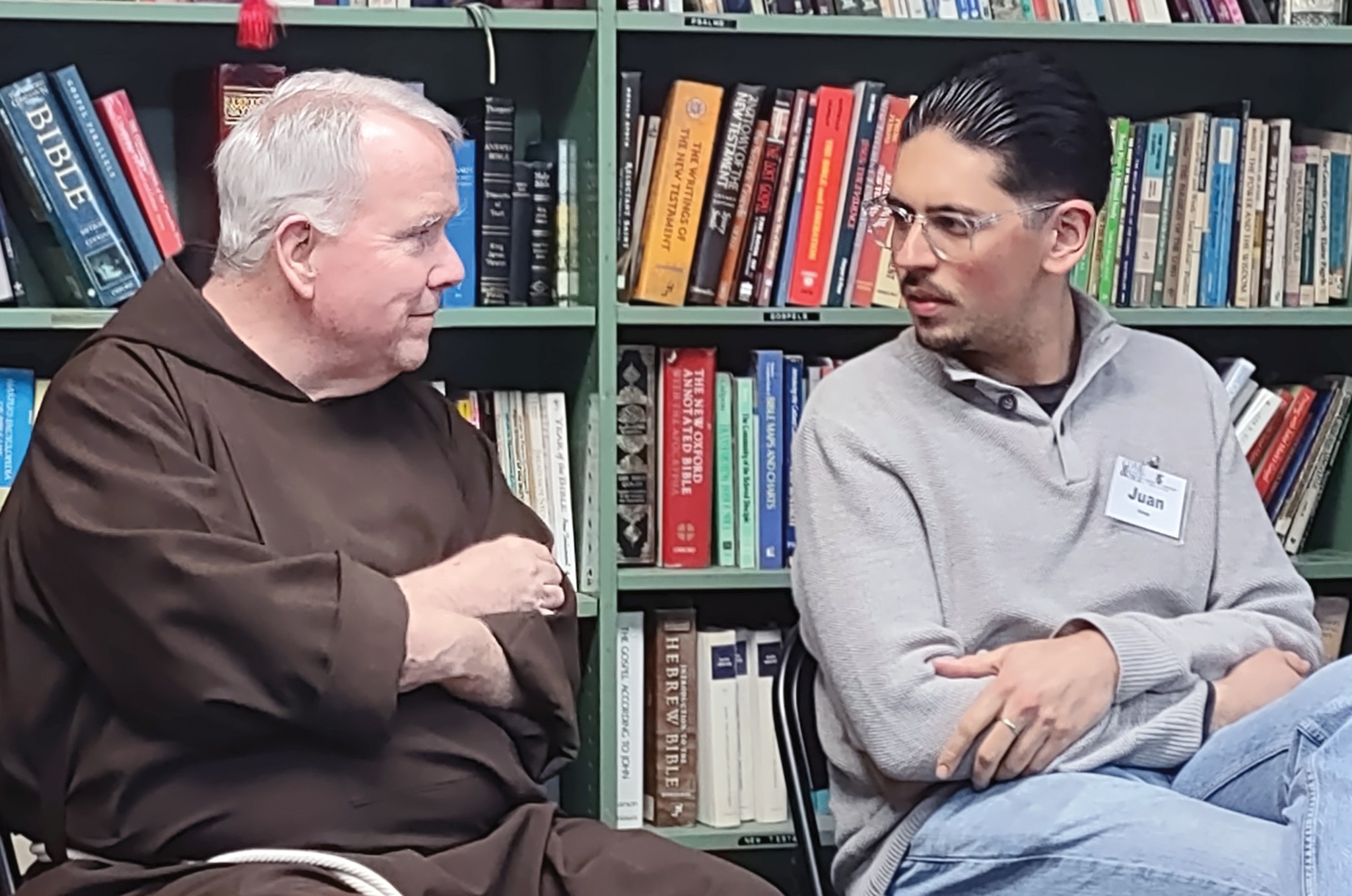
Ultimately, the goal of the vocation ministry is not growth of the Province but faithfulness to God’s call. “We’re not recruiting in a corporate sense,” Father Erik said. “We’re accompanying. We’re planting seeds and letting God bring the growth.” Often the work bears fruit in ways that aren’t immediately tangible. Some men become permanent deacons, Catholic school teachers, or parish lay ministers. The path of discernment can lead to many different places.
Why be a Capuchin? It’s a question the vocation ministry strives constantly to address. Father Erik said that in a world that is noisy and often isolating, the Capuchin way of life offers something radically different: simplicity, community, prayer, and service. The friars live among the people, especially the poor and marginalized, and offer a witness to Gospel joy and hope. For a man discerning his vocation, stepping into the life of the Capuchins can be both challenging and freeing. It involves sacrifice, but also deep joy. It calls for trust but also provides profound belonging.
“This life changes people,” Father Erik said. “If it’s lived faithfully, it leads to holiness. That’s what we’re inviting people into. We can nourish and cultivate and encourage, but only the Lord can make a vocation, right?”
The Capuchin saints are models of holiness, and there are many of them. No religious order in the Church has more saints than the Capuchins. “People know the Capuchins. We have great, well-known saints like Padre Pio and even Solanus Casey,” Father Erik said. “That’s a real gift from God. These saints are concrete representations of our charism.
“This way of life works,” he said. “If you live it, it can transform you into a saint. And we’ve seen some success stories, thanks be to God.”