


When Br. James Peterson reflects on his 25 years as a Capuchin Franciscan friar, he recalls a journey defined by not one but two vocations. Once a rising attorney in Pennsylvania, he is now known across New England as a humble servant of the Church and an embodiment of the Capuchin ideal to live the Gospel with simplicity, fraternity, and service to others.
“I loved working as a lawyer,” Brother James said. “But there was still something missing. I wasn’t motivated by money or position. I was searching for something that had deeper meaning.”
That search would eventually lead him from the busy hallways of law firms to the quieter sanctuaries of friaries and chanceries. As a Capuchin friar and a canon lawyer, he discovered a life consecrated in prayer and service.
Service to the Law
Brother James’ early years gave hints of the life change to come. Born and raised in Yorktown Heights, N.Y., he grew up in a deeply Catholic home, surrounded by his loving parents and three siblings and a parish life that encouraged a young man to ponder his vocation. “When I was 14 or 15,” he recalled, “I thought that when people prayed for vocations during Mass, they were praying for me specifically.
“I had a vague notion that I might have a vocation, but at that time the only option I knew was the priesthood.”
After graduating from Villanova University School of Law in 1998, he passed the bar in two states and began practicing commercial litigation and municipal law in Pennsylvania and New Jersey. But despite his success, something was nagging at him. “During law school, I had a strong sense that law was my vocation, so I grappled a bit with what the Lord was calling me to.”
He remembers an early case that gave him pause. Assigned to handle an eviction, he received a call from the tenant, who agreed to leave peacefully. When he reported back to one of the firm’s partners, the response was, “Let’s hope all our cases aren’t resolved that easily, or we’d be out of business.” The remark struck him. “That made me stop and think,” he reflected. “It seems like anyone can do this kind of work, but following the Lord’s call—that’s something more challenging and entirely different.”
By 1999, after two years in legal practice, he began exploring the “something missing” in his life.
A Pivotal Conversation
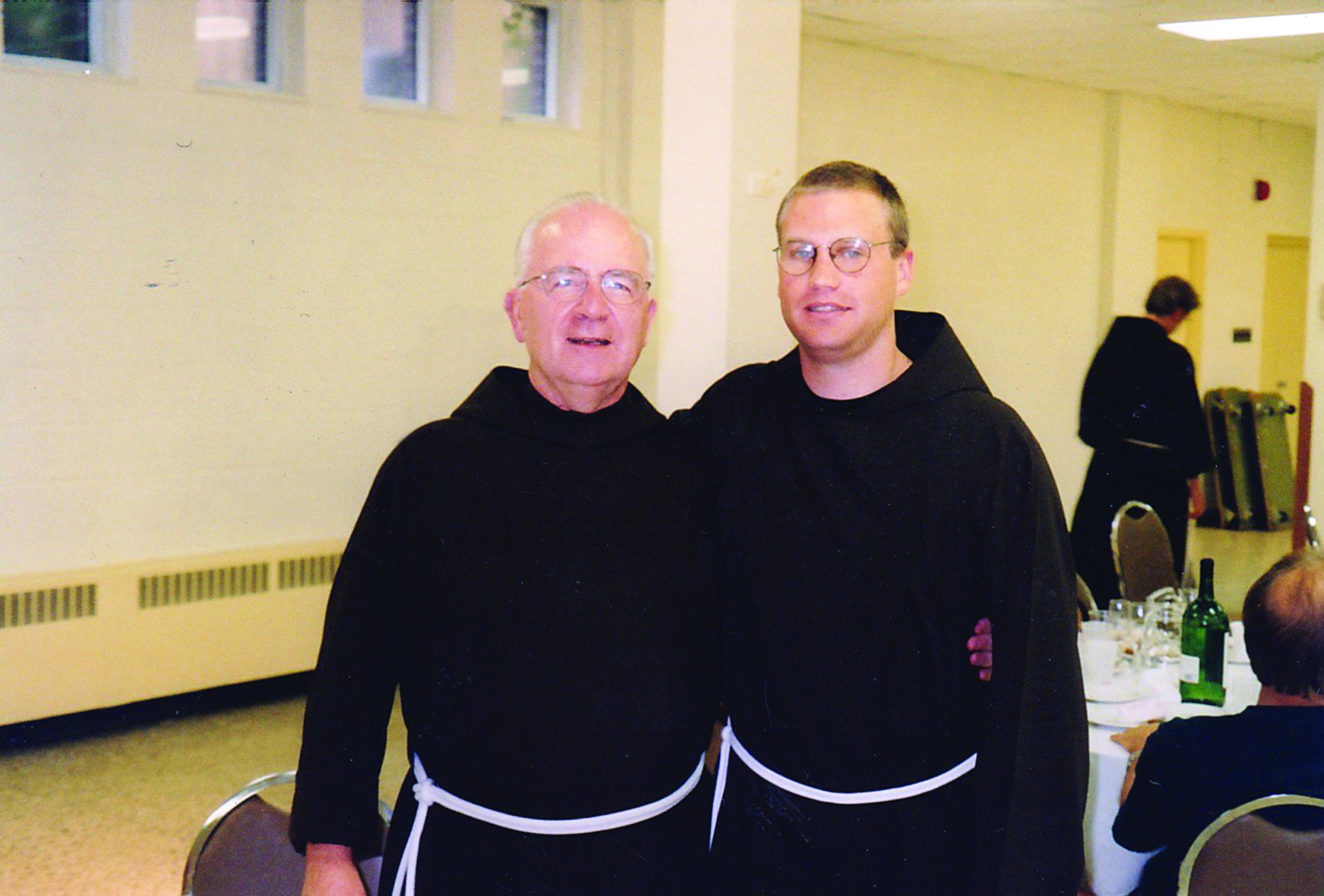
That year, at the suggestion of his parents, he met Br. Bernard Smith (d. 2010), who was then the provincial minister of the Province of St. Mary. At that time, Brother Bernard was assisting with sacramental ministries at St. Patrick Parish in Yorktown Heights, James’ home parish. Over a long lunch, Brother Bernard shared with James what it meant to be a Capuchin friar—living in community, serving the poor, and dedicating one’s talents entirely to God.
Brother Bernard introduced him to the Province’s vocation director, and within a month or so, James attended one of our discernment weekends. “I met a bunch of friars doing some pretty amazing things,” he recalled. “By the end of the weekend I said, ‘This is what I want to do with my life.’ ”
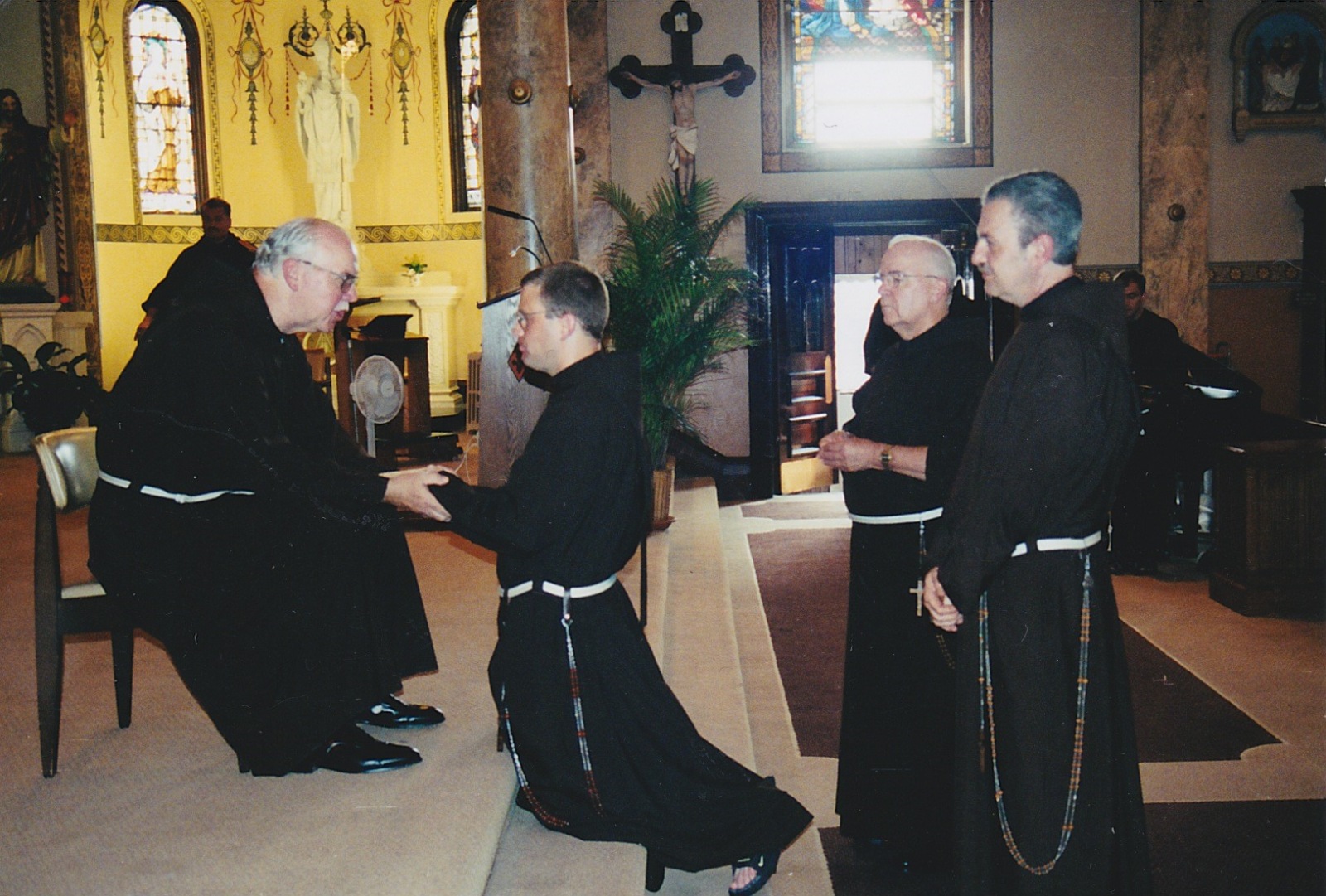
In the fall of 2000, James began initial formation. His postulancy was in Brooklyn, his novitiate was in Wisconsin, and his post-novitiate studies were in Boston. He was present at the opening of San Lorenzo Friary in Jamaica Plain. “I was in the first class, along with Michael Greco and Lake Herman, to start theological studies in Boston,” he recounted.
The transition required immense adjustment—from white shoe law firms to brown habits, and from autonomy to community. “There is a surrender that has to occur,” Brother James said of his early Capuchin days. “I had to let go of things … even my U.S. history book collection! Letting go of possessions was difficult, but the hardest part was letting go of my independence. I worked my whole life to be self-sufficient. It was jarring to become interdependent.”
Yet the simplicity of the Capuchin life soon took root. Eventually, he found how favorable the exchange was. He let go of the history books, but in the bargain he received everything that mattered: prayer, community, and purpose.
A Vocation Within a Vocation
In the Capuchin tradition, the talents each friar brings are viewed as gifts to be placed fully in service of the Gospel. For Brother James, that talent was law. His superiors quickly recognized how his legal training could serve the Church, not in the courtroom, but in marriage tribunals and diocesan administration.
After his first profession of vows in 2002 and his perpetual profession in 2005, he earned a master of theological studies degree from Weston Jesuit School of Theology, Cambridge, Mass. There followed advanced degrees, a licentiate and doctorate in canon law from The Catholic University of America in Washington, D.C. With the encouragement of Brother Bernard, he also studied for and passed the New York State bar exam.
During his canon law studies, he came to know Cardinal Seán O’Malley, archbishop of Boston and a Capuchin of the Province of St. Augustine. At the Cardinal’s request, Brother James joined the Archdiocese of Boston in 2007 as assistant to the moderator of the curia for canonical affairs and vice chancellor, serving until 2010 and again from 2013 to 2024.
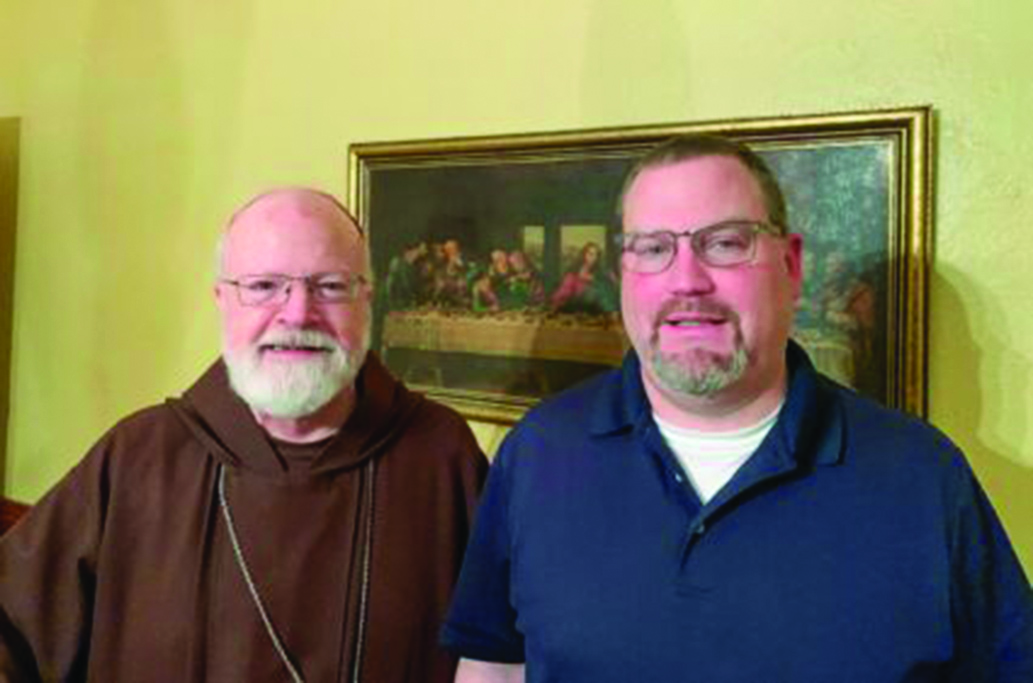 As a canon lawyer for the Boston archdiocese, Brother James provided guidance in matters ranging from diocesan administration to property transactions and the pastoral care of Catholics throughout New England. “Canon law is a very different practice of law,” he explained. “Where once I represented corporations, now I represent the bishop and the Church.”
Those who have worked with him highlight his sharp mind and Franciscan spirit. “Br. James Peterson has been an outstanding assistant to the moderator of the curia for canonical affairs in the Archdiocese of Boston,” said Cardinal Sean. “He is widely respected by his colleagues in the archdiocese, by his fellow Capuchins, and across the field of canon law.”
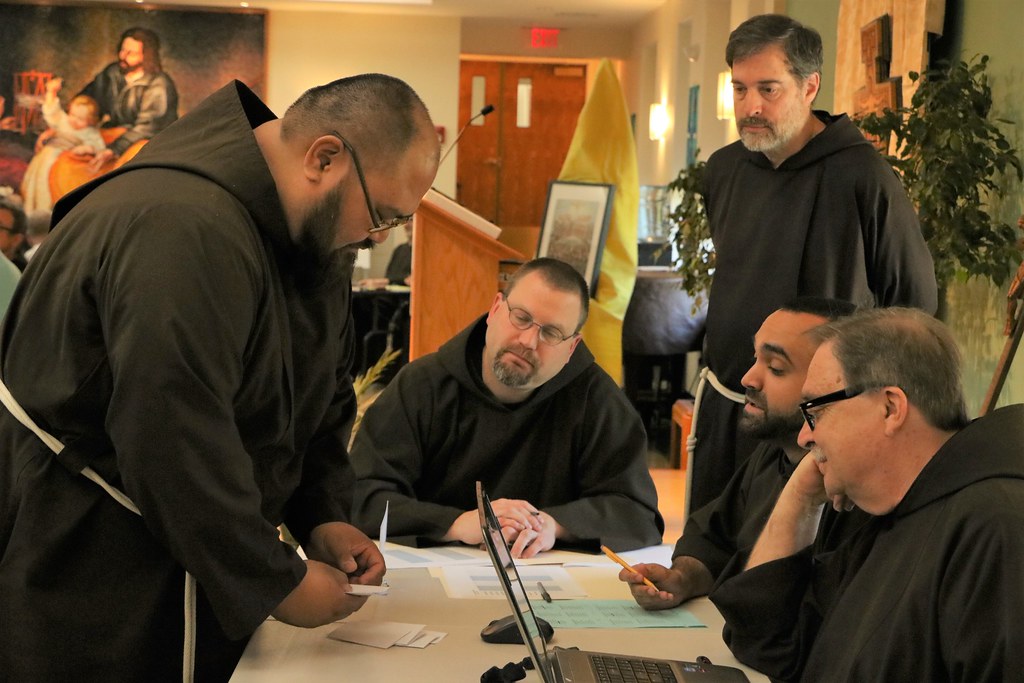
His expertise in ecclesiastical law has led him to serve on several boards, including the health care and pension plans of the Archdiocese of Boston. He has been an advisor to Franciscans International, an NGO representing the voice of the Franciscan family at the United Nations. He was elected twice to our provincial council, in 2011 and 2017. He has been an integral part of our implementation of safe environment policies throughout the Province and a member of our safe environment review board. For many years he was guardian of the post-novitiate house at St. Francis Friary in Jamaica Plain.
In August 2024, Bishop James Ruggieri of the Diocese of Portland, Maine, appointed Brother James as chancellor of the diocese. He is responsible for maintaining official records, overseeing diocesan archives, verifying episcopal signatures, and providing canonical and administrative support to the bishop and his staff. “We are blessed to welcome Brother James to the Diocese of Portland in this important role,” he said at the time. “His experience, reputation, and record of faithful service make him an exceptional leader for our diocese.”
A Franciscan Heart
All of this makes for an impressive, even imposing resume, but Brother James approaches his vocation with humility. “I have a vocation within a vocation,” he said. “Primarily, I am a Capuchin friar. But the law is where the Lord has called me to function as a friar.”
Sharing a rectory with Br. Peter Kaseta at St. Joseph Residence in Portland, Brother James remains grounded in the rhythms of a religious life rooted in common prayer and fraternity. Though he once owned a new Ford Explorer and shelves of history books, today he measures his wealth in relationships.
“There are many sacrifices,” he said. “But there is also great freedom. I have found happiness and fulfillment in a deeper call that is more fruitful and can benefit more lives. True happiness and vocation go hand in hand.”
As Brother James marks his silver jubilee of religious life in Portland, we join the friars, his colleagues, and his friends in celebrating a Capuchin who applies the law to the Gospel.