



by Br. Thomas Faiola
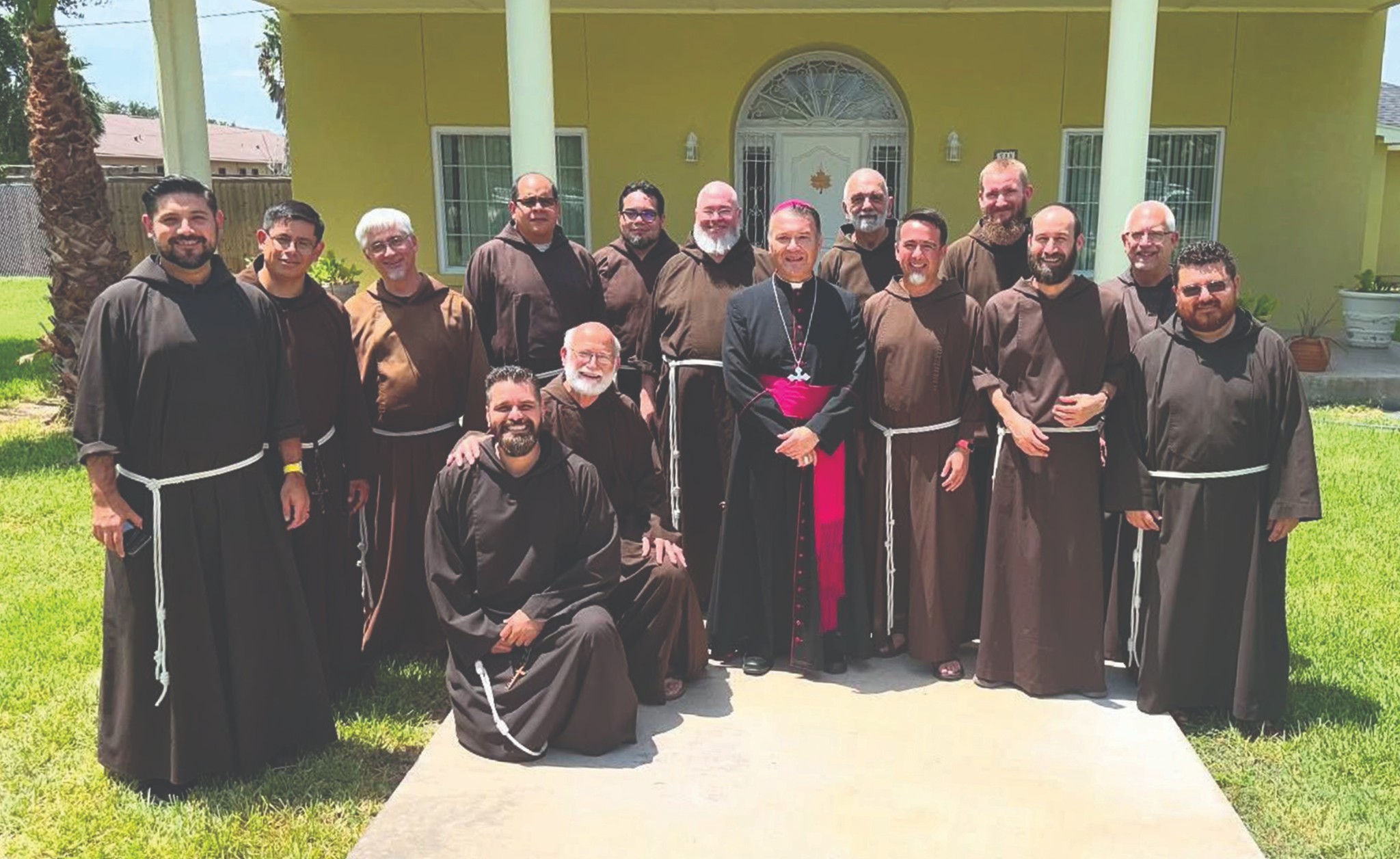 At the beginning of July 2025, a group of four friars arrived in Alamo, Texas, to begin a “new” experience of Capuchin Franciscan life. We friars came from four different circumscriptions of the Order: one from California, one from Kansas, one from New York, and one from Mexico. With the addition of a fifth friar from Bahia, Brazil in December, we became a very international, multilingual fraternity.
Convento Camerino is one of a number of San Lorenzo da Brindisi Capuchin fraternities. There is one in Spain on the camino to Santiago de Compostela, one in Lourdes in France, and several in Amazonia, Brazil. The purpose of these fraternities is to live our Capuchin charism as our early friars did, based on four pillars: fraternal life, spiritual life, simple/poor life, and ministerial life.
In order to center attention on fraternity and prayer, we do not take responsibility for any institutions. We pray five hours of the Divine Office together as well as spending time in silent contemplation together. We gather for meals, which we prepare. We have no employees; all the work of the fraternity is done by the friars.
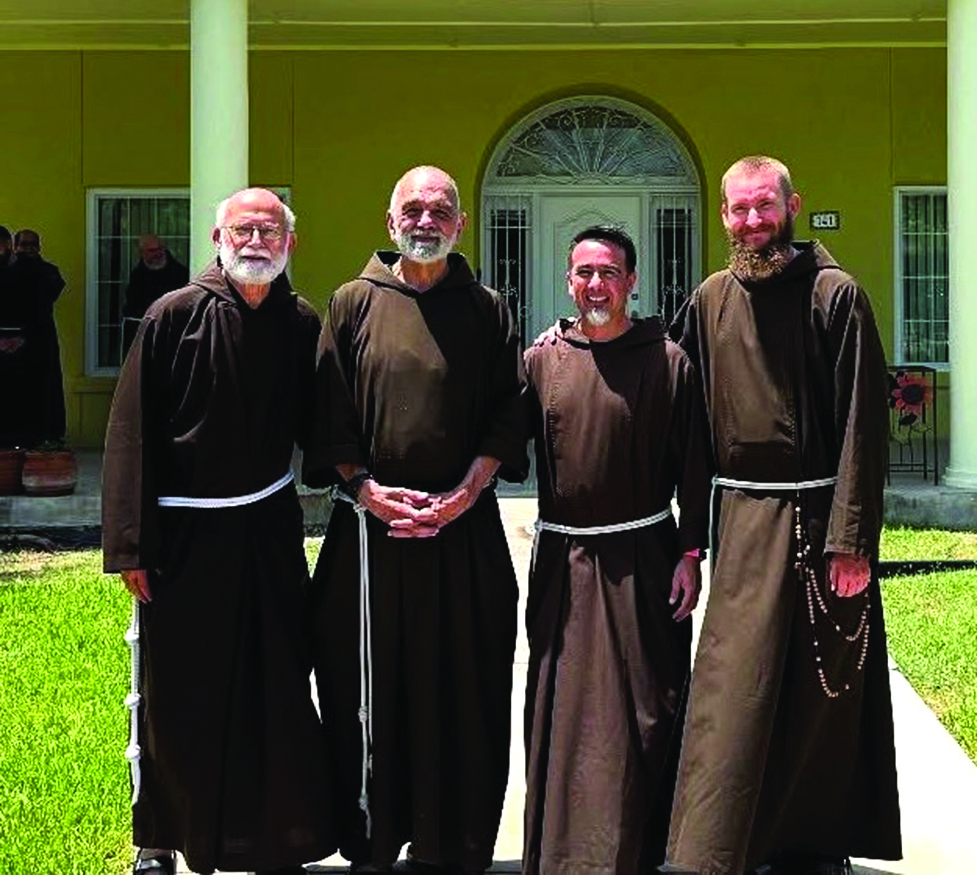 In terms of ministry, there is more than enough to do. The fraternity was founded here on the border with Mexico because of the large number of immigrants who were entering the United States here for a number of years. Our friars thought they would accompany migrants. However, there are no large numbers of migrants freely crossing the border presently. So we have looked for other ways to do ministry. Since the Diocese of Brownsville, where Alamo is located, has the lowest ratio of priests to Catholic population of all of the dioceses of the United States, there is no shortage of requests for help with Masses, confessions, missions, retreats, and spiritual direction. Additionally, brothers help with hospital ministry, the local branch of the University of Texas, several high schools, and Shalom Media, a multinational evangelizing ministry. It is not unusual for us to help in five or six parishes on one weekend.
It might be difficult for someone who has never visited the Rio Grande Valley to picture what the friars’ life is like. This is a subtropical location. The landscape is stark, almost desert-like. There has been a rapid population growth in recent decades. The diocese itself is only 60 years old, having split off from the Diocese of Corpus Christi in 1965. Most of the churches in the diocese were built after that time. The terrain is very flat and distances are great; one weekend I had a Mass in Rio Grande City on Saturday and left for Port Isabel at 5 a.m. on Sunday morning for three Masses, traveling a distance of 120 miles to get there. The culture of the valley is uniquely Texana (Tex-Mex). Almost everyone speaks Spanish, and a very high percentage of people are bilingual. Geographically, it is the United States, but culturally it is a world that lives on both sides of the border. In the two Catholic high schools we assist pastorally, about one-third of the students cross the border every day to attend classes. Many people live in Mexico and work here, or they live here and have businesses, medical, and dental practices in Mexico.
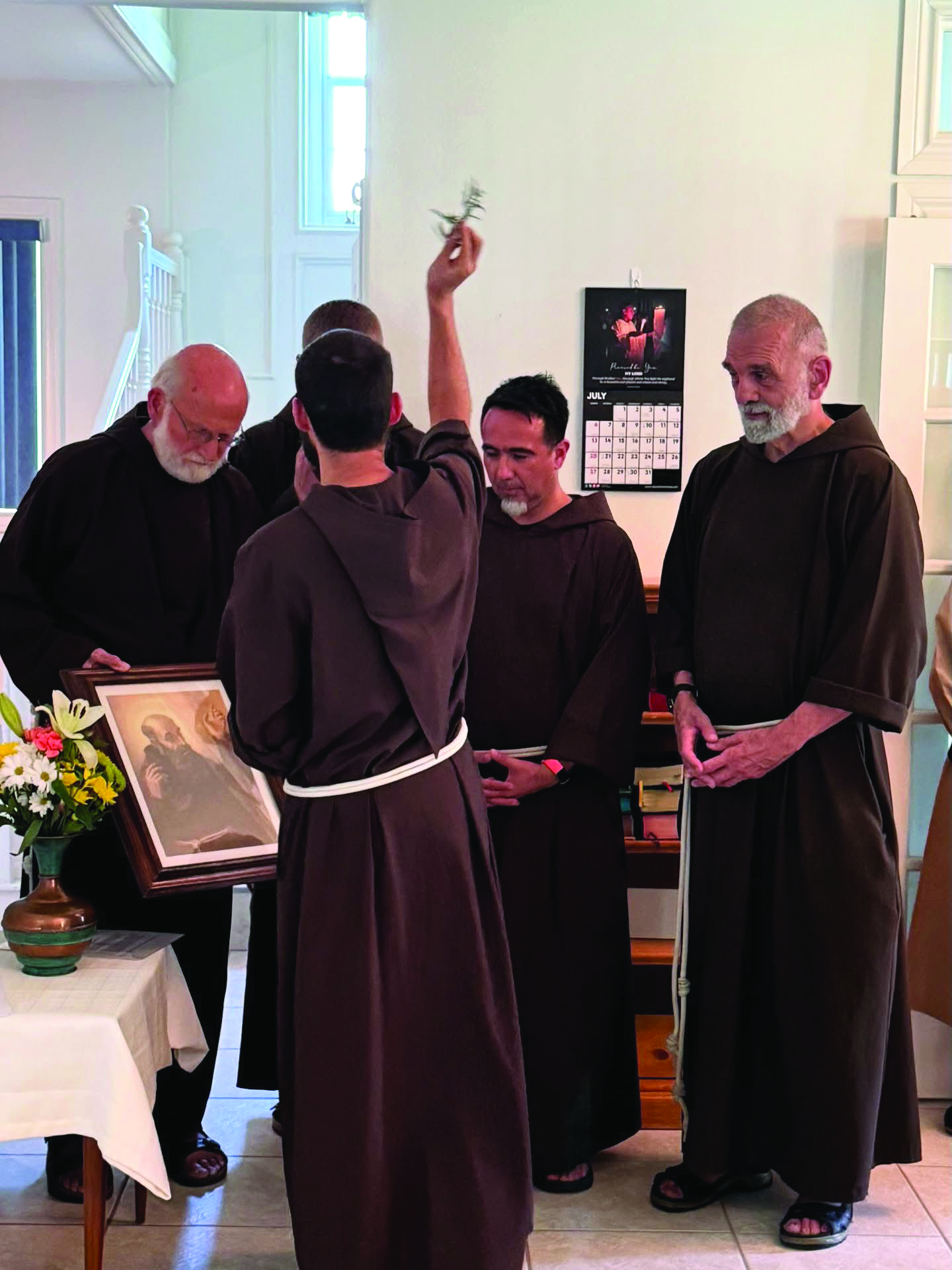 The interesting element in the San Lorenzo fraternities is that there is no fixed formula to define how they will function. We currently have a rhythm of life, prayer, and ministries, but this could be modified based on changed circumstances. For example, our friary is a rather nice house, the former home of a retired bishop. But it is conceivable that the fraternity could move to a simpler friary in a poorer community. It is also quite possible that the friars will discover pastoral needs more urgent than those in which we currently engage.
In the meantime, the friars are learning how to be an international, truly multi-cultural fraternity. That aspect of our life is very invigorating and sometimes challenging. One discovers that aspects of life, such as engagement with the community, and time for individual activities differ not only on national but also on provincial and personal variables. Meals can be an adventure of ethnic diversity and also a reflection of the reality that fast food is much more a part of the culture of this part of the world than the Northeast or Southern California. We are all learning new things about ourselves, each other, our countries, and our provinces. A cultural anthropologist would have a field day.