


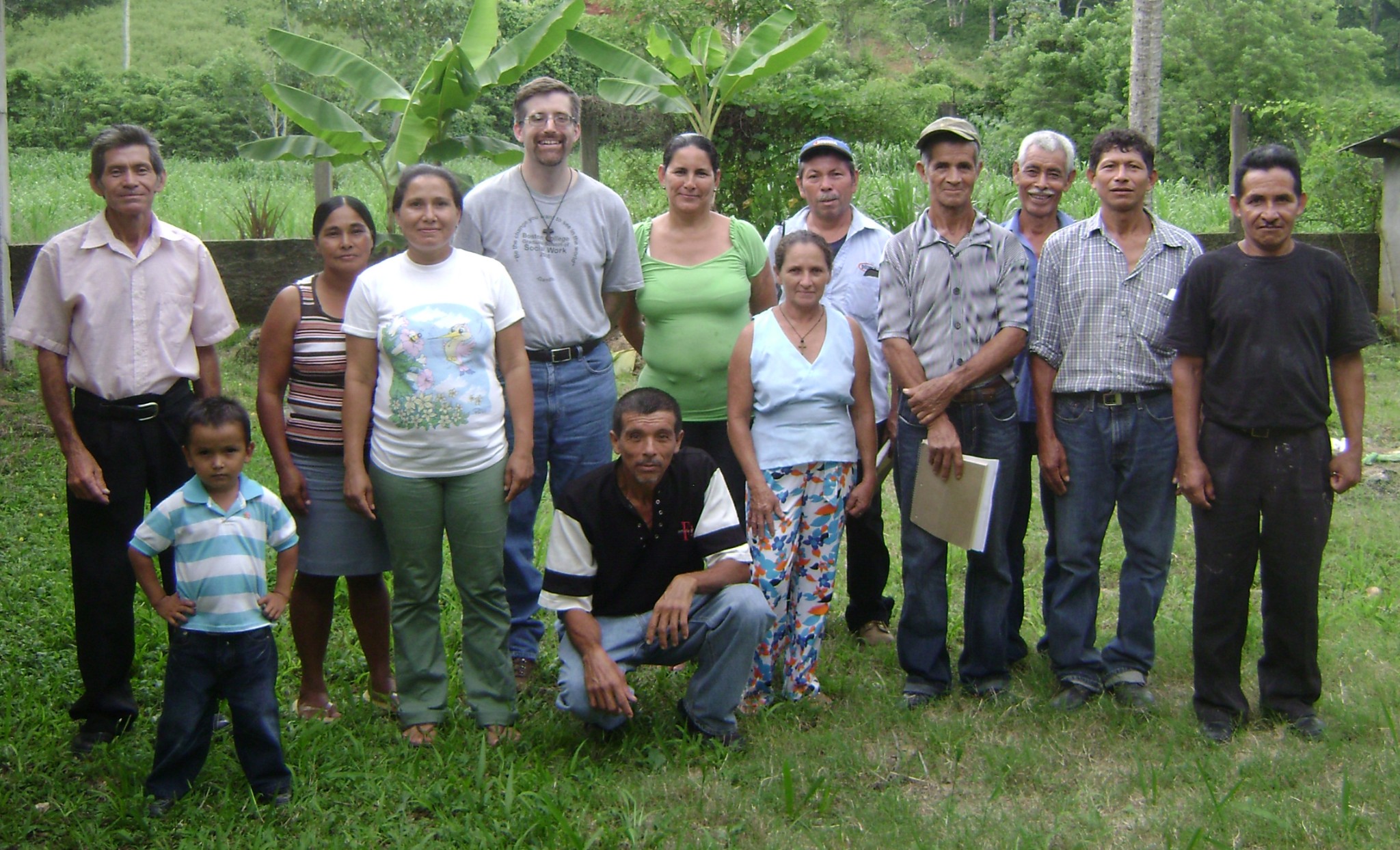
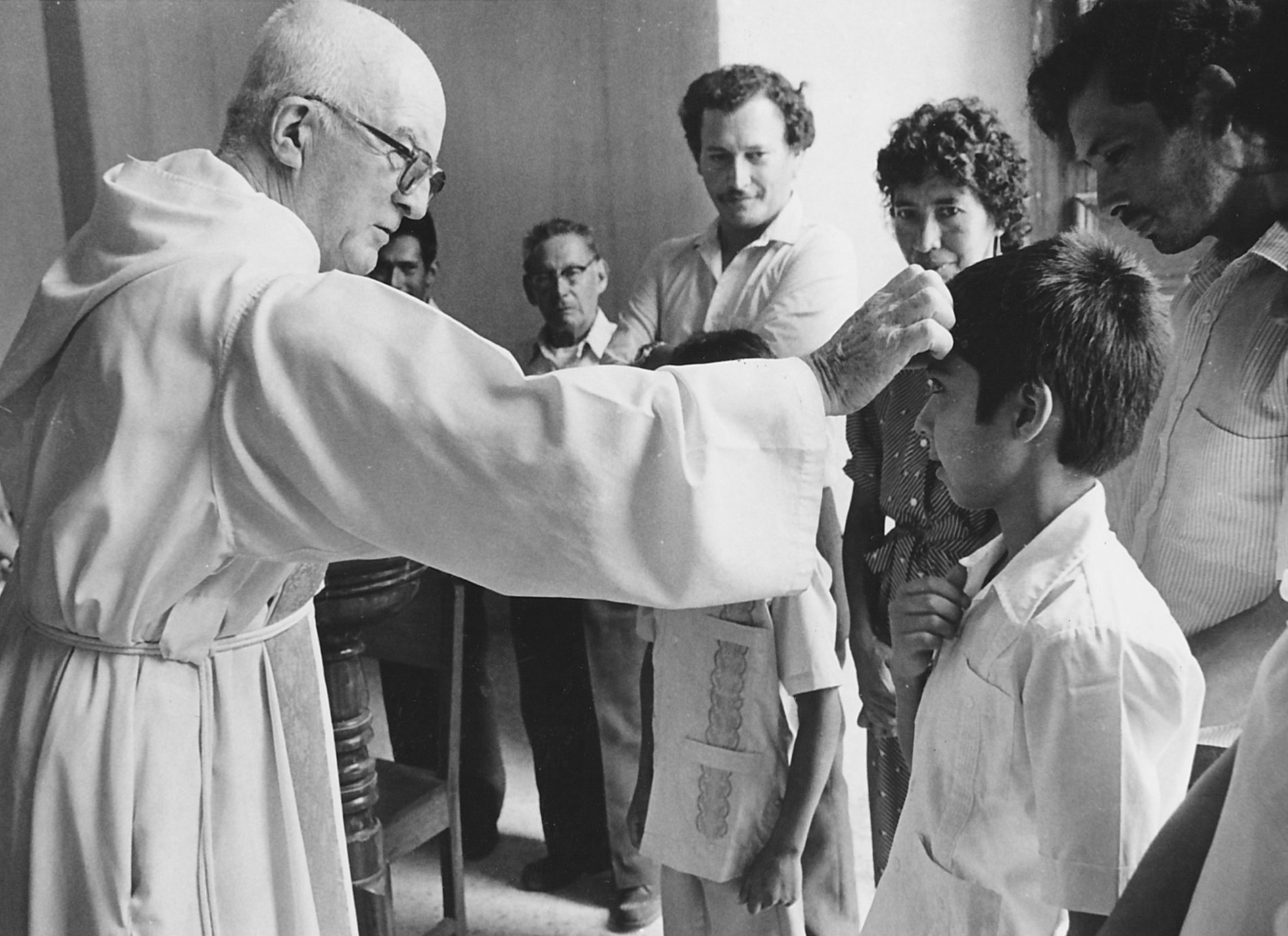
 Br. James Donegan, who served in Central America for six years, is seen here in Choloma, Honduras, with a rural base community of the parish of Nuestra Señora de Lourdes.
At our provincial chapter in May, the friars approved a proposal to support the development of the Capuchin presence in northern Central America: El Salvador, Guatemala, and Honduras. This territory is currently a custody of the Order and is on its way to becoming an independent province. This decision marks the beginning of new chapter in our long relationship with our Capuchin brothers in Central America, and with the local Church.
The history of the Order in Central America is a fascinating journey of faith, service, and adaptation. It spans centuries and continents. It tells of the tireless toil of many dedicated friars. The Capuchins have played a significant role in shaping Catholicism in Central America.
Early Missions
The first Capuchin missionaries arrived with the Spanish colonizers. Their aim was to evangelize the indigenous populations and provide spiritual guidance to the Spanish settlers. Over time, Capuchins from four European provinces took root in the region, two from Spain (Andalusia and Catalonia) and two from Poland (Krakow and Warsaw).
The United States became involved in Central America’s Capuchin missions in the early 20th century. Friars from New York, New England, and the Midwest served the indigenous peoples of Bluefields, Nicaragua. After the division of the New York and Midwest provinces in 1952, the friars of the Province of St. Joseph assumed responsibility for the Nicaragua mission. In the mid-1960s, the Province of St. Mary established a mission in Honduras.
By the 1980s, the Order had reorganized the American, Polish, and Spanish missions into one vice province, creating a centralized structure for the coordination of activities. The aim was to foster greater collaboration among the friars.
One Friar’s Journey
During this transitional period, one of our friars began a lifelong relationship with the peoples of Central America.
Fr. Thomas Faiola’s journey began in 1981, when he arrived in Honduras as a student in initial formation. For a year, he lived in a refugee camp in San Marcos, which housed over 40,000 refugees from the civil war in El Salvador. After his ordination to the priesthood, Father Tom returned to Honduras n 1985 to work in the formation of new friars. He became the director of novices and built a novitiate house in Ocotepeque. This house of formation now trains novices from all of Central America as well as from the Caribbean and Mexico. Father Tom, who is currently the pastor at Church of the Good Shepherd in New York City, continues to keep in touch and made a fraternal visit to the novitiate community this summer.
Division and Transformation
In the early 1990s, the Order split the Central America mission into two vice provinces: a southern one (Costa Rica, Panama, and Nicaragua) and a northern one (El Salvador, Guatemala, and Honduras). The Order later reclassified these vice provinces as custodies. Custodies are jurisdictions with the potential to become provinces in the future.
The northern custody, called Our Lady of Hope, has seen steady growth. There are about 30 friars in El Salvador, Guatemala, and Honduras. The mean age of these friars is in the 40s. Fr. Juan Pablo Lobos, a delegate from the custody, reported to our provincial chapter that the custody had achieved financial independence, a testament to their resilience and dedication. Father Juan Pablo told the Province that the custody has the potential to become a province, and he believes that they only need further administrative preparation
before taking that significant step.
At its own custodial chapter, Our Lady of Hope approved a proposal for formal association with the Province of St. Mary. Their request is not centered on financial assistance or personnel support; rather, the friars seek guidance, accompaniment, and an ongoing fraternal relationship. This move reflects the growing realization within the Capuchin Order, as expressed at the pan-American Capuchin gathering held in Brazil in May 2022, that collaboration across jurisdictions is essential for effective evangelization in the contemporary world.
“Such cooperation is seen as necessary to forward the pastoral presence that reaches new generations who might not respond to current Church structure,” said Father Tom. “But they are nonetheless hungry for the kind of love, fulfillment, and transcendence that can come only through an encounter with our God.” Father Tom believes that the Capuchin charisms, which emphasize fraternity, simplicity, and service, are ideally suited for today’s evangelization.
Lay Involvement
During his time in Honduras, Father Tom was deeply impressed by the creativity and dedication of the local Church. “When I first went to Honduras, I lived in a parish that had one or sometimes two priests who ministered to 84 communities with chapels,” he said. “Each community had Delegates of the Word and catechists who played a vital role in the celebration of the Word and the preparation of individuals for sacraments.”
These lay ministers, often men and women who learned to read specifically to understand the Bible, shouldered immense responsibilities. The pastor supervised the ongoing formation of these individuals and made periodic visits to the base communities for the celebration of sacraments. This grassroots engagement demonstrated the vitality and strength of the local faith community.
Building for the Future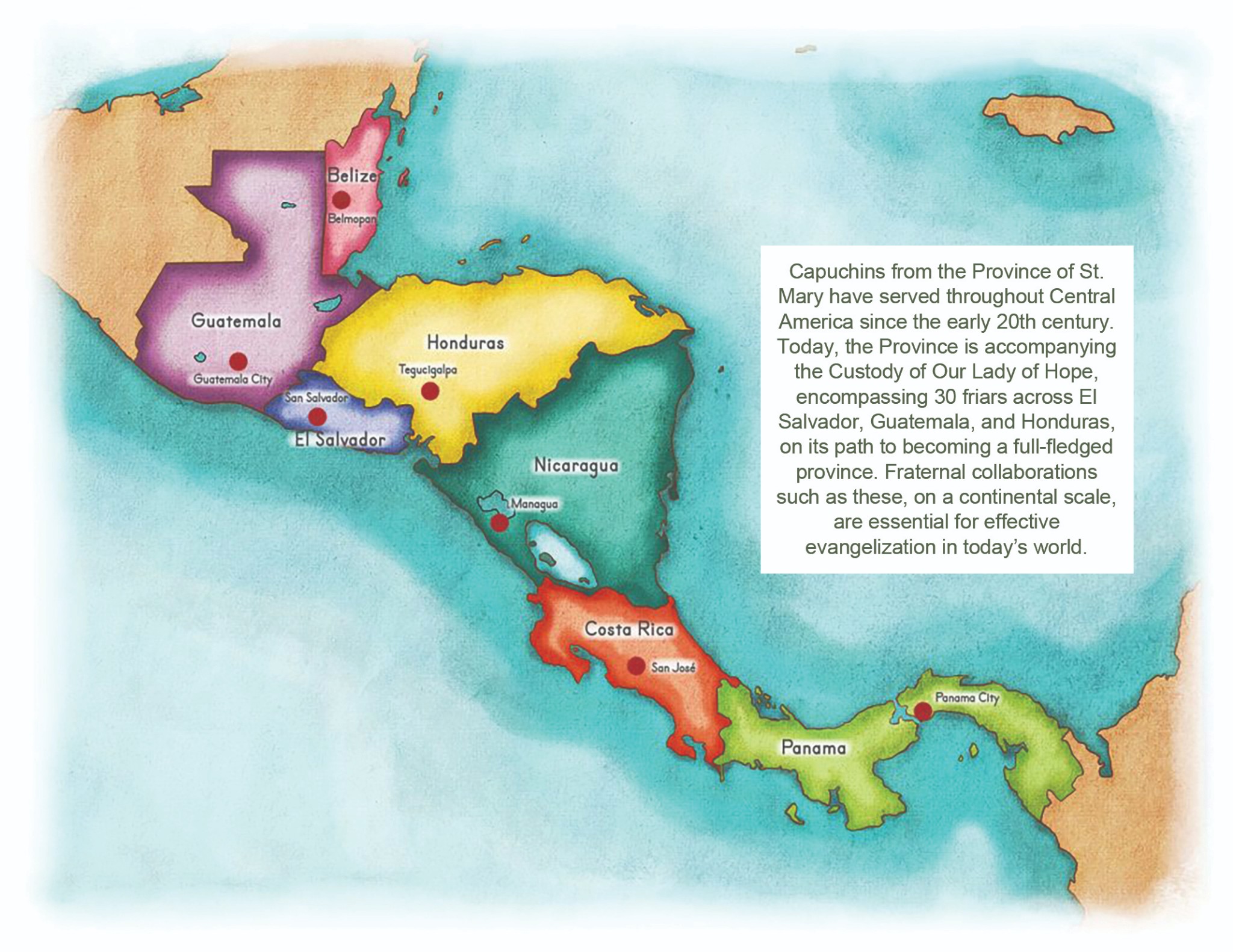
The Capuchin Order in Central America is not stagnant. It continues to adapt to changing circumstances and respond to the needs of the communities it serves. The common novitiate for Central America, the Caribbean, and Mexico, based in Ocotepeque, Honduras, is one example. This initiative brings together friars from eight custodies, fostering a new level of collaboration in initial formation.
The opening celebration of this novitiate was marked by simple but meaningful rites, rich with the symbols of the Capuchin charism. Superiors from the various custodies involved in this initiative were present, underscoring the importance of unity in formation. “We want to start this journey together, united under the standards posed by the Ratio Formationis [formation plan of the Order], and may it serve to encourage us to further collaborate on future initiatives,” said Fr. José Angel Torres Rivera, vicar general minister of the Order, who was present at the celebration.
The friars of the Custody of Our Lady of Hope are poised for further growth and transformation. Their desire for collaboration with the Province of St. Mary exemplifies the Capuchin commitment to unity and fraternity in the service of the Gospel.
 |
 |
|
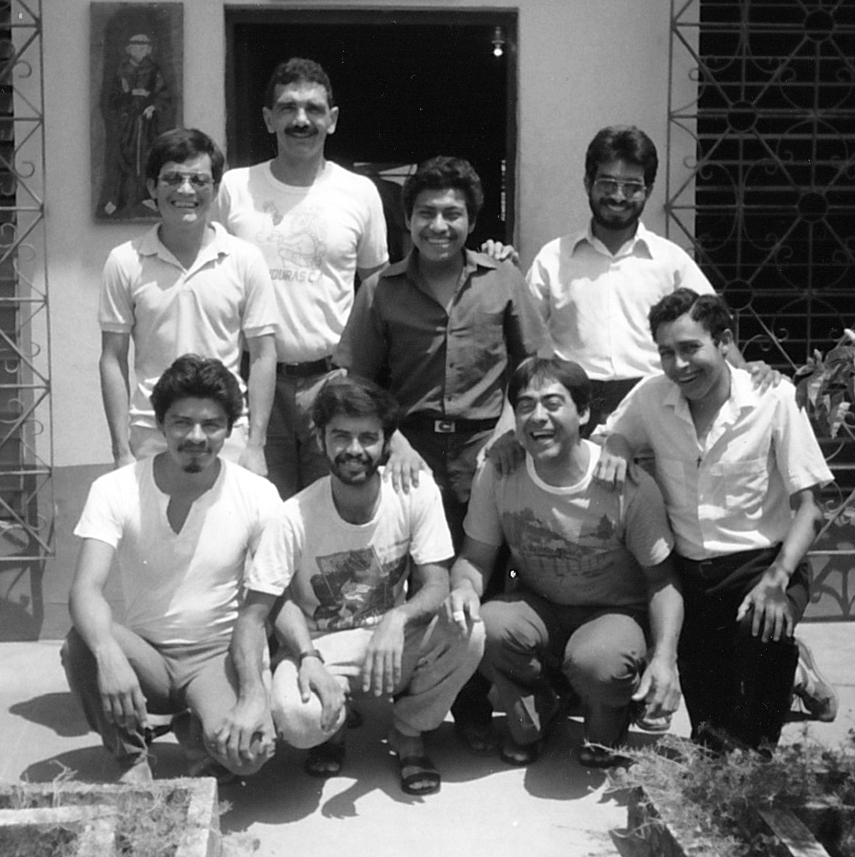
Fr. Thomas Faiola, standing second from left, at the formation house in Rama, Nicaragua, in 1988 with seven novice brothers during their year of profundizacion. |
Fr. Joseph Casimir Walsh administers the sacraments in San Marcos, Honduras, in May 1985. |